

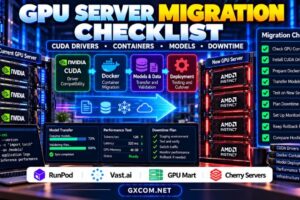
GPU Server Migration Checklist: CUDA Drivers, Containers, Models and Downtime
A GPU server migration checklist helps AI teams move workloads between cloud instances, dedicated servers, and hosting providers without unnecessary downtime. Unlike ordinary website migrations, GPU infrastructure changes can introduce CUDA driver conflicts, incompatible containers,…
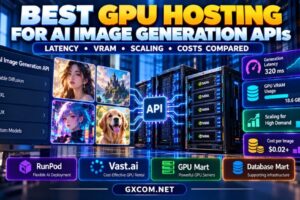
Best GPU Hosting for AI Image Generation APIs: Latency, VRAM and Scaling Compared
Choosing the best GPU hosting for AI image generation APIs requires more than comparing accelerator names or hourly rental prices. Production applications must deliver predictable image generation times, manage concurrent requests, and scale without wasting…

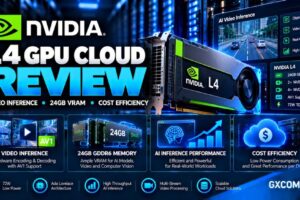
NVIDIA L4 GPU Cloud Review: Video Inference, Memory and Cost Efficiency
Cloud GPU buyers often focus on the most powerful accelerator available, even when their applications need something more economical. Video analytics, image processing, and smaller AI inference services may benefit more from balanced memory capacity,…
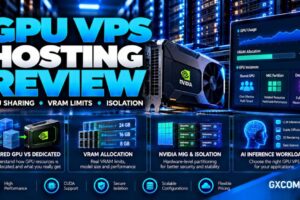
GPU VPS Hosting Review: GPU Sharing, VRAM Limits and Isolation Explained
GPU hosting has become more accessible, but the terminology surrounding virtual GPU servers remains confusing. A provider may advertise a GPU VPS, shared accelerator, virtual GPU, or dedicated GPU instance without explaining exactly how physical…
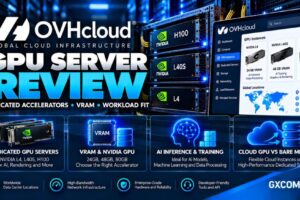
OVHcloud GPU Server Review: Dedicated Accelerators, VRAM and Workload Fit
Renting a GPU server is no longer just about finding the fastest NVIDIA accelerator. For AI inference, machine learning, video processing, and graphics workloads, the right decision depends on GPU memory, deployment flexibility, CPU resources,…

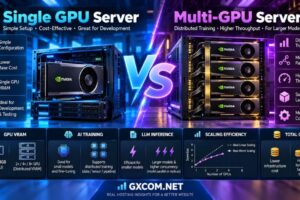
Single GPU vs Multi-GPU Server: AI Training, Inference Scaling and Infrastructure Costs
Adding more GPUs sounds like an obvious way to accelerate artificial intelligence workloads. If one GPU can train or serve a model, four GPUs should be four times faster—or so the assumption goes. Real-world AI…
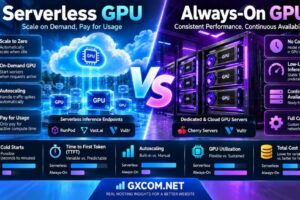
Serverless GPU vs Always-On GPU: Cold Starts, LLM Inference Latency and Cost
Deploying a large language model is no longer just a question of choosing the right GPU. The way that GPU is provisioned, kept available, scaled, and billed can have an equally important impact on application…
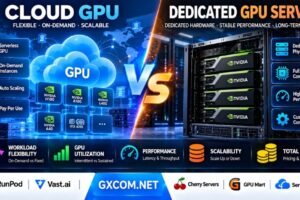
Cloud GPU vs Dedicated GPU Server: AI Workload Flexibility, Utilization and Total Cost
Should you rent GPUs from a cloud platform or choose a dedicated GPU server for artificial intelligence? The answer depends on more than GPU specifications or advertised hourly prices. AI workloads have very different resource…

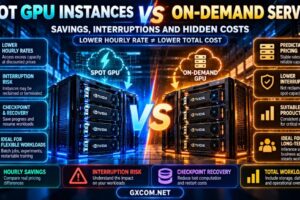
Spot GPU Instances vs On-Demand Servers: Savings, Interruptions and Hidden Costs
Spot GPU vs On-Demand is an important comparison for AI developers, machine learning teams, and businesses trying to reduce GPU computing costs. Spot GPU instances can offer lower advertised rates by using capacity that may…
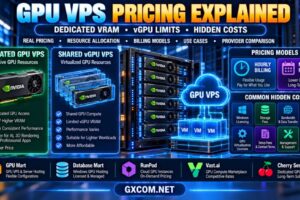
GPU VPS Pricing Explained: Dedicated VRAM, vGPU Limits and Hidden Costs
Understanding GPU VPS pricing requires looking beyond the advertised monthly rate. Two GPU virtual private servers with similar specifications may have very different performance, resource isolation, software compatibility, and total operating costs. One plan may…
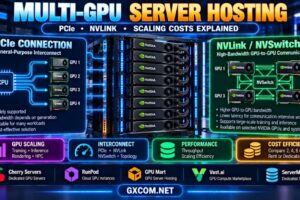
Multi-GPU Server Hosting: PCIe, NVLink and Scaling Costs Explained
Choosing the right multi-GPU server hosting solution involves more than counting graphics cards. A server with four or eight GPUs may offer substantial compute capacity, but actual performance depends on GPU memory, PCIe connectivity, NVLink…
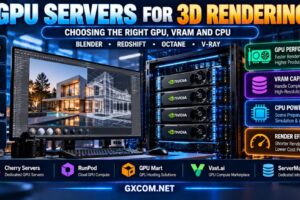
GPU Servers for 3D Rendering: Choosing the Right GPU, VRAM and CPU
Choosing the right GPU servers for 3D rendering can make a major difference to production workflows, render completion times, scene compatibility, and infrastructure costs. However, the most expensive graphics processor is not automatically the best…
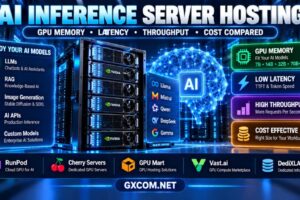
AI Inference Server Hosting: GPU Memory, Latency and Cost Compared
Choosing the right AI inference server hosting solution is essential for developers and businesses deploying large language models, AI chatbots, retrieval-augmented generation (RAG) applications, and production AI APIs. Unlike AI training, inference focuses on running…
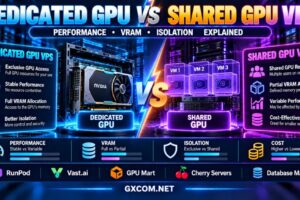
Dedicated GPU vs Shared GPU VPS: Performance, VRAM and Isolation Explained
Choosing between a dedicated GPU vs shared GPU VPS can significantly affect application performance, available VRAM, workload isolation, and hosting costs. Two GPU hosting plans may advertise similar graphics hardware yet deliver very different levels…
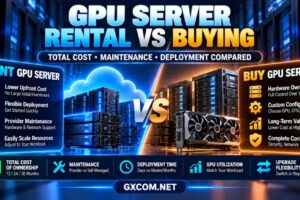
GPU Server Rental vs Buying: Total Cost, Maintenance and Deployment Compared
Choosing between GPU server rental vs buying is one of the most important infrastructure decisions for businesses running AI training, large language models, 3D rendering, scientific computing, and GPU-intensive applications. Buying a GPU server provides…