


Shared Hosting for Small Business Websites: When It’s Enough and When to Upgrade
Small business owners often face a difficult hosting decision: start with an affordable shared hosting plan or invest immediately in a more powerful server. For many company websites, shared hosting can be a practical starting…
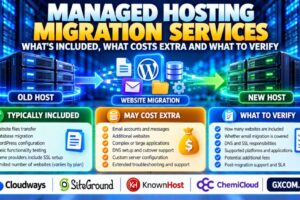
Managed Hosting Migration Services: What’s Included, What Costs Extra and What to Verify
Moving to a new hosting provider can improve your website’s infrastructure, support options, and long-term flexibility. However, transferring a live website involves more than copying files to another server. Managed hosting migration services can reduce…


WordPress Hosting for Multiple Websites: Resource Isolation, Management and Costs
Running several WordPress websites under one hosting plan can reduce administrative work and simplify billing. However, a plan that supports multiple domains does not necessarily provide independent server resources, security boundaries, or backups for every…

Web Hosting Server Location: How Data Centers Affect Latency and Website Performance
Choosing a hosting provider involves more than comparing storage, CPU resources, and introductory discounts. The physical location of your website’s server can influence how quickly visitors connect to your website and receive content. Web hosting…
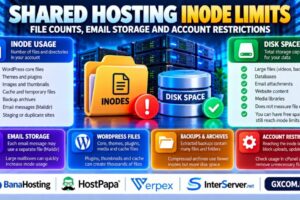
Shared Hosting Inode Limits Explained: File Counts, Email Storage and Account Restrictions
Your shared hosting account may have plenty of free disk space, yet WordPress suddenly stops uploading images, backups fail, or incoming email becomes unreliable. One possible cause is an account-level file-count restriction. Shared hosting inode…


Fully Managed vs Semi-Managed Hosting: What’s Included and Who Handles What?
Choosing managed hosting sounds straightforward until you compare the services included in different plans. One provider may handle operating system updates, monitoring, and backups, while another offers technical assistance only for selected infrastructure tasks. Understanding…

WordPress Staging Hosting: How to Choose a Plan for Safe Website Updates
Updating WordPress plugins, themes, or core software directly on a live website can introduce unexpected problems. A plugin conflict may break a contact form, a theme update may change page layouts, and a WooCommerce extension…

Web Hosting with Email: What to Check Before Choosing a Hosting Plan
Choosing web hosting with email can simplify the process of launching a professional website. Instead of managing separate providers for your website and business email, some hosting plans let you create addresses such as [email protected]…


Shared Hosting Resource Limits Explained: CPU, RAM, I/O and Entry Processes
Shared hosting is an affordable way to launch a website, but every shared server has finite resources. Even when a plan advertises generous storage or bandwidth, your account may still face restrictions on CPU usage,…
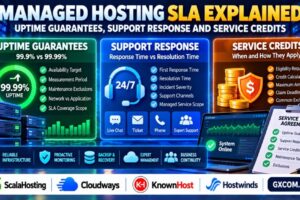
Managed Hosting SLA Explained: Uptime Guarantees, Support Response and Service Credits
A hosting provider may advertise 99.9% uptime, around-the-clock support, and reliable managed services. However, these claims do not automatically tell you what happens when your website goes offline or a critical support ticket remains unresolved.…

WordPress Hosting for WooCommerce: PHP Workers, Database Load and Checkout Performance
Choosing WordPress Hosting for WooCommerce requires more than checking storage space, bandwidth, or an advertised visitor allowance. An online store handles product searches, shopping carts, customer accounts, inventory updates, and payment requests that behave differently…

Web Hosting Renewal Costs Explained: Introductory Pricing, Add-Ons and Hidden Fees
A web hosting plan may look affordable when you first sign up, but the amount you pay at renewal can be significantly different. Introductory discounts, billing terms, domain fees, and optional services all influence the…

Best Hosting for High-Traffic Websites: Performance and Scalability Compared
High-traffic websites need more than a hosting plan with a large storage allowance and an impressive bandwidth number. As traffic grows, website performance increasingly depends on CPU capacity, memory, database efficiency, caching, storage performance, network…

Is Reseller Hosting Profitable? Costs, Pricing and Profit Margins Explained
Reseller hosting can be profitable, but the business is rarely as simple as buying hosting cheaply and selling it at a higher price. The real profit comes from understanding your total costs, pricing services correctly,…

Best Web Hosting for Small Business: Reliable Hosting Compared
A small business website does not need the most powerful server on the internet. It needs hosting that works reliably when customers visit, keeps the website secure, provides usable backups, offers responsive support and leaves…