

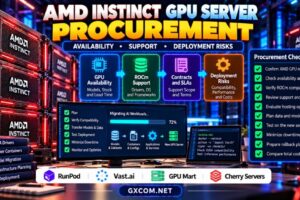
AMD Instinct GPU Server Procurement: Availability, Support and Deployment Risks
AMD Instinct GPU server procurement requires more than selecting an accelerator with impressive memory capacity. Enterprise buyers must verify hardware availability, ROCm software compatibility, technical support, deployment timelines, and long-term operating costs before signing a…
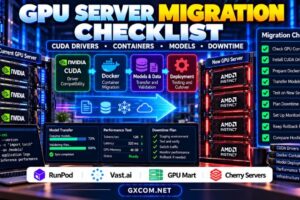
GPU Server Migration Checklist: CUDA Drivers, Containers, Models and Downtime
A GPU server migration checklist helps AI teams move workloads between cloud instances, dedicated servers, and hosting providers without unnecessary downtime. Unlike ordinary website migrations, GPU infrastructure changes can introduce CUDA driver conflicts, incompatible containers,…

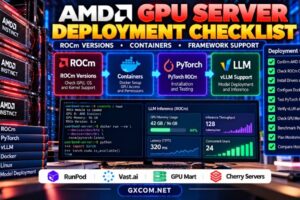
AMD GPU Server Deployment Checklist: ROCm Versions, Containers and Framework Support
An AMD GPU server deployment checklist helps AI teams avoid costly compatibility problems before launching training or inference workloads. Installing ROCm is not enough: the accelerator, operating system, kernel, container runtime, and machine learning framework…
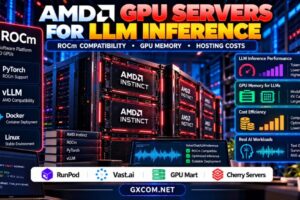
AMD GPU Servers for LLM Inference: ROCm Compatibility, Memory and Hosting Costs
AMD GPU servers for LLM inference are increasingly relevant to teams evaluating alternatives to NVIDIA-based AI infrastructure. AMD Instinct accelerators can offer substantial memory capacity and computing resources, but selecting hardware is only part of…
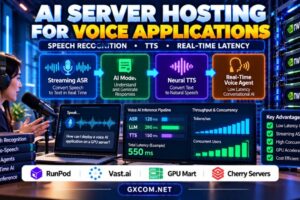
AI Server Hosting for Voice Applications: Speech Recognition, TTS and Real-Time Latency
AI server hosting for voice applications requires a different infrastructure strategy from ordinary chatbot deployment. Speech recognition, text-to-speech (TTS), and real-time voice agents must process audio quickly enough to support natural conversations. Even powerful GPUs…

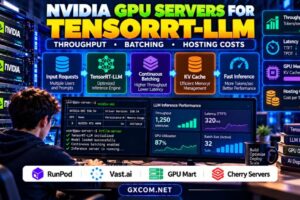
NVIDIA GPU Servers for TensorRT-LLM: Throughput, Batching and Hosting Costs
Choosing NVIDIA GPU servers for TensorRT-LLM requires more than comparing GPU memory and hourly rental prices. Large language model inference depends on throughput, request concurrency, batching efficiency, memory management, and latency targets. A powerful accelerator…
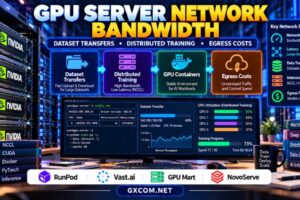
GPU Server Network Bandwidth: Dataset Transfers, Distributed Training and Egress Costs
GPU server network bandwidth can determine whether expensive AI accelerators spend their time processing data or waiting for it to arrive. For machine learning teams, network performance affects dataset transfers, distributed training, model deployment, and…
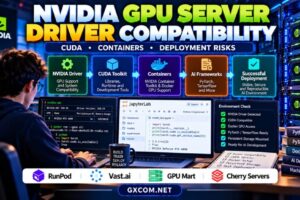
NVIDIA GPU Server Driver Compatibility: CUDA, Containers and Deployment Risks
NVIDIA GPU server driver compatibility is essential for reliable AI training, inference, and containerized deployment. A powerful GPU cannot run your workload correctly when its driver, CUDA runtime, container configuration, or machine learning framework is…


Best GPU Servers for University Research Labs: Shared Access, Storage and Budget Control
Finding the best GPU servers for university research labs requires balancing computing performance, shared access, data storage, and limited research budgets. Unlike individual developers, university laboratories often support multiple students, faculty members, and research projects…
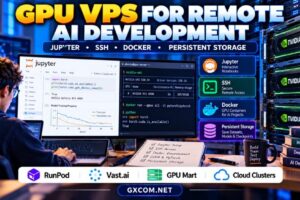
GPU VPS for Remote AI Development: Jupyter, SSH, Docker and Persistent Storage
A GPU VPS for remote AI development allows developers to build, test, and run machine learning applications without relying on a powerful local workstation. With remote access, Jupyter notebooks, Docker containers, and persistent storage, a…

Best GPU Hosting for AI Model Evaluation: Batch Testing, Reproducibility and Costs
Finding the best GPU hosting for AI model evaluation requires more than comparing accelerator specifications. Reliable model testing depends on consistent hardware, reproducible environments, predictable inference performance, and a clear understanding of total evaluation costs.…

Cheap GPU Hosting for Students: Notebook Sessions, Storage and Budget Limits
Cheap GPU hosting for students makes machine learning, deep learning, and AI experimentation possible without buying an expensive graphics card. Whether you are training a small neural network, running PyTorch assignments, or exploring image generation,…
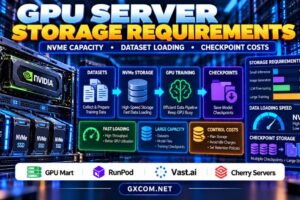
GPU Server Storage Requirements: NVMe Capacity, Dataset Loading and Checkpoint Costs
GPU server storage requirements are easy to underestimate when planning AI training, fine-tuning, or inference infrastructure. A powerful NVIDIA GPU cannot deliver its full potential if datasets load slowly, model checkpoints fill the disk, or…

GPU Cloud Idle Costs Explained: Persistent Storage, Stopped Instances and Billing Traps
GPU cloud idle costs can turn an affordable hourly rental into an unexpectedly expensive AI hosting bill. Developers often assume that stopping a GPU instance stops every charge. In reality, persistent storage, reserved capacity, networking…
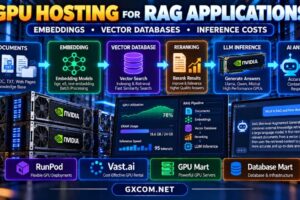
GPU Hosting for RAG Applications: Embeddings, Vector Databases and Inference Costs
GPU hosting for RAG applications can accelerate document embeddings, reranking, and language model inference, but renting a GPU for every component is rarely necessary. Retrieval-augmented generation (RAG) combines searchable knowledge with an LLM, creating several…