

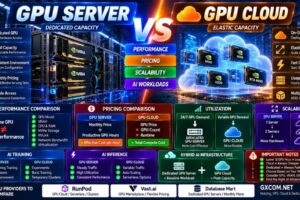
GPU Server vs GPU Cloud: Performance, Pricing and Which Is Better for AI?
AI infrastructure can be deployed in two very different ways: rent a dedicated GPU server for continuous access to the hardware, or use GPU cloud infrastructure that can be provisioned when workloads need it. Both…

NVIDIA A100 vs H100: AI Training, Inference, Performance and Cost Compared
NVIDIA A100 and H100 are two of the most widely recognized data center GPUs for artificial intelligence, machine learning, large language models, and high-performance computing. But they belong to different generations. The A100 is based…

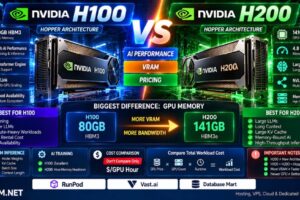
NVIDIA H100 vs H200: AI Performance, VRAM, Pricing and Which GPU Should You Choose?
NVIDIA H100 and H200 are two of the most important data center GPUs for generative AI, large language models, machine learning, and high-performance computing. They are also closely related. Both are based on NVIDIA’s Hopper…
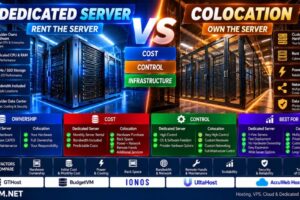
Dedicated Server vs Colocation: Cost, Control and Infrastructure Compared
Dedicated servers and colocation can both provide enterprise-grade physical infrastructure, but they use fundamentally different ownership models. With a dedicated server, you normally rent an entire physical server from a hosting provider. The provider owns…
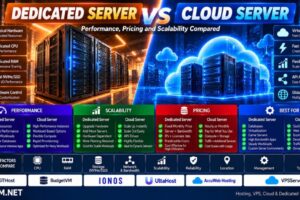
Dedicated Server vs Cloud Server: Performance, Pricing and Scalability Compared
Dedicated servers and cloud servers can both deliver powerful computing infrastructure, but they use fundamentally different resource models. A dedicated server provides an entire physical machine to one customer. A cloud server typically provides virtualized…

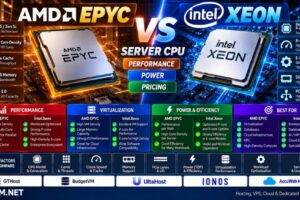
AMD EPYC vs Intel Xeon Server: Performance, Power and Pricing Compared
AMD EPYC and Intel Xeon are the two dominant processor families in modern x86 server infrastructure. Both power dedicated servers, cloud platforms, virtualization clusters, databases, AI systems, enterprise applications, and high-performance computing environments. But choosing…
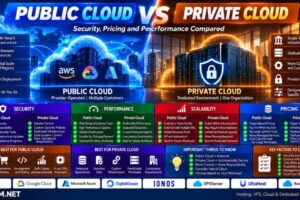
Public Cloud vs Private Cloud: Security, Pricing and Performance Compared
Public cloud and private cloud provide two different ways to deliver computing resources such as virtual machines, storage, databases, networking, and applications. The biggest difference is not simply where the servers are located. Public cloud…
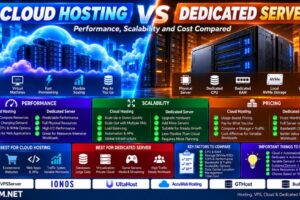
Cloud Hosting vs Dedicated Server: Performance, Scalability and Cost Compared
Cloud hosting and dedicated servers represent two very different approaches to infrastructure. Cloud hosting draws computing resources from a broader pool of virtual and physical infrastructure, making it easier to provision, resize, and distribute workloads.…

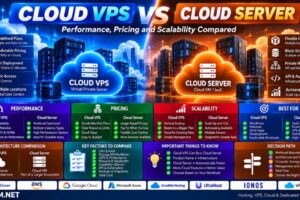
Cloud VPS vs Cloud Server: Performance, Pricing and Scalability Compared
Cloud VPS and cloud server are two of the most commonly used terms in modern hosting, but the difference between them is not always as clear as provider marketing pages suggest. Both can provide virtual…
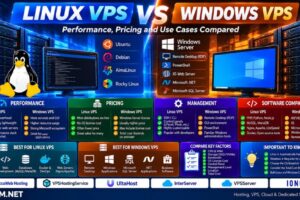
Linux VPS vs Windows VPS: Performance, Pricing and Use Cases Compared
Linux VPS and Windows VPS can run on identical server hardware while providing very different hosting environments. Both can offer dedicated virtual resources, administrator-level access, SSD or NVMe storage, dedicated IP addresses, and the ability…
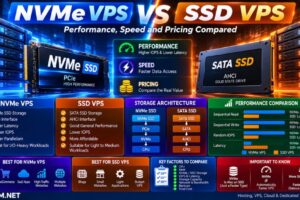
NVMe VPS vs SSD VPS: Performance, Speed and Pricing Compared
NVMe VPS and SSD VPS hosting are both dramatically faster than the HDD-based virtual servers that were common in the past, but they do not use exactly the same storage architecture. The terminology can also…
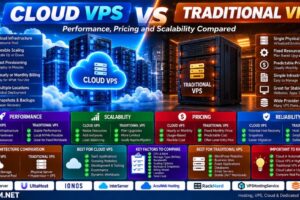
Cloud VPS vs Traditional VPS: Performance, Pricing and Scalability Compared
Cloud VPS and traditional VPS hosting can look almost identical on a pricing page. Both may offer vCPU, RAM, SSD or NVMe storage, root access, Linux or Windows, dedicated IP addresses, and full control over…
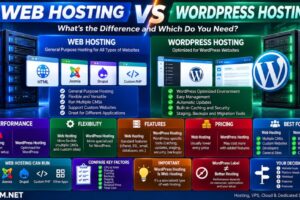
Web Hosting vs WordPress Hosting: What’s the Difference and Which Do You Need?
Web hosting and WordPress hosting are often presented as two different hosting products, but the relationship between them is simpler than it first appears. Web hosting is the broad category. It provides the infrastructure required…
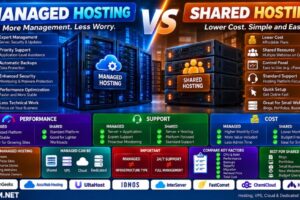
Managed Hosting vs Shared Hosting: Performance, Support and Cost Compared
Managed hosting and shared hosting are often compared as if they were two completely different hosting technologies. In reality, the distinction is more nuanced. Shared hosting describes an infrastructure model where multiple websites share server…
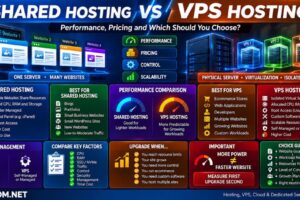
Shared Hosting vs VPS Hosting: Performance, Pricing and Which Should You Choose?
Choosing between shared hosting and VPS hosting is one of the most important decisions when launching or scaling a website. Both can host WordPress, business websites, blogs, ecommerce stores, and other web projects, but the…