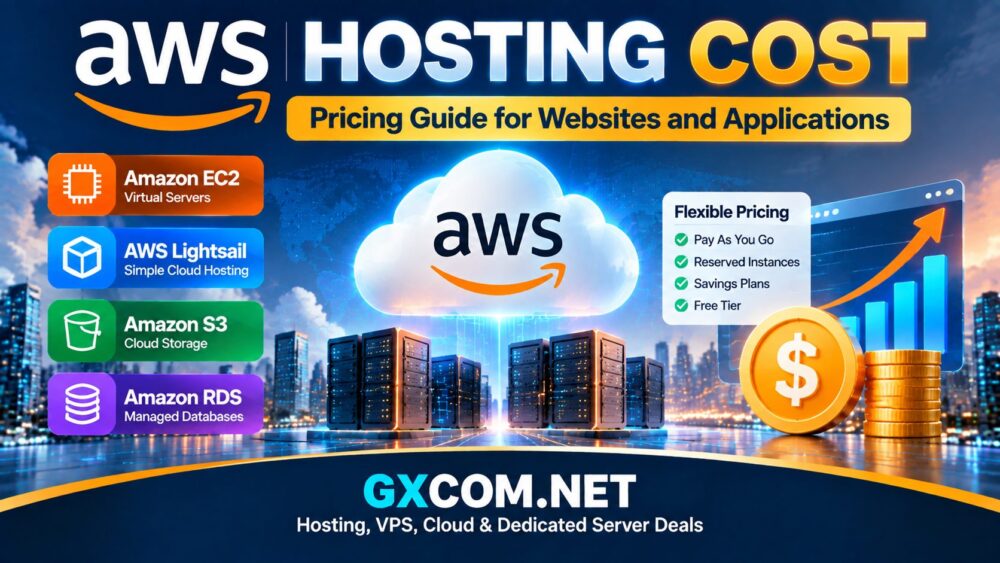
Understanding AWS hosting cost is essential for businesses, developers, and website owners planning to use Amazon Web Services infrastructure. Unlike traditional hosting providers with fixed monthly plans, AWS uses a flexible pay-as-you-go pricing model based on actual resource usage.
The total cost of AWS Hosting depends on factors such as server resources, storage, bandwidth, database services, and additional cloud features. A small website may only require a simple AWS Lightsail plan, while large applications may need advanced Amazon EC2 infrastructure.
This AWS Hosting Cost guide explains AWS pricing, common services, estimated expenses, and ways to optimize cloud spending for websites and applications.
What Determines AWS Hosting Cost?
AWS does not charge a single fixed hosting fee. Instead, users pay for individual cloud resources based on consumption.
The main factors affecting AWS hosting costs include:
- Compute resources
- Storage requirements
- Database usage
- Network traffic
- Server location
- Additional AWS services
AWS Hosting Pricing Model Explained
AWS provides several pricing models designed for different workloads and business needs.
Pay-As-You-Go Pricing
The pay-as-you-go model allows users to pay only for the resources they consume. This approach provides flexibility for projects with changing workloads.
Reserved Instances
Reserved pricing allows businesses to commit to AWS resources for longer periods in exchange for discounted rates.
Savings Plans
AWS Savings Plans provide lower pricing for customers who commit to consistent usage over a specific period.
AWS EC2 Hosting Cost
Amazon EC2 is one of the most commonly used AWS hosting services. It provides virtual servers that can run websites, applications, APIs, and databases.
EC2 pricing depends on:
- Instance type
- CPU and memory resources
- Operating system
- Region
- Usage duration
Small websites may use entry-level EC2 instances, while larger applications may require high-performance computing resources.
AWS Lightsail Hosting Cost
AWS Lightsail is designed for users who want a simpler cloud hosting experience with predictable pricing.
It is suitable for:
- Small business websites
- WordPress websites
- Development projects
- Simple applications
Compared with Amazon EC2, Lightsail provides easier management and simplified monthly pricing, making it more accessible for beginners.
AWS Storage Pricing
Storage is another important part of AWS hosting costs.
Common AWS storage services include:
- Amazon S3 object storage
- EBS block storage for EC2
- Backup storage solutions
Storage costs depend on capacity, access frequency, and data transfer requirements.
AWS Database Hosting Cost
Many websites and applications require managed databases. AWS provides database services such as Amazon RDS and DynamoDB.
Database pricing depends on:
- Database engine
- Instance size
- Storage amount
- Backup requirements
- Traffic volume
Estimated AWS Hosting Costs for Different Projects
| Project Type | Estimated Monthly Cost | Recommended AWS Service |
|---|---|---|
| Small Website | Low monthly cost | AWS Lightsail |
| Business Website | Moderate monthly cost | EC2 + Storage |
| Ecommerce Website | Higher depending on traffic | EC2 + RDS |
| Web Application | Variable based on usage | EC2 + Managed Services |
AWS Hosting Cost vs Traditional Hosting
| Feature | AWS Hosting | Traditional Hosting |
|---|---|---|
| Pricing | Usage-based billing | Fixed monthly plans |
| Scalability | Highly flexible | Limited upgrades |
| Control | Advanced customization | Simple management |
| Resources | Cloud infrastructure | Shared or dedicated servers |
How to Reduce AWS Hosting Costs
1. Choose the Right Instance Type
Selecting unnecessary high-performance resources can increase costs. Choose instance types based on actual workload requirements.
2. Monitor Cloud Usage
AWS provides monitoring tools that help identify unused resources and optimize spending.
3. Use Auto Scaling
Auto scaling allows applications to automatically adjust resources according to demand, reducing unnecessary expenses.
4. Consider Managed Cloud Alternatives
Businesses without dedicated technical teams may prefer managed cloud solutions that simplify infrastructure management.
You can compare business-focused options through our guide to
Managed Cloud Hosting for Small Businesses.
AWS Hosting Cost vs Other Cloud Providers
AWS competes with other major cloud platforms including Google Cloud and Microsoft Azure.
Pricing differences depend on workload type, region, discounts, and required services.
Businesses comparing cloud platforms can also review our
AWS vs Google Cloud Comparison
guide.
Is AWS Hosting Worth the Cost?
AWS provides powerful infrastructure, global availability, and extensive cloud services. For businesses requiring flexibility and scalability, AWS can provide strong long-term value.
However, AWS requires careful cost management because complex configurations and unused resources can increase monthly expenses.
Final Thoughts
AWS Hosting Cost varies significantly depending on website size, application requirements, and selected services.
Small projects may use affordable AWS Lightsail plans, while growing businesses can take advantage of EC2, databases, and advanced cloud services.
Before choosing AWS, evaluate your technical requirements, expected traffic, and budget. Proper planning and cost optimization can help you benefit from AWS cloud infrastructure while maintaining predictable expenses.