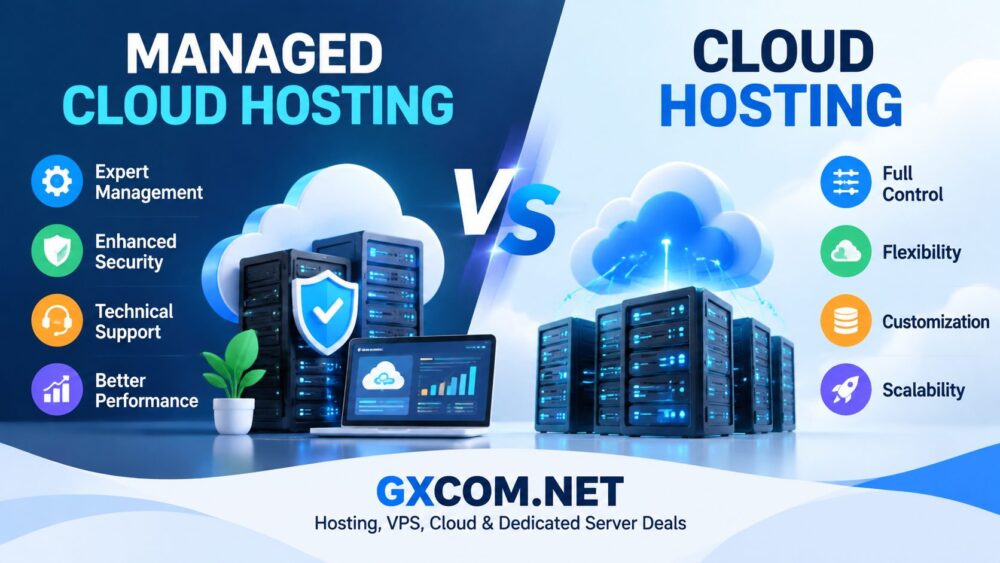
Small businesses need reliable hosting solutions that can deliver strong performance, security, and scalability without requiring a dedicated IT team.
Traditional hosting may become limited as websites grow, while unmanaged cloud servers often require advanced technical knowledge.
Managed Cloud Hosting provides a balance between cloud infrastructure and professional server management. Hosting providers handle important tasks such as server configuration, security updates, monitoring, backups, and technical support, allowing business owners to focus on growth.
In this guide, we compare the key features businesses should look for when choosing the Best Managed Cloud Hosting Providers and explain how managed cloud solutions can support small business websites, ecommerce stores, and online applications.
What Is Managed Cloud Hosting?
Managed Cloud Hosting combines cloud computing resources with professional management services. Unlike traditional cloud hosting where users are responsible for server administration, managed solutions include expert assistance from the hosting provider.
A managed cloud hosting provider typically handles:
- Cloud server setup and configuration
- Operating system updates
- Security monitoring
- Performance optimization
- Automated backups
- Technical troubleshooting
- Resource scaling
For small businesses without experienced system administrators, managed cloud hosting reduces complexity while providing enterprise-level infrastructure.
Why Small Businesses Need Managed Cloud Hosting
Small businesses often face challenges when managing online platforms. Website downtime, slow loading speeds, security issues, and server maintenance can affect customer experience and revenue.
Managed cloud hosting solves these problems by providing:
- Better Reliability: Cloud infrastructure reduces dependence on a single server.
- Professional Management: Experts handle technical operations.
- Improved Security: Regular updates and monitoring help protect websites.
- Easy Scaling: Resources can grow as traffic increases.
- Time Savings: Business owners can focus on operations instead of server maintenance.
Key Features to Look for in Managed Cloud Hosting Providers
1. Performance and Scalability
A good managed cloud hosting provider should offer flexible resources, including CPU, RAM, storage, and bandwidth options. This allows small businesses to handle traffic growth without migrating to a completely new platform.
Businesses that need flexible cloud infrastructure can also explore
Cloud Hosting Solutions
for different website and application requirements.
2. Security Protection
Security is one of the most important factors for small businesses. Managed cloud hosting should include features such as firewall protection, malware scanning, SSL support, and regular security updates.
Professional management helps reduce risks caused by incorrect server configuration or outdated software.
3. Technical Support
Reliable support is essential when running a business website. Managed cloud providers usually offer technical assistance for server issues, optimization, and troubleshooting.
This is especially valuable for businesses without internal developers or IT specialists.
4. Backup and Recovery Options
Data loss can seriously impact small businesses. A quality managed cloud hosting service should provide automated backups and recovery solutions to protect important website data.
Best Managed Cloud Hosting Providers for Small Businesses
The ideal provider depends on your business size, technical requirements, budget, and growth plans. The following providers are commonly considered by businesses looking for managed cloud infrastructure.
Cloudways
Cloudways focuses on simplified managed cloud hosting by allowing users to deploy websites on major cloud platforms while receiving management services.
It is popular among small businesses, agencies, and ecommerce websites that need cloud performance without managing servers directly.
SiteGround Cloud
SiteGround provides managed cloud hosting with performance optimization, security tools, and expert support. It is designed for businesses that need reliable hosting with less technical maintenance.
Kinsta
Kinsta offers managed cloud hosting built on Google Cloud infrastructure. It focuses on performance, security, and website management for businesses that require premium hosting services.
DigitalOcean Managed Solutions
DigitalOcean provides cloud infrastructure popular among developers and growing companies. Businesses can combine its cloud platform with managed services for easier operation.
You can also compare infrastructure options through our guide to
Best Cloud Hosting Providers.
Managed Cloud Hosting vs Traditional Hosting for Small Businesses
| Feature | Managed Cloud Hosting | Traditional Hosting |
|---|---|---|
| Performance | High scalability and flexible resources | Limited by shared infrastructure |
| Management | Provider handles technical tasks | User handles more maintenance |
| Security | Professional monitoring available | Usually requires manual configuration |
| Growth | Easy resource upgrades | May require migration |
| Cost | Higher but includes management | Lower initial cost |
How Much Does Managed Cloud Hosting Cost?
Managed cloud hosting prices vary depending on resources, provider services, and support levels.
Small businesses usually choose plans based on:
- Website traffic
- Storage requirements
- Application complexity
- Security needs
- Expected future growth
Although managed cloud hosting costs more than unmanaged alternatives, the saved time and reduced maintenance workload can provide better long-term value.
Managed Cloud Hosting vs Cloud VPS Hosting
Some small businesses also compare managed cloud hosting with cloud VPS solutions. Cloud VPS provides more control and customization, while managed cloud hosting focuses on convenience and professional support.
For businesses that need more control over server resources, our
Cloud VPS Hosting
guide provides additional information.
How to Choose the Right Managed Cloud Hosting Provider
Before selecting a provider, consider these factors:
- Business website requirements
- Monthly budget
- Expected traffic growth
- Support quality
- Security features
- Backup options
The right hosting solution should provide enough performance today while supporting future business expansion.
Final Thoughts
Managed Cloud Hosting is an effective solution for small businesses that want reliable cloud infrastructure without dealing with complex server management.
By choosing a provider with strong performance, security, support, and scalability, businesses can build a stable online foundation and focus on attracting customers instead of managing servers.