


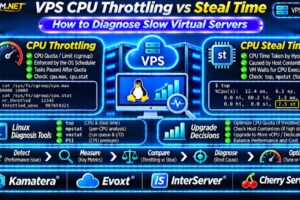
VPS CPU Throttling vs Steal Time: How to Diagnose Slow Virtual Servers
VPS CPU throttling vs steal time is an important distinction when a virtual server becomes slow despite apparently reasonable CPU utilization. Both can delay application execution, but they originate from different resource-control mechanisms. CPU throttling…
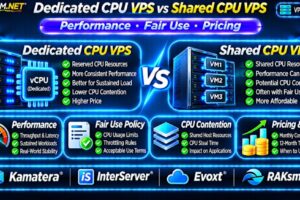
Dedicated CPU VPS vs Shared CPU VPS: Performance, Fair Use and Pricing
Choosing a dedicated CPU VPS vs shared CPU VPS affects application performance, server responsiveness, and monthly hosting costs. Shared CPU plans are often attractive for websites with occasional traffic spikes, while dedicated CPU options may…

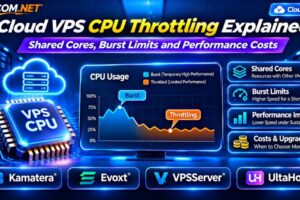
Cloud VPS CPU Throttling Explained: Shared Cores, Burst Limits and Performance Costs
Cloud VPS CPU throttling can explain why a virtual server performs well during short tasks but slows down under sustained workloads. A VPS advertised with four vCPUs does not necessarily provide four dedicated physical CPU…
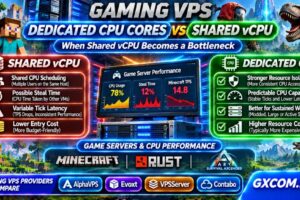
Gaming VPS with Dedicated CPU Cores: When Shared vCPU Becomes a Bottleneck
A gaming VPS with dedicated CPU cores can improve performance consistency when shared virtual CPUs become overloaded. However, dedicated resources are not automatically necessary for every Minecraft, Rust, or ARK server. The right choice depends…
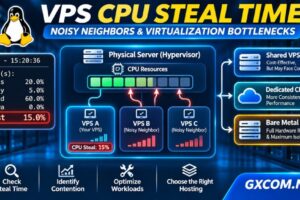
VPS CPU Steal Time Explained: Detect Noisy Neighbors and Virtualization Bottlenecks
VPS CPU steal time is an important performance metric when a virtual private server feels slow despite having available CPU resources. Applications may respond inconsistently, database queries may take longer, and website latency may increase…


AlphaVPS Review for Game Servers: CPU, Control and Hosting Costs
AlphaVPS offers VPS and dedicated infrastructure for administrators who want to build and manage their own game servers. Its Ryzen-powered products emphasize fast processors, NVMe storage, and full root access. However, choosing infrastructure for Minecraft,…
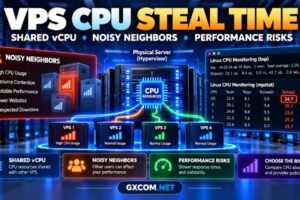
VPS CPU Steal Time Explained: Shared vCPU, Noisy Neighbors and Performance Risks
VPS CPU steal time can explain why a virtual private server feels slow even when its advertised CPU specifications appear sufficient. A VPS with four or eight virtual CPU cores may still experience inconsistent performance…

Best VPS for SaaS Applications: CPU Isolation, Scaling and Reliability
Choosing the best VPS for SaaS applications requires more than comparing CPU cores, RAM, and advertised monthly prices. A software-as-a-service platform must deliver predictable performance as customer activity grows, while maintaining reliable access to application…


VPS Deals with Dedicated CPU Cores: Isolation, Fair Use and Pricing
Finding the best VPS deals with dedicated CPU cores requires more than comparing vCPU counts. A virtual server advertising eight cores may perform differently from a four-core plan with guaranteed CPU resources, especially during sustained…

Gaming VPS CPU Steal and Shared Resources: Performance Risks Explained
A gaming VPS can advertise multiple vCPUs, generous RAM, and NVMe storage yet still struggle with unpredictable game server lag. One possible explanation is gaming VPS CPU steal, a virtualization metric that reveals when a…
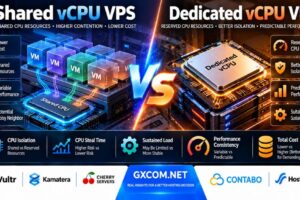
Shared vCPU vs Dedicated vCPU VPS: Performance Isolation, CPU Limits and Real Costs
Two VPS plans can advertise the same number of virtual CPUs and deliver very different performance under sustained load. A 4-vCPU server might handle occasional traffic spikes comfortably but struggle with continuous background processing. Another…

Contabo VPS Review: CPU Performance, NVMe Storage and Resource Limits
This Contabo VPS review examines CPU performance, NVMe storage, shared resource limitations, network policies, and long-term hosting value. Contabo is widely considered by budget-conscious VPS buyers because its plans offer substantial RAM, storage, and virtual…

Cherry Servers Cloud VPS Review: Compute Options, Networking and Pricing
This Cherry Servers Cloud VPS review examines the provider’s virtual server options, shared versus dedicated computing resources, network capabilities, pricing structure, and practical limitations. We also compare Cherry Servers with other cloud VPS providers to…