Amazon Web Services (AWS) is one of the world's largest cloud computing platforms, providing infrastructure services for websites, applications, enterprises, and developers. With powerful computing resources, global data centers, and a wide range of cloud products, AWS has become a popular choice for businesses looking for scalable hosting solutions.
This AWS Hosting Review explores AWS features, pricing, performance, advantages, limitations, and alternatives to help you understand whether AWS is the right cloud hosting solution for your website or application.
Unlike traditional hosting providers, AWS provides flexible cloud infrastructure where users can customize computing resources based on their specific requirements.
What Is AWS Hosting?
AWS Hosting refers to using Amazon Web Services infrastructure to host websites, applications, databases, and online services. Instead of purchasing physical servers, businesses can rent cloud resources from AWS and scale them according to demand.
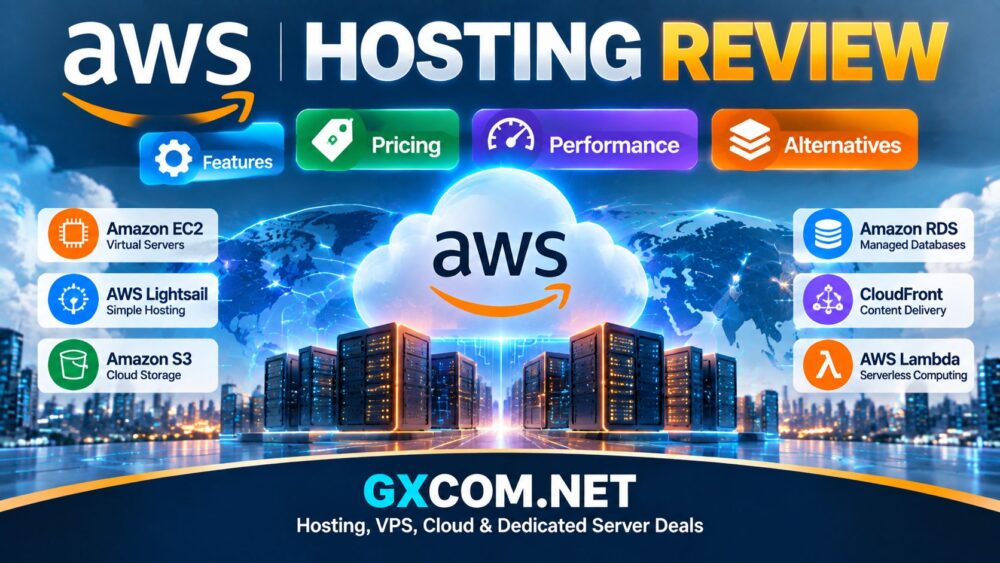
AWS provides hundreds of cloud services, including:
- Amazon EC2 for cloud servers
- AWS Lightsail for simplified hosting
- Amazon S3 for storage
- Amazon RDS for databases
- CloudFront for content delivery
- AWS Lambda for serverless applications
AWS Hosting Features
1. Global Cloud Infrastructure
AWS operates a large global infrastructure with data centers across multiple regions. Businesses can deploy applications closer to their users to improve performance and reduce latency.
2. Flexible Resource Scaling
One of the biggest advantages of AWS Hosting is scalability. Businesses can increase or decrease computing resources based on traffic requirements.
This makes AWS suitable for startups, growing businesses, and enterprise applications with changing workloads.
3. Advanced Security Features
AWS provides multiple security tools, including identity management, encryption, monitoring, and network protection.
Businesses can configure security settings based on their application requirements and compliance needs.
4. Developer-Friendly Environment
AWS supports many programming languages, frameworks, databases, and deployment tools. Developers can build, test, and deploy applications using flexible cloud infrastructure.
AWS Hosting Performance
AWS performance depends on the services, configurations, and resources selected by users.
Amazon EC2 allows users to choose different instance types optimized for:
- General computing
- Memory-intensive applications
- High-performance computing
- Machine learning workloads
With global infrastructure and powerful networking options, AWS can support websites and applications ranging from small projects to enterprise platforms.
AWS Hosting Pricing Explained
AWS pricing is flexible but can be complex because users pay based on resource consumption.
The main pricing factors include:
- Compute resources
- Storage usage
- Database services
- Data transfer
- Additional cloud services
AWS EC2 Pricing
Amazon EC2 pricing depends on instance type, operating system, region, and usage duration. Users can choose different payment options, including pay-as-you-go and reserved plans.
AWS Lightsail Pricing
AWS Lightsail provides a simpler cloud hosting experience with predictable monthly pricing. It is designed for small websites, blogs, and simple applications.
Businesses comparing different cloud platforms can also explore our guide to
Best Cloud Hosting Solutions.
AWS Hosting Pros and Cons
| Advantages | Limitations |
|---|---|
| Global infrastructure | Complex pricing structure |
| Highly scalable resources | Requires technical knowledge |
| Large service ecosystem | Advanced features can be difficult for beginners |
| Strong security options | Costs can increase without proper management |
Who Should Use AWS Hosting?
AWS is suitable for:
- Growing businesses
- Software companies
- SaaS platforms
- Developers
- Enterprise applications
- High-traffic websites
Small businesses that need simpler management may prefer managed cloud solutions instead of managing AWS infrastructure directly.
You can compare another business-focused approach through our guide to
Managed Cloud Hosting for Small Businesses.
AWS Hosting Alternatives
Although AWS is one of the largest cloud platforms, some users may prefer alternatives based on pricing, simplicity, or specific requirements.
Google Cloud Platform
Google Cloud provides powerful infrastructure with strong capabilities in data analytics, artificial intelligence, and modern application development.
Microsoft Azure
Azure is popular among enterprises that use Microsoft technologies and require hybrid cloud solutions.
DigitalOcean
DigitalOcean focuses on simplicity and developer-friendly cloud infrastructure, making it attractive for startups and smaller projects.
For users comparing broader cloud platforms, our
Best Cloud Hosting Providers
guide provides additional options.
AWS Hosting vs Traditional Hosting
| Feature | AWS Hosting | Traditional Hosting |
|---|---|---|
| Scalability | Flexible cloud resources | Limited server capacity |
| Infrastructure | Global cloud network | Single server or data center |
| Pricing | Usage-based pricing | Fixed plans |
| Control | Advanced customization | Limited customization |
Final Thoughts
AWS Hosting provides powerful cloud infrastructure for businesses, developers, and organizations that need flexibility, scalability, and advanced features.
However, AWS requires technical knowledge and careful cost management. Users who need maximum control may benefit from AWS, while those looking for simpler solutions may prefer managed cloud platforms or other cloud providers.
Before choosing AWS, evaluate your technical requirements, budget, application needs, and long-term growth plans to determine whether AWS is the right hosting solution for your project.