

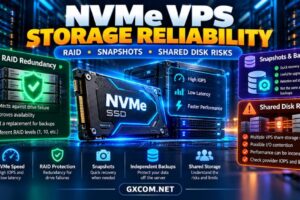
NVMe VPS Storage Reliability: RAID, Snapshots and Shared Disk Risks
NVMe storage can make a VPS feel faster, especially when running databases, WordPress websites, and applications with frequent disk operations. However, impressive storage speeds do not automatically mean your data is safe. NVMe VPS storage…
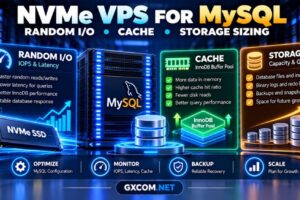
NVMe VPS for MySQL Databases: Random I/O, Cache and Storage Sizing
Choosing an NVMe VPS for MySQL databases involves more than selecting the fastest advertised storage technology. MySQL performance depends on random I/O latency, available RAM, InnoDB caching, CPU allocation, and the storage resources shared with…


Linux VPS for PostgreSQL: Memory, NVMe IOPS and Backup Requirements
Choosing a Linux VPS for PostgreSQL requires more than comparing CPU cores and advertised storage capacity. Database performance depends on available memory, query concurrency, random disk I/O, transaction logging, and reliable recovery procedures. A poorly…

Linux VPS for Docker Containers: CPU, RAM, Storage and Deployment Costs
Choosing a Linux VPS for Docker containers requires more than counting virtual CPU cores. Containers share the host operating system kernel, but applications still consume processor time, memory, disk space, and network resources. A small…
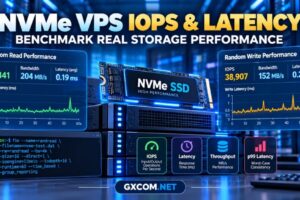
NVMe VPS IOPS and Latency: How to Benchmark Real Storage Performance
NVMe VPS IOPS and latency are critical indicators of storage performance, but an NVMe label alone does not guarantee a fast virtual private server. Two VPS plans with similar CPU, RAM, and NVMe capacity can…


Bacloud KVM VPS Review: CPU Allocation, NVMe Storage and Network Value
Choosing a virtual private server involves more than comparing CPU cores, RAM, and monthly prices. Two VPS plans with identical specifications can behave differently because of processor sharing, storage contention, network routing, and virtualization policies.…

AlphaVPS vs RackNerd: Budget KVM VPS, Resource Limits and Network Value
A cheap VPS can be excellent value until CPU contention, slow storage, or bandwidth restrictions begin affecting your applications. Two servers with similar advertised RAM and vCPU allocations may perform very differently under real workloads.…

UltaHost Review: Managed Hosting, VPS and Dedicated Server Options
Choosing a hosting provider becomes more complicated when one company offers shared hosting, managed VPS plans, virtual dedicated servers, and physical dedicated hardware. Each product promises greater control or performance, but the differences in administration,…


RackNerd Budget VPS Review: Resource Limits, Network Performance and Upgrade Costs
Budget VPS hosting can look remarkably affordable when a provider offers multiple CPU cores, generous bandwidth, and an annual subscription costing less than many monthly hosting plans. But advertised resources do not always reveal how…

KnownHost Managed VPS Review: Server Administration, Support and Scalability
Moving a growing website from shared hosting to a virtual private server can improve resource control, but it also creates new responsibilities. Operating system updates, security hardening, server configuration, and troubleshooting all require attention. For…

AlphaVPS Linux VPS Review: CPU Resources, NVMe Storage and Network Value
Choosing an affordable Linux VPS involves more than comparing virtual CPU cores, memory, and monthly prices. Processor architecture, shared-resource policies, storage performance, and network routing can determine whether a server performs reliably under real workloads.…

Gaming VPS for Minecraft, Rust and ARK: How to Match Specs to Each Game
Choosing a gaming VPS is not simply a matter of buying the plan with the most CPU cores or the largest memory allocation. Minecraft, Rust, and ARK place different demands on server hardware, and a…

Gaming VPS Deals: How to Compare CPU, RAM and Total Costs
Gaming VPS deals can look attractive when a provider advertises multiple CPU cores, generous RAM, and NVMe storage at a discounted rate. However, the cheapest advertised plan is not necessarily the best value for running…
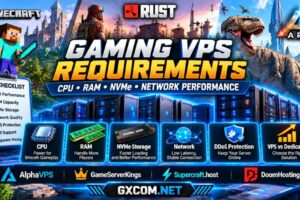
Gaming VPS Requirements: CPU, RAM, NVMe and Network Performance
Choosing a virtual private server for multiplayer gaming requires more than checking how many vCPUs and gigabytes of RAM appear on a hosting plan. A VPS with impressive specifications can still struggle with Minecraft world…

Best Gaming VPS Hosting: CPU, NVMe and Low-Latency Servers Compared
Choosing the best gaming VPS hosting requires more than comparing virtual CPU counts or advertised network speeds. Multiplayer servers need responsive processors, sufficient memory, reliable storage, and stable connections. A gaming VPS gives administrators control…