


WordPress Hosting vs WooCommerce Hosting: Database Load, Checkout Performance and Costs
A WordPress website can feel fast until it starts processing real orders. Product browsing, customer logins, inventory updates, and payment requests create workloads that ordinary page caching cannot eliminate. That is why choosing the right…
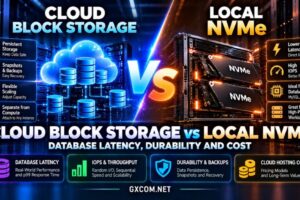
Cloud Block Storage vs Local NVMe: Database Latency, Durability and Cost
Choosing storage for a production database involves more than comparing advertised IOPS. A fast disk may deliver excellent query latency but complicate recovery after a server failure. A persistent cloud volume may simplify infrastructure changes…

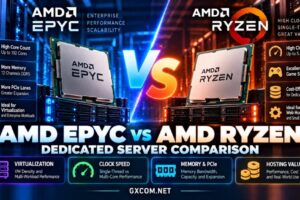
AMD EPYC vs AMD Ryzen Dedicated Server: Virtualization, Clock Speed and Hosting Value
Should you rent an AMD EPYC server with more cores and memory channels, or choose a high-frequency AMD Ryzen dedicated server at a potentially lower cost? The answer depends on whether your applications need faster…
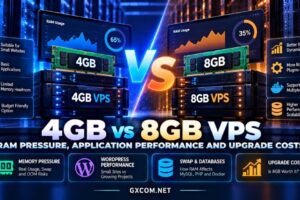
4GB vs 8GB VPS: RAM Pressure, Application Performance and Upgrade Costs
Should you buy a 4GB VPS or spend more on 8GB of RAM? For WordPress websites, online stores, Docker applications, and small databases, the answer depends on memory pressure rather than advertised visitor numbers. This…

NVIDIA L4 vs L40S: Video Inference, GPU Memory and Cloud Hosting Costs
Choosing between the NVIDIA L4 and L40S is not simply a matter of buying more GPU performance. The right accelerator depends on model size, video processing requirements, inference concurrency, and the actual cost of completing…

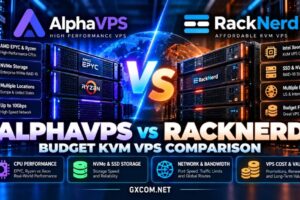
AlphaVPS vs RackNerd: Budget KVM VPS, Resource Limits and Network Value
A cheap VPS can be excellent value until CPU contention, slow storage, or bandwidth restrictions begin affecting your applications. Two servers with similar advertised RAM and vCPU allocations may perform very differently under real workloads.…
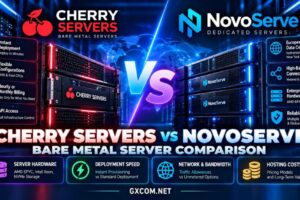
Cherry Servers vs NovoServe: Bare Metal Hardware, Deployment and Network Costs
Choosing a bare metal provider involves more than comparing CPU cores and monthly prices. Deployment time, network capacity, hardware flexibility, and long-term operating costs can determine whether a dedicated server delivers real business value. This…

HostArmada vs ChemiCloud: WordPress Speed, Backups and Renewal Value
Choosing between two WordPress hosting providers becomes difficult when both advertise fast storage, free migrations, daily backups, and heavily discounted introductory plans. The differences that matter most often appear after your website grows or your…


RunPod vs Vast.ai: GPU Rental Reliability, Deployment Flexibility and AI Costs
Renting a GPU is no longer simply about finding the lowest hourly rate. For AI developers, unreliable instances, storage charges, slow deployments, and interrupted training jobs can make an apparently inexpensive GPU surprisingly costly. In…

10Gbps vs 1Gbps Dedicated Server: Bandwidth, Port Speed and Real Network Performance
A dedicated server advertised with a 10Gbps network port sounds significantly faster than a server with a 1Gbps connection. In theory, the port supports ten times the line rate. But does that translate into ten…
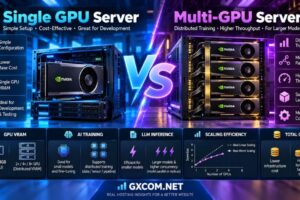
Single GPU vs Multi-GPU Server: AI Training, Inference Scaling and Infrastructure Costs
Adding more GPUs sounds like an obvious way to accelerate artificial intelligence workloads. If one GPU can train or serve a model, four GPUs should be four times faster—or so the assumption goes. Real-world AI…
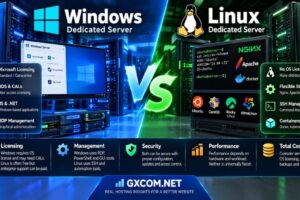
Windows vs Linux Dedicated Server: Licensing, Management and Total Cost Compared
Choosing between a Windows and Linux dedicated server is not simply a matter of personal preference. The operating system affects application compatibility, licensing obligations, server administration, security workflows, and the total cost of running a…
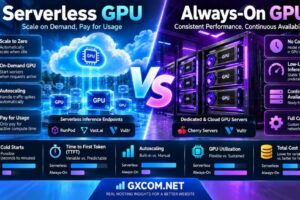
Serverless GPU vs Always-On GPU: Cold Starts, LLM Inference Latency and Cost
Deploying a large language model is no longer just a question of choosing the right GPU. The way that GPU is provisioned, kept available, scaled, and billed can have an equally important impact on application…
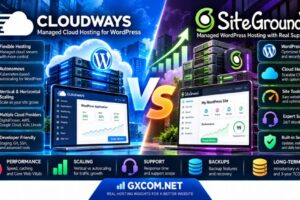
Cloudways vs SiteGround: Managed WordPress Scaling, Support and Long-Term Costs
Choosing between Cloudways and SiteGround can be straightforward for a small WordPress website, but the decision becomes more complicated as traffic, WooCommerce orders, plugin activity, and hosting costs increase. Both providers offer managed WordPress hosting,…
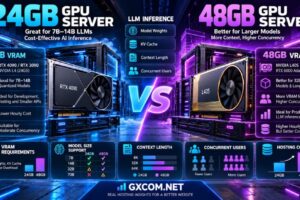
24GB vs 48GB GPU Server: VRAM Requirements, LLM Inference and Hosting Costs
Choosing between a 24GB and 48GB GPU server can determine whether your large language model runs comfortably, struggles with memory limits, or becomes unnecessarily expensive to host. However, the decision is more complicated than comparing…