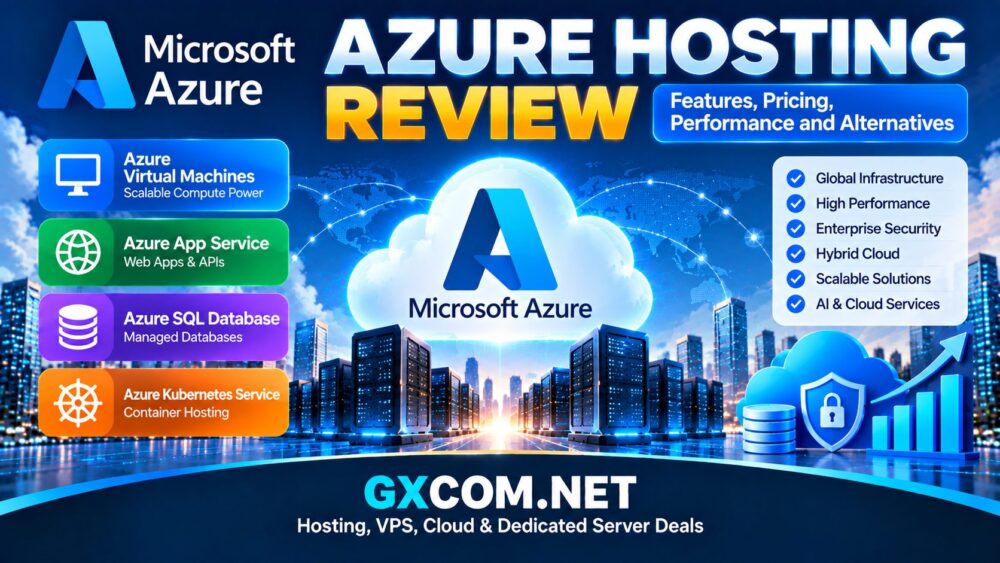
Microsoft Azure and Amazon Web Services (AWS) are two of the world's largest cloud computing platforms. Both provide virtual servers, storage, databases, networking, artificial intelligence, security tools, and managed services for businesses ranging from startups to global enterprises.
The Azure vs AWS decision is not simply about choosing the larger cloud provider. The right platform depends on your existing technology stack, workload requirements, pricing model, technical expertise, and long-term cloud strategy.
This comparison examines Azure and AWS across infrastructure, performance, pricing, security, hybrid cloud, artificial intelligence, and business use cases to help you understand which platform better matches your requirements.

What Is Microsoft Azure?
Microsoft Azure is a cloud computing platform offering infrastructure and managed services for websites, applications, databases, enterprise systems, analytics, artificial intelligence, and hybrid cloud environments.
Important Azure services include:
- Azure Virtual Machines
- Azure App Service
- Azure Blob Storage
- Azure SQL Database
- Azure Kubernetes Service
- Azure Functions
Azure is particularly relevant to businesses already using Microsoft technologies such as Windows Server, SQL Server, .NET, and Microsoft identity services.
For a deeper look at the platform, see our
Azure Hosting Review.
What Is Amazon Web Services?
Amazon Web Services is a broad cloud computing platform providing infrastructure and managed services for websites, applications, databases, storage, analytics, artificial intelligence, and enterprise workloads.
Popular AWS services include:
- Amazon EC2
- Amazon S3
- Amazon RDS
- AWS Lambda
- Amazon EKS
- Amazon CloudFront
AWS provides a large service ecosystem that can support everything from small development environments to complex global infrastructure.
Our
AWS Hosting Review
covers its hosting capabilities in greater detail.
Azure vs AWS: Key Differences
| Feature | Microsoft Azure | AWS |
|---|---|---|
| Core Compute | Azure Virtual Machines | Amazon EC2 |
| Object Storage | Azure Blob Storage | Amazon S3 |
| Managed SQL | Azure SQL Database | Amazon RDS |
| Serverless | Azure Functions | AWS Lambda |
| Kubernetes | Azure Kubernetes Service | Amazon EKS |
| Enterprise Focus | Strong Microsoft and hybrid integration | Broad cloud service ecosystem |
Azure vs AWS Performance
Both Azure and AWS provide multiple compute families designed for different workload requirements. Businesses can choose configurations optimized for general computing, memory-intensive workloads, storage, databases, development, and high-performance applications.
Actual performance depends on the selected instance type, region, storage architecture, network configuration, operating system, and application design.
Rather than assuming one platform will always be faster, businesses should benchmark the specific workload and region they intend to deploy.
Azure vs AWS Pricing
Both Azure and AWS primarily use consumption-based cloud pricing. Customers can start with flexible usage-based resources and use commitment-based programs when workloads become more predictable.
Azure Pricing
Azure provides pay-as-you-go pricing along with options such as reservations and Azure savings plan for compute. Businesses with eligible existing Microsoft licenses may also benefit from Azure Hybrid Benefit.
This can be particularly relevant for organizations migrating Windows Server or SQL Server workloads to the cloud.
AWS Pricing
AWS also provides pay-as-you-go pricing and commitment-based Savings Plans. Costs vary according to service, region, resources, storage, network traffic, and workload duration.
For a closer look at AWS expenses, see our
AWS Hosting Cost
guide.
Azure vs AWS for Windows Workloads
Azure has an important advantage for organizations deeply invested in Microsoft's software ecosystem.
Businesses using Windows Server, SQL Server, .NET applications, and Microsoft identity technologies may find Azure's integrations useful when migrating or extending existing infrastructure.
AWS also supports Windows workloads extensively, so the decision should consider licensing, architecture, administration experience, and total cost rather than operating system support alone.
Azure vs AWS for Linux and Open-Source Applications
Both platforms support Linux virtual machines, containers, Kubernetes, databases, and open-source development technologies.
For Linux-based applications, the decision often depends more on the required services, pricing, regional availability, automation tools, and existing engineering expertise than on basic operating system compatibility.
Azure vs AWS for Hybrid Cloud
Hybrid cloud is an important part of Azure's enterprise strategy. Microsoft provides technologies designed to connect Azure services with on-premises infrastructure and other environments.
This can appeal to organizations that cannot or do not want to move every workload entirely into the public cloud.
AWS also provides hybrid and edge technologies, making both platforms viable for organizations operating infrastructure across multiple environments.
Azure vs AWS Security
Both platforms provide extensive security capabilities, including identity management, encryption, network controls, monitoring, logging, and compliance services.
However, using a major cloud platform does not automatically make an application secure. Customers remain responsible for configuring many aspects of their workloads correctly.
Businesses should evaluate security based on their specific architecture, compliance obligations, access policies, and operational processes.
Azure vs AWS for AI and Machine Learning
Artificial intelligence has become an increasingly important part of both cloud ecosystems.
Azure provides AI services integrated with Microsoft's broader cloud and enterprise ecosystem, while AWS offers a wide range of machine learning, generative AI, and AI infrastructure services.
Organizations building AI applications should compare model availability, GPU infrastructure, data services, development tools, regional availability, and pricing for their specific workloads.
Azure vs AWS for Small Businesses
Small businesses can use either platform, but hyperscale cloud infrastructure may introduce more complexity than a basic website requires.
A company running a simple WordPress site may find conventional or managed hosting easier to operate, while a growing SaaS platform may benefit significantly from Azure or AWS infrastructure.
Businesses looking for simpler infrastructure can compare our
Managed Cloud Hosting for Small Businesses
guide.
Azure vs AWS for Enterprises
Large organizations often evaluate cloud platforms differently from small website owners. Existing software licenses, compliance requirements, data center infrastructure, employee expertise, procurement agreements, and migration strategies can significantly influence the decision.
Azure can be attractive to organizations with substantial Microsoft infrastructure, while AWS offers an extensive cloud ecosystem and broad service selection.
Some enterprises also use more than one cloud provider rather than committing every workload to a single platform.
Azure vs AWS: Pros and Cons
| Platform | Advantages | Considerations |
|---|---|---|
| Azure | Microsoft integration, hybrid cloud capabilities, enterprise services | Complex pricing and architecture can require expertise |
| AWS | Large service ecosystem, flexible infrastructure, broad workload support | Large service catalog and pricing structure can be complex |
Azure vs AWS: Which Should Your Business Choose?
Azure may be particularly suitable when your organization already relies heavily on Microsoft technologies, requires hybrid infrastructure, or wants close integration with existing Windows and SQL Server environments.
AWS may be attractive when your organization wants access to a broad cloud service ecosystem, requires extensive infrastructure options, or already has strong AWS engineering expertise.
For businesses without a strong dependency on either ecosystem, compare the actual architecture required by your application and calculate the total cost of compute, storage, databases, bandwidth, support, and administration.
What About Google Cloud?
Azure and AWS are not the only major options. Google Cloud is another hyperscale platform with strong capabilities in Kubernetes, analytics, artificial intelligence, and cloud-native development.
You can compare those platforms in our
Google Cloud vs AWS Comparison.
Final Thoughts
Azure and AWS are both capable of supporting demanding websites, applications, databases, and enterprise infrastructure. The meaningful differences appear when you consider the technologies your business already uses and the services your workload actually requires.
Azure offers particularly strong integration with Microsoft's enterprise ecosystem and hybrid environments. AWS provides a broad cloud ecosystem with extensive infrastructure and managed services.
Before choosing either platform, build a workload-specific comparison covering performance, regions, licensing, cloud services, security requirements, migration costs, technical expertise, and long-term pricing. That provides a more useful answer than choosing a provider based on brand size alone.