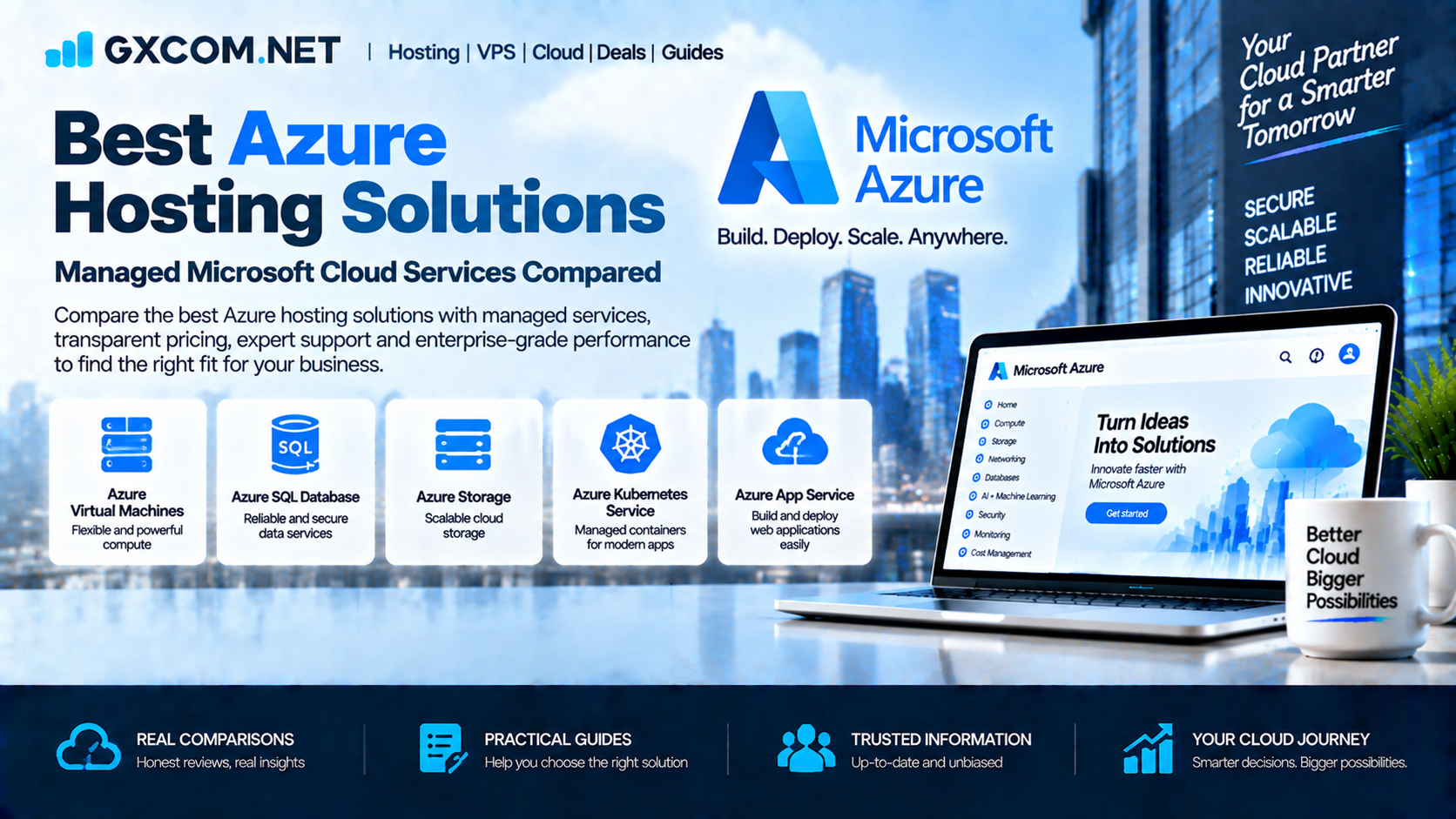
Microsoft Azure is one of the world's largest cloud computing platforms, providing infrastructure and managed services for websites, applications, databases, artificial intelligence, and enterprise workloads. Its close integration with Microsoft technologies also makes Azure particularly relevant to businesses already using Windows Server, Microsoft 365, SQL Server, and other Microsoft products.
This Azure Hosting Review examines Azure's hosting features, pricing model, performance, advantages, limitations, and major alternatives. Whether you need a virtual machine, managed application platform, or scalable enterprise infrastructure, understanding how Azure works can help determine whether it fits your project.
Unlike conventional web hosting, Azure is a broad cloud platform. Users can combine computing, storage, networking, databases, security, and managed services to create infrastructure around specific workload requirements.
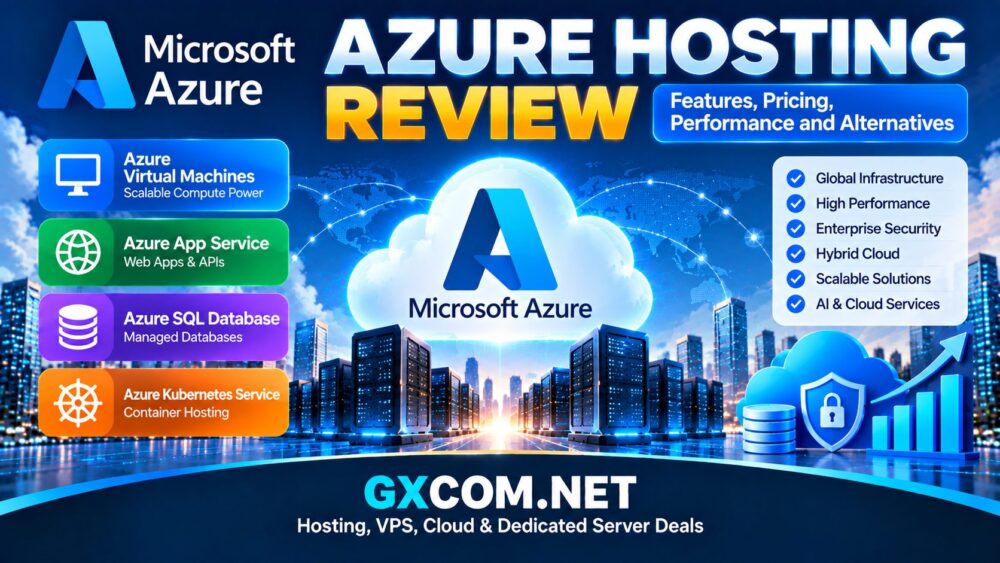
What Is Microsoft Azure Hosting?
Azure Hosting generally refers to running websites, applications, virtual servers, and other workloads on Microsoft's Azure cloud infrastructure.
Instead of purchasing physical servers, businesses can deploy resources in Azure data centers and increase or decrease capacity as their requirements change.
Important Azure services for hosting include:
- Azure Virtual Machines
- Azure App Service
- Azure Blob Storage
- Azure SQL Database
- Azure Kubernetes Service
- Azure Functions
- Azure networking and load balancing services
Azure Hosting Features
1. Azure Virtual Machines
Azure Virtual Machines provide customizable cloud servers for Windows and Linux workloads. Businesses can select different combinations of processors, memory, storage, and operating systems according to application requirements.
Virtual machines are useful when users need greater control over the operating system and server environment than a managed hosting platform provides.
2. Azure App Service
Azure App Service provides a managed environment for hosting web applications and APIs without requiring users to manage every part of the underlying server infrastructure.
It can be useful for development teams that want to focus more on applications and less on routine server administration.
3. Storage and Database Services
Azure offers several storage and database technologies for different workloads. Azure Blob Storage can handle object-based data, while services such as Azure SQL Database provide managed database infrastructure.
These services allow businesses to build complete cloud environments without relying on a single virtual server for every component.
4. Windows and Microsoft Integration
Azure has a natural advantage for organizations already using Microsoft's technology ecosystem. Businesses running Windows Server, SQL Server, Microsoft Entra ID, .NET applications, and related technologies can integrate them with Azure services.
This can be particularly useful for enterprise environments combining existing infrastructure with cloud resources.
5. Hybrid Cloud Capabilities
Not every business wants to move all infrastructure into the public cloud. Azure provides technologies designed to connect cloud resources with on-premises and hybrid environments.
This makes Azure relevant to organizations modernizing existing infrastructure gradually rather than replacing everything at once.
Azure Hosting Performance
Azure provides multiple virtual machine families and infrastructure configurations designed for different workloads. Performance ultimately depends on the selected instance, storage, region, network architecture, and application configuration.
Azure can support workloads including:
- Business websites
- Ecommerce applications
- Enterprise software
- SaaS platforms
- Databases
- Development environments
- AI and data workloads
For businesses comparing Azure with a broader range of infrastructure options, our
Best Cloud Hosting Solutions
guide covers additional cloud hosting approaches.
Azure Hosting Pricing Explained
Azure does not have one universal hosting price. Costs depend on the individual resources and services included in the cloud environment.
Important pricing factors include:
- Virtual machine size
- CPU and memory resources
- Operating system
- Storage capacity and type
- Database resources
- Outbound data transfer
- Azure region
- Backup and additional services
This flexibility allows businesses to build infrastructure around their requirements, but it also means that estimating the complete workload is important before deployment.
Azure Virtual Machine Pricing
Azure Virtual Machine costs vary according to instance family, resource configuration, operating system, region, and usage model.
A lightweight development server requires substantially fewer resources than an enterprise database or high-traffic production application.
Businesses should compare the complete cost of compute, storage, network traffic, backups, and related services rather than looking only at the advertised virtual machine price.
Azure Hosting for Websites
Azure can host anything from relatively simple websites to complex enterprise web platforms.
A website can be deployed using Azure Virtual Machines when server-level control is required, while Azure App Service can provide a more managed approach for supported web applications.
For small websites with basic requirements, however, a hyperscale cloud platform may provide more infrastructure complexity than necessary. Simpler cloud or managed hosting may be easier to operate.
Azure Hosting for Applications
Application hosting is one of Azure's strongest use cases because developers can combine multiple services rather than relying entirely on one server.
A modern application architecture might use:
- Azure App Service or Virtual Machines for computing
- Azure SQL Database for data
- Blob Storage for objects and media
- Load balancing for traffic distribution
- Azure Functions for event-driven workloads
- Monitoring and security services
This modular architecture allows resources to evolve as an application grows.
Azure Security
Microsoft provides identity, network, encryption, monitoring, and security technologies across Azure. However, cloud security remains a shared responsibility.
Businesses still need to configure access controls, applications, operating systems, credentials, networks, and data protection appropriately for their workloads.
Organizations handling regulated or sensitive workloads should evaluate the exact Azure services and compliance requirements relevant to their industry rather than assuming every configuration provides the same level of protection.
Azure Hosting Pros and Cons
| Advantages | Limitations |
|---|---|
| Large cloud service ecosystem | Pricing can be difficult to estimate |
| Strong Microsoft integration | Many services require technical expertise |
| Windows and Linux support | Architecture can become complex |
| Strong enterprise and hybrid cloud capabilities | Small websites may not need its full capabilities |
| Flexible infrastructure | Poorly optimized resources can increase costs |
Who Should Consider Azure Hosting?
Azure can be particularly relevant for:
- Businesses using Microsoft technologies
- Enterprise applications
- .NET development teams
- Windows Server workloads
- Hybrid cloud environments
- SaaS applications
- Organizations requiring scalable infrastructure
Businesses without an internal infrastructure team may instead prefer a provider that handles more of the underlying cloud administration.
Our guide to
Managed Cloud Hosting for Small Businesses
explains how managed infrastructure differs from operating a cloud platform directly.
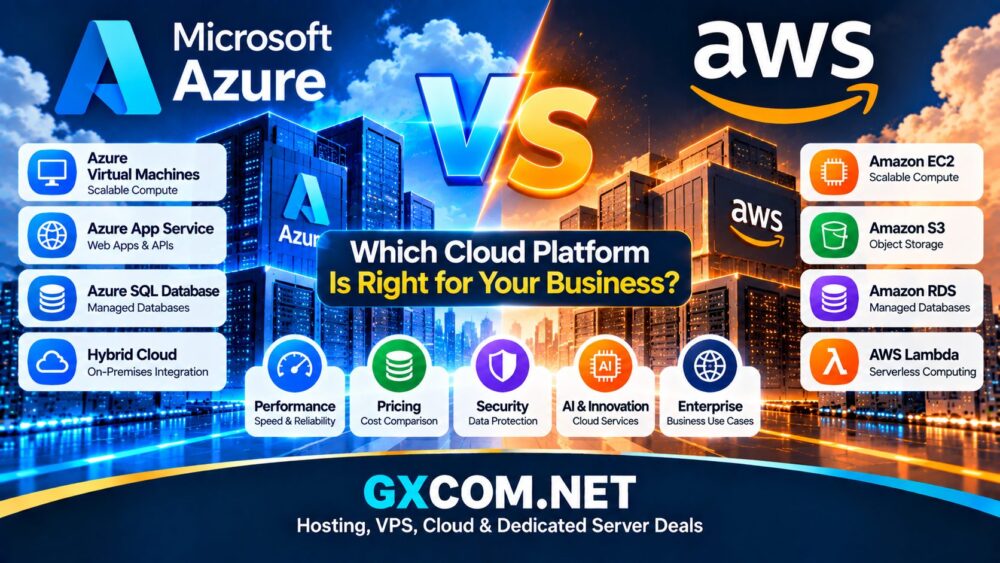
Azure vs AWS vs Google Cloud
Microsoft Azure, Amazon Web Services, and Google Cloud are all major cloud platforms, but their ecosystems and strengths differ.
| Area | Azure | AWS | Google Cloud |
|---|---|---|---|
| Enterprise Integration | Strong Microsoft ecosystem | Broad enterprise ecosystem | Strong cloud-native ecosystem |
| Compute | Azure Virtual Machines | Amazon EC2 | Compute Engine |
| Containers | Azure Kubernetes Service | Multiple container services | Google Kubernetes Engine |
| Data & AI | Broad Microsoft AI and data services | Large service portfolio | Strong analytics and AI ecosystem |
| Hybrid Cloud | Major platform focus | Available | Available |
If AWS and Google Cloud are also on your shortlist, see our
Google Cloud vs AWS Comparison
for a closer look at those two platforms.
Best Azure Alternatives
Amazon Web Services
AWS offers an extensive cloud ecosystem covering computing, storage, databases, networking, serverless infrastructure, AI, and many other services.
Google Cloud
Google Cloud is particularly notable for cloud-native development, Kubernetes, analytics, and artificial intelligence technologies.
DigitalOcean
DigitalOcean provides a more streamlined cloud experience aimed at developers, startups, and businesses that may not need the complexity of a hyperscale cloud platform.
Managed Cloud Hosting
Managed cloud services can be attractive to businesses that want cloud infrastructure without handling as much operating system maintenance, security administration, and server management internally.
For additional platforms, compare our
Best Cloud Hosting Providers.
Is Azure Hosting Worth It?
Azure can provide strong value when a business needs scalable infrastructure, Microsoft integration, enterprise services, or hybrid cloud capabilities.
It may be less suitable for users who simply want inexpensive, straightforward hosting with minimal administration. In those situations, a conventional VPS, managed cloud service, or simpler cloud provider may offer a more practical experience.
The right decision depends on the application architecture, technical expertise, expected traffic, existing technology stack, and total infrastructure budget.
Final Thoughts
Microsoft Azure is much more than a traditional hosting provider. It is a comprehensive cloud platform capable of supporting websites, applications, databases, enterprise infrastructure, and hybrid environments.
Its major strengths include flexible computing resources, Microsoft ecosystem integration, managed application services, and enterprise cloud capabilities. The tradeoff is complexity: pricing and infrastructure management can require more planning than conventional hosting.
Before choosing Azure, estimate the complete workload rather than evaluating only virtual machine prices. Compare compute, storage, databases, bandwidth, management requirements, and future scalability to determine whether Azure fits your project.