Choosing the right cloud platform is an important decision for businesses, developers, and organizations building modern websites and applications. Amazon Web Services (AWS) and Google Cloud Platform (GCP) are two of the world's leading cloud providers, offering powerful infrastructure, global data centers, and advanced cloud technologies.
The difference between AWS vs Google Cloud mainly comes down to ecosystem, pricing models, available services, developer tools, and specific business requirements. AWS provides a broader cloud service ecosystem, while Google Cloud is recognized for data analytics, artificial intelligence, and modern application development.
This guide compares AWS and Google Cloud across features, performance, pricing, security, and use cases to help you understand which cloud platform may better fit your project.
What Is AWS?
Amazon Web Services (AWS) is Amazon's cloud computing platform that provides infrastructure services for websites, applications, enterprises, and developers.
AWS offers hundreds of cloud services, including:
- Amazon EC2 cloud servers
- AWS Lightsail hosting
- Amazon S3 storage
- Amazon RDS databases
- CloudFront content delivery
- AWS Lambda serverless computing
Businesses use AWS for everything from small websites to large enterprise applications.
What Is Google Cloud?
Google Cloud Platform (GCP) is Google's cloud infrastructure service designed for businesses, developers, and organizations requiring scalable computing resources.
Google Cloud provides services including:
- Compute Engine virtual machines
- Cloud Storage
- Google Kubernetes Engine
- BigQuery analytics
- AI and machine learning tools
Google Cloud is particularly popular among companies working with data, artificial intelligence, and container-based applications.
AWS vs Google Cloud: Key Differences
| Feature | AWS | Google Cloud |
|---|---|---|
| Market Experience | Long-established cloud platform | Rapidly growing cloud provider |
| Services | Largest service ecosystem | Strong specialized services |
| AI & Data | Powerful AI services | Strong AI and analytics capabilities |
| Pricing | Flexible but complex | Often simpler pricing options |
| Enterprise Adoption | Widely used globally | Strong enterprise and developer adoption |
AWS vs Google Cloud Performance
Both AWS and Google Cloud provide high-performance infrastructure designed for demanding workloads.
AWS offers a large selection of computing instances through Amazon EC2, allowing businesses to choose resources optimized for different applications.
Google Cloud provides powerful infrastructure with high-speed networking and advanced data processing capabilities.
For websites and applications that require flexible cloud infrastructure, you can also explore our guide to
Best Cloud Hosting Solutions.
AWS vs Google Cloud Pricing Comparison
Cloud pricing depends on resources, usage patterns, location, and selected services. Both platforms use flexible pricing models.
AWS Pricing
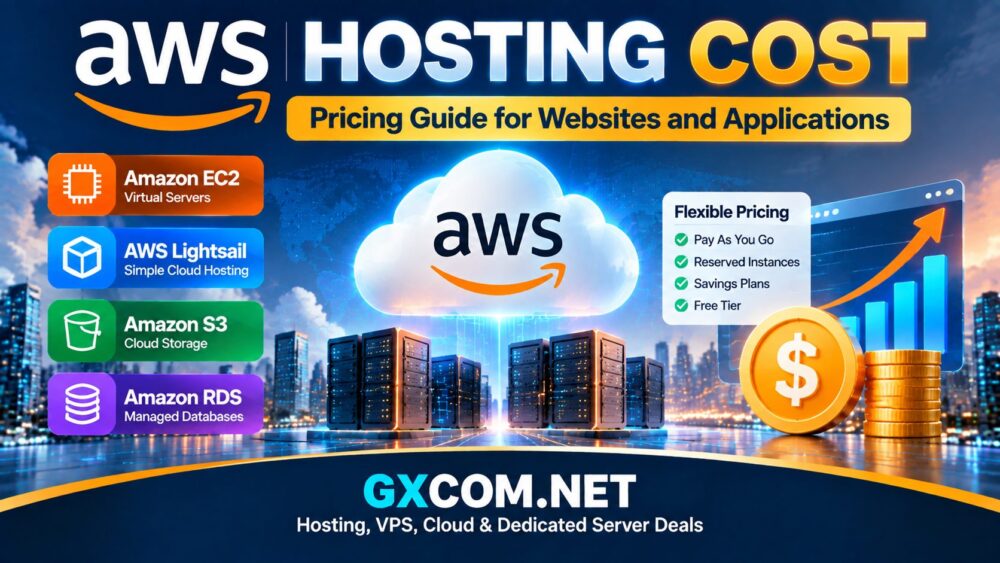
AWS follows a pay-as-you-go model. Users pay for computing resources, storage, databases, and additional services based on usage.
AWS provides options such as:
- On-demand pricing
- Reserved instances
- Savings plans
- Free tier services
Google Cloud Pricing
Google Cloud also provides usage-based pricing with additional discounts based on sustained usage and long-term commitments.
Google Cloud pricing features include:
- Pay-as-you-go billing
- Sustained use discounts
- Committed use discounts
- Free tier resources
AWS vs Google Cloud Security
Both AWS and Google Cloud provide enterprise-level security features, including encryption, identity management, monitoring, and compliance tools.
AWS provides extensive security services through tools such as IAM, GuardDuty, and security monitoring solutions.
Google Cloud integrates security technologies developed from Google's global infrastructure experience, including advanced encryption and identity controls.
AWS vs Google Cloud for Developers
Developers choose cloud platforms based on available tools, documentation, deployment options, and ecosystem support.
AWS Developer Advantages
- Large service ecosystem
- Extensive documentation
- Many third-party integrations
- Broad industry adoption
Google Cloud Developer Advantages
- Strong Kubernetes support
- Advanced AI tools
- Powerful data analytics services
- Modern application development features
AWS vs Google Cloud for Businesses
Businesses should choose a cloud platform based on their technical requirements, existing systems, budget, and future growth plans.
AWS May Be Suitable For:
- Large enterprises
- Complex cloud environments
- Businesses requiring many cloud services
- Applications with global users
Google Cloud May Be Suitable For:
- AI-focused applications
- Data analytics projects
- Cloud-native applications
- Companies using Kubernetes
AWS vs Google Cloud Alternatives
Although AWS and Google Cloud are leading platforms, businesses may also consider other cloud providers depending on their requirements.
Microsoft Azure is another major cloud platform widely used by enterprises, especially organizations that rely on Microsoft technologies.
For a broader comparison of cloud infrastructure options, see our
Best Cloud Hosting Providers
guide.
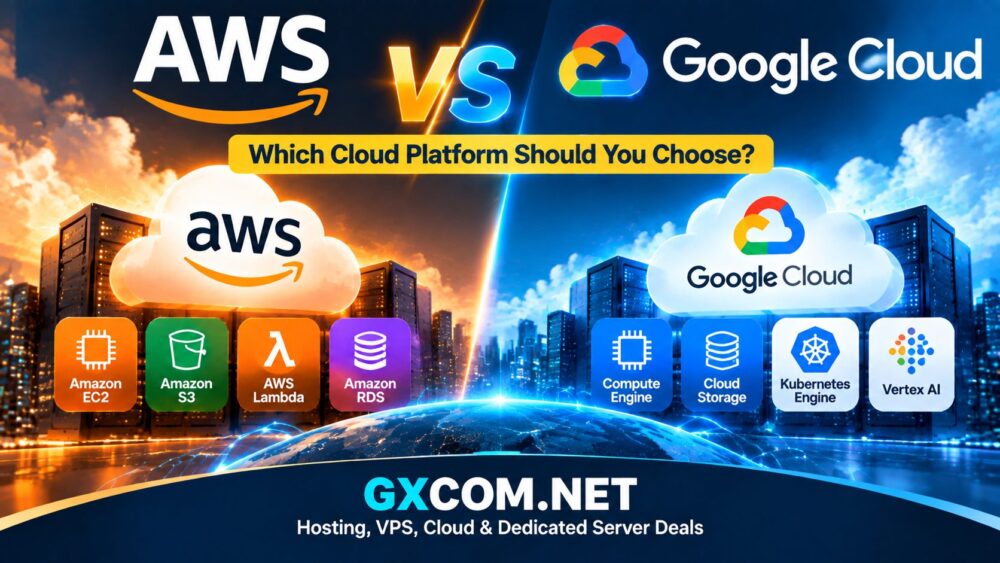
AWS vs Google Cloud: Which One Should You Choose?
There is no single cloud platform that fits every project. AWS provides a mature ecosystem with a wide range of services, while Google Cloud offers strong capabilities in AI, analytics, and modern application development.
Businesses should evaluate factors such as required services, technical expertise, pricing structure, performance needs, and future scalability before making a decision.
If you need maximum flexibility and a broad service ecosystem, AWS may match your requirements. If your projects focus on artificial intelligence, analytics, or cloud-native development, Google Cloud may provide suitable solutions.
Final Thoughts
AWS and Google Cloud are both powerful cloud platforms capable of supporting websites, applications, and enterprise workloads.
The best choice depends on your specific goals, technical requirements, and budget. Comparing features, pricing, and available services can help you select a cloud platform that supports long-term growth.