Web hosting with free domain and SSL sounds like an ideal package for launching a website. You pay for hosting, receive a domain name, activate HTTPS, and start building. However, the word “free” often describes an introductory benefit rather than a permanent saving.
Domain renewals, premium certificates, privacy services, backups, and checkout extras can change the total price. Before choosing a provider, understand exactly what is included, when promotional benefits expire, and what happens if you move your website elsewhere.

What Does Free Domain and SSL Hosting Actually Mean?
A hosting package may combine three separate services: server space for website files, domain registration for your web address, and an SSL/TLS certificate for encrypted HTTPS connections.
These services have different renewal rules. Hosting usually renews according to the purchased term, domain registration follows its own expiration date, and certificates require periodic renewal or replacement. A provider can include one service without permanently including the others.
Our web hosting services comparison explains additional criteria beyond introductory offers.
1. Is the Free Domain Really Free?
Many introductory hosting promotions provide eligible domain registration for the first year when customers purchase a qualifying plan. The benefit may apply only to selected extensions, billing terms, or new registrations.
Ask whether the promotion covers registration only or also includes renewal. A domain advertised as free today may have a standard renewal charge next year. Premium names, transfers, and certain extensions may be excluded.
Check who controls the registration, whether you receive access to DNS management, and whether the domain can be transferred to another registrar. Domain ownership and portability matter more than a small initial discount.
2. Free SSL vs Paid SSL Certificates
Free SSL usually refers to a domain-validated certificate that enables HTTPS. Automated certificate services can provide strong transport encryption without requiring a paid certificate. For ordinary blogs, portfolios, and many business websites, domain validation is sufficient.
Paid certificates may offer additional validation services, administrative support, or specific enterprise requirements. A higher certificate price does not automatically mean stronger encryption for normal browser connections.
Confirm that the hosting plan supports automatic certificate installation and renewal. Also check whether HTTPS works for the primary domain, the www version, and any required subdomains.
3. Hidden Costs That Appear at Checkout
Hosting checkout pages may offer paid backups, security scanning, premium support, email services, privacy products, or website-building tools. Some are useful, but not every customer needs every add-on.

Review the cart before payment. Determine which services are optional, which renew automatically, and whether introductory discounts apply to the entire purchase or only the hosting component.
For WordPress sites, compare the package with our WordPress versus web hosting guide to avoid paying twice for overlapping features.
4. Four Hosting Providers to Compare
Bluehost: Entry-Level Website Packages
Bluehost is relevant for customers evaluating beginner-friendly hosting and domain-related promotions. Review the exact plan’s domain eligibility, SSL inclusion, billing commitment, renewal charges, and optional services. Do not assume every advertised benefit applies to every product.
HostPapa: Small-Business Hosting
HostPapa is worth considering for small businesses that want hosting and domain management in one purchasing workflow. Compare introductory conditions, included email functionality, certificate management, and the cost of renewing both hosting and domain services.
IONOS: Domain and Hosting Bundles
IONOS is another option for buyers comparing website hosting alongside domain services. Examine the selected offer’s contract duration, domain registration conditions, SSL coverage, and cancellation rules. Promotional pricing may depend on the exact package and market.
GreenGeeks: General-Purpose Website Hosting
GreenGeeks belongs on the shortlist for blogs and small-business websites. Confirm whether your preferred domain extension qualifies for any registration offer, how SSL is provisioned, and which backup or security services are included.
All four providers should be compared using current checkout totals and written terms rather than assuming a free domain or certificate is permanently included.
5. Calculate the Real Cost Over Three Years
A longer comparison period reveals costs hidden by introductory pricing. Add the initial hosting payment, subsequent hosting renewals, domain renewals, required add-ons, and any paid services you intend to keep.
For example, consider a hypothetical plan costing $36 for its first year, followed by $120 annually, with a domain renewal of $18 per year beginning in year two. The three-year total would be $312 before optional extras. These figures illustrate the calculation and are not provider quotations.
Annual cost also depends on whether you prepay several years, qualify for a promotional domain, or choose monthly billing. Compare like-for-like terms before deciding which package is cheaper.
6. Domain Ownership, Transfers and Cancellation
Keeping domain registration and hosting together can simplify administration, but it can also create confusion when you change providers. Verify that the domain is registered under your control and that you can update nameservers or obtain an authorization code when eligible.
Some promotional arrangements have conditions concerning cancellation, refunds, or domain charges. Review these terms before requesting a hosting refund. Domain registration fees may be nonrefundable even when hosting offers a money-back period.
Plan migrations carefully so DNS changes, email records, and certificate provisioning do not interrupt your website.
7. Security and Backups Beyond HTTPS
HTTPS encrypts data in transit, but it does not protect a website from vulnerable plugins, stolen passwords, malicious uploads, or accidental deletion. A complete hosting decision should include software updates, account security, malware response, and reliable backups.
Read our managed hosting security guide for a clearer explanation of provider and customer responsibilities.
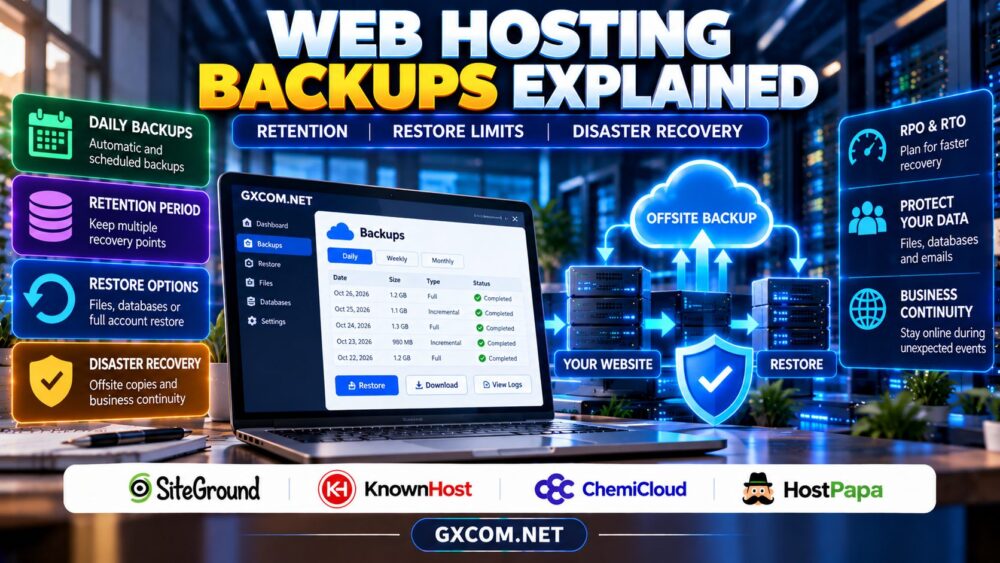
Also confirm whether automatic backups are included, how long copies are retained, and whether restoration carries an additional charge.
8. When Is a Free Domain Bundle Worth Choosing?
A bundle makes sense when the domain extension you want is eligible, the renewal prices are competitive, and the provider offers adequate performance and support. Convenience can be valuable for a first website.

Buying a domain separately may be preferable when you want independent registrar control, predictable renewal pricing, or flexibility to change hosts frequently.
Compare offers in our web hosting deals guide, then inspect the actual checkout details before paying.
Compare Hosting, Domain and SSL Offers
Check introductory eligibility, SSL coverage, domain renewal pricing, and optional checkout services before ordering.
Free Domain and SSL Hosting FAQ
Does free SSL expire?
Certificates have expiration dates, but hosting systems may renew them automatically. Verify renewal automation and domain coverage.
Can I keep my free domain if I cancel hosting?
Often the domain remains registered for its paid registration term, but cancellation charges, transfer eligibility, and promotional conditions vary. Check the agreement.
Is paid SSL necessary for a small website?
Usually not for standard HTTPS requirements. Free domain-validated certificates can provide strong encryption when correctly installed and maintained.
Final Verdict
Web hosting with free domain and SSL can provide genuine introductory savings, but the best deal depends on renewal pricing, domain control, certificate automation, and essential extras. Compare Bluehost, HostPapa, IONOS, and GreenGeeks using the full cost of ownership rather than the first invoice alone.