Microsoft Azure is one of the world’s largest cloud computing platforms, providing businesses, developers and enterprises with powerful infrastructure, applications and digital services.
As a major competitor to AWS and Google Cloud, Azure offers cloud servers, storage, databases, artificial intelligence solutions and enterprise-focused services.
This Microsoft Azure review compares cloud services, pricing, features, performance, security and scalability to help you understand whether Azure is the right cloud platform for your needs.
Quick Verdict: Microsoft Azure Review
| Category | Rating | Summary |
|---|---|---|
| Performance | ★★★★★ | Enterprise-grade cloud infrastructure |
| Scalability | ★★★★★ | Highly flexible resources |
| Pricing | ★★★★☆ | Flexible but complex |
| Enterprise Integration | ★★★★★ | Excellent Microsoft ecosystem support |
| Ease of Use | ★★★★☆ | Good for business users |
What Is Microsoft Azure?
Microsoft Azure is Microsoft’s cloud computing platform that provides infrastructure, software services and enterprise solutions through global data centers.
Azure allows organizations to run websites, applications, databases, virtual machines and AI workloads without managing physical servers.
Main Azure services include:
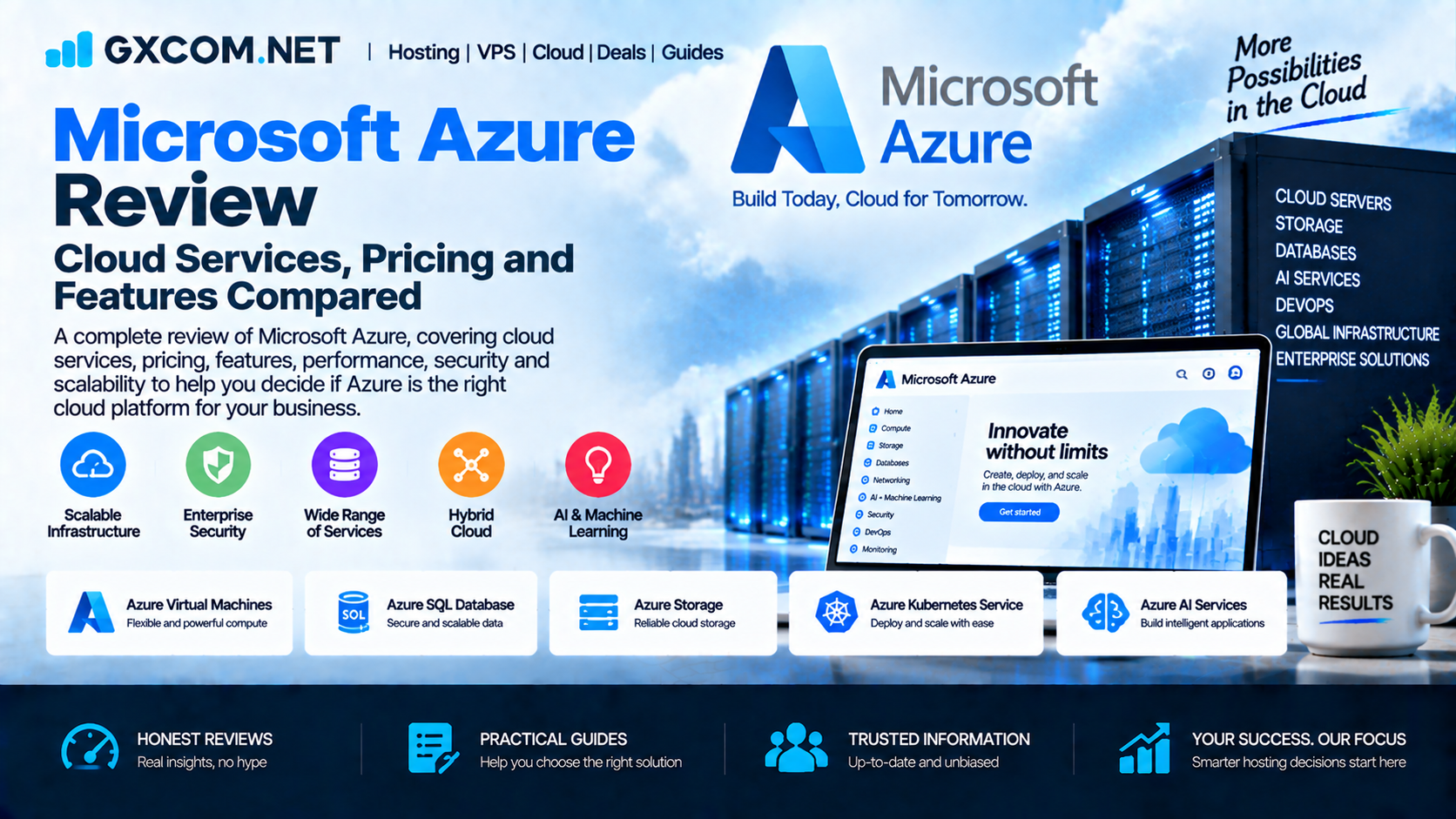
- Azure Virtual Machines
- Azure Storage
- Azure SQL Database
- Azure Kubernetes Service
- Azure AI Services
- Azure DevOps
Users comparing cloud infrastructure can also explore our Google Cloud resources.
Microsoft Azure Pricing Review
Azure uses a flexible pay-as-you-go pricing model, allowing businesses to pay based on actual cloud usage.
| Azure Service | Purpose | Pricing Model |
|---|---|---|
| Virtual Machines | Cloud servers | Usage based |
| Blob Storage | Cloud storage | Storage amount |
| Azure SQL | Managed database | Resource based |
| Azure Kubernetes Service | Container management | Cluster usage |
Microsoft Azure Features
1. Enterprise Cloud Integration
Azure has a major advantage for organizations already using Microsoft products such as Windows Server, Microsoft 365 and Active Directory.
2. Global Cloud Infrastructure
Azure operates a large global network of cloud regions, helping businesses deploy applications closer to users.
3. Artificial Intelligence Services
Azure provides AI tools for machine learning, automation and intelligent applications.
4. Hybrid Cloud Capabilities
Azure supports hybrid cloud environments, allowing businesses to combine local infrastructure with cloud resources.
Azure Performance Review
Microsoft Azure provides enterprise-level performance through scalable computing resources and global infrastructure.
Performance advantages include:
- Global data centers
- High availability architecture
- Flexible computing options
- Fast networking
Azure Security Features
Security is one of Azure’s strongest areas, especially for enterprise customers.
- Identity and access management
- Encryption services
- Threat protection
- Security monitoring
- Compliance solutions
Microsoft Azure Pros and Cons
Advantages of Azure
- Excellent enterprise integration
- Strong hybrid cloud support
- Large global infrastructure
- Advanced security features
- Strong business ecosystem
Disadvantages of Azure
- Pricing can be complicated
- Requires technical knowledge
- Many services increase learning difficulty
Microsoft Azure vs AWS
| Feature | Azure | AWS |
|---|---|---|
| Enterprise Usage | Excellent | Excellent |
| Cloud Services | Extensive | Largest ecosystem |
| Hybrid Cloud | Excellent | Strong |
| Developer Community | Strong | Very large |
Azure vs Google Cloud
| Feature | Azure | Google Cloud |
|---|---|---|
| Enterprise Solutions | Excellent | Strong |
| AI Technology | Strong | Excellent |
| Data Analytics | Strong | Excellent |
| Kubernetes | Strong | Excellent |
For more platform comparisons, see our best AWS alternatives guide.
Who Should Use Microsoft Azure?
Azure is suitable for:
- Large enterprises
- Companies using Microsoft products
- Government organizations
- Hybrid cloud projects
- Business applications
Who Should Avoid Azure?
Azure may not be ideal for:
- Small websites needing simple hosting
- Beginners looking for basic shared hosting
- Users wanting simple fixed pricing
Microsoft Azure Alternatives
Main Azure alternatives include:
- AWS
- Google Cloud
- DigitalOcean
- Vultr
Final Verdict
Microsoft Azure is a powerful cloud platform designed for businesses requiring scalable infrastructure, enterprise integration and advanced security.
Its biggest strengths are Microsoft ecosystem integration, hybrid cloud capabilities and enterprise services.
For companies already using Microsoft technologies, Azure is one of the strongest cloud platforms available.
Frequently Asked Questions
Is Microsoft Azure good for hosting websites?
Yes. Azure can host websites, applications and enterprise platforms of different sizes.
Is Azure cheaper than AWS?
Pricing depends on services and usage. Both platforms offer flexible pricing models.
Is Azure better than Google Cloud?
Azure is stronger for enterprise integration, while Google Cloud has advantages in AI and data services.
Who uses Microsoft Azure?
Many enterprises, governments and organizations use Azure for cloud computing and digital transformation.