Choosing the right VPS provider requires comparing more than just monthly pricing. A reliable VPS Providers Compared analysis should consider server performance, hardware specifications, network quality, scalability, support and overall value.
Virtual Private Server hosting provides dedicated resources inside a virtualized environment, offering more control and performance than shared hosting while remaining more affordable than dedicated servers.
Different VPS providers focus on different users. Some prioritize affordable VPS plans, while others focus on enterprise cloud infrastructure, developer flexibility or managed services.
This guide compares popular VPS providers based on performance, pricing, features, scalability and suitable use cases.
Last updated: September 2026. VPS pricing, hardware availability and promotions change frequently. Always verify current provider offers before purchasing.
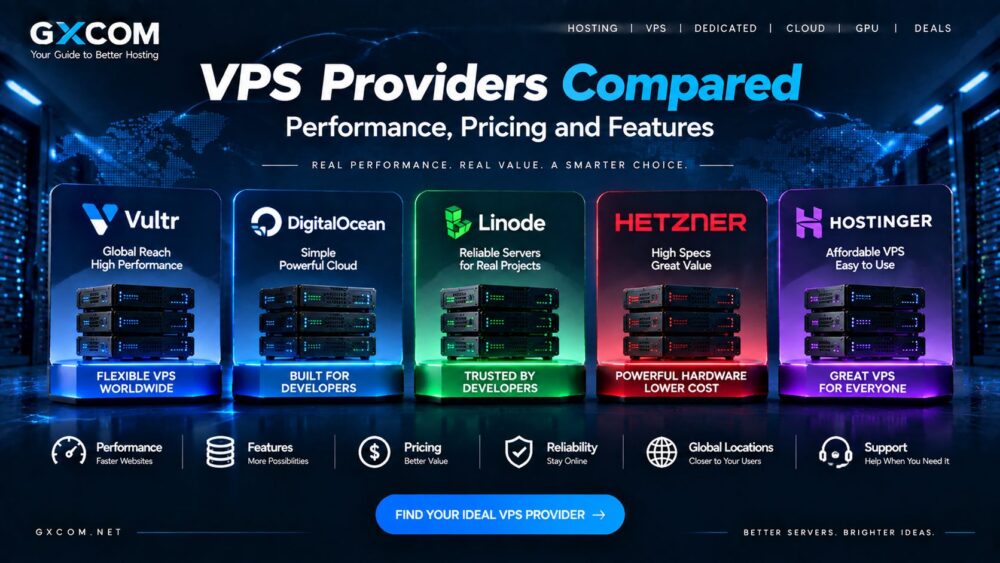
VPS Providers Compared: Quick Overview
| Provider | Best For | Main Advantage | VPS Type |
|---|---|---|---|
| Vultr | Developers and flexible deployments | Global locations and fast deployment | Cloud VPS |
| DigitalOcean | Developers and startups | Simple cloud infrastructure | Cloud VPS |
| Linode | Linux developers | Developer-focused VPS | Cloud VPS |
| Hetzner | Budget-conscious users | High hardware value | Cloud VPS |
| Hostinger VPS | Affordable websites | Low-cost VPS plans | Managed VPS |
How to Compare VPS Providers
A VPS provider comparison should evaluate several important factors:
- CPU performance
- RAM allocation
- SSD or NVMe storage
- Network speed
- Data center locations
- Operating system options
- Backup features
- Security tools
- Technical support
- Pricing structure
The cheapest VPS plan may not always provide the best value. Hardware quality and network reliability can have a major impact on real-world performance.
1. Vultr VPS Comparison
Vultr is a cloud infrastructure provider known for flexible VPS deployments and a wide selection of global server locations.
The platform allows users to quickly deploy VPS instances with different operating systems and configurations.
Key advantages include:
- Multiple global regions
- Fast VPS deployment
- Flexible cloud infrastructure
- Wide operating system support
- Developer-friendly management
Vultr is commonly used for:
- Web applications
- Development environments
- Game servers
- VPN servers
- Cloud projects
Learn more about our Vultr review for detailed analysis.
2. DigitalOcean VPS Comparison
DigitalOcean is a popular cloud platform designed around simplicity and developer experience.
Its VPS products, known as Droplets, provide straightforward cloud servers for developers and businesses.
Main features include:
- Simple VPS management
- Developer-friendly tools
- Extensive documentation
- Scalable cloud infrastructure
DigitalOcean is commonly selected by startups, developers and software teams building applications.
3. Linode VPS Comparison
Linode has built a strong reputation among Linux developers and technical users who want reliable cloud VPS infrastructure.
Key features include:
- Linux-focused VPS hosting
- Developer tools
- Predictable pricing
- Multiple deployment options
Linode is suitable for users who prefer control over their server environment.
4. Hetzner VPS Comparison
Hetzner is known for providing competitive hardware pricing, especially among European VPS users.
The company offers cloud servers with strong hardware specifications at relatively affordable prices.
Advantages include:
- Competitive pricing
- Modern server hardware
- European data centers
- High resource value
Hetzner is often considered by developers and businesses looking for cost-efficient infrastructure.
5. Hostinger VPS Comparison
Hostinger VPS focuses on affordable VPS hosting for website owners and users who want more control than shared hosting.
Features include:
- Affordable VPS plans
- Easy management tools
- Multiple operating systems
- Website-focused solutions
Hostinger VPS can be suitable for small businesses, websites and users upgrading from shared hosting.
Performance Comparison Between VPS Providers
VPS performance depends on:
- CPU architecture
- Virtualization technology
- Storage performance
- Network capacity
- Resource allocation
Modern VPS providers increasingly use NVMe storage and newer generation processors to improve performance.
NVMe VPS Performance Comparison
Storage technology has become an important factor in VPS performance.
NVMe VPS servers provide faster storage communication compared with traditional SSD solutions.
Benefits include:
- Faster application loading
- Improved database performance
- Better website response times
- Higher I/O performance
Explore our NVMe VPS guides for more information.
Pricing Comparison: VPS Providers
| Provider Category | Pricing Model | Suitable Users |
|---|---|---|
| Budget VPS | Low monthly pricing | Personal websites and small projects |
| Cloud VPS | Flexible resource pricing | Developers and applications |
| Managed VPS | Higher pricing with support | Businesses needing assistance |
| High Performance VPS | Premium hardware pricing | Demanding workloads |
Managed VPS vs Unmanaged VPS
One of the biggest differences between VPS providers is management level.
Unmanaged VPS gives users full control but requires technical knowledge.
Managed VPS includes additional services such as:
- Server configuration
- Security updates
- Technical support
- Performance optimization
Users should choose based on their technical experience and management requirements.
VPS Providers Compared for Developers
Developers often prioritize:
- API access
- Server customization
- Linux support
- Flexible deployment
- Developer documentation
Cloud VPS providers are often preferred because they provide flexible infrastructure for testing and production environments.
VPS Providers Compared for Business Websites
Businesses should focus on:
- Reliability
- Backup options
- Security
- Support quality
- Scalability
A VPS can provide a balance between performance and cost for growing websites.
VPS Providers Compared for WordPress
WordPress websites moving beyond shared hosting often choose VPS solutions for additional resources.
Important considerations include:
- Server optimization
- Database performance
- Backup systems
- Security configuration
Cloud VPS vs Traditional VPS
Cloud VPS uses distributed cloud infrastructure, providing flexibility and easier scaling.
Traditional VPS hosting usually runs on a single physical server environment.
The better choice depends on whether you prioritize flexibility or simplicity.
How to Choose the Right VPS Provider
Before selecting a VPS provider, consider:
- Your website traffic
- Required applications
- Technical knowledge
- Growth plans
- Budget
VPS Providers Compared: Final Checklist
The VPS Providers Compared decision depends on your workload, technical requirements and future growth plans.
Developers may prefer flexible cloud VPS platforms, while businesses may prioritize managed solutions and support.
Before purchasing, compare CPU performance, storage technology, pricing, locations and scalability options.
GXCOM.NET will continue publishing VPS comparisons and hosting reviews to help users choose the right server infrastructure.