Choosing the Best Hosting Providers Compared requires more than looking at the lowest monthly price. Different hosting companies focus on different users, from beginners building their first website to businesses requiring reliable performance, advanced features and scalable infrastructure.
The best hosting provider depends on your website type, traffic expectations, technical experience and budget. A simple blog may need affordable shared hosting, while an online store or growing business may require managed hosting, VPS or cloud infrastructure.
This guide compares popular hosting providers based on features, performance, pricing, scalability, support and suitable use cases to help you select the right hosting solution.
Last updated: September 20, 2026. Hosting prices, plans and promotions change frequently. Always check current provider offers before purchasing.
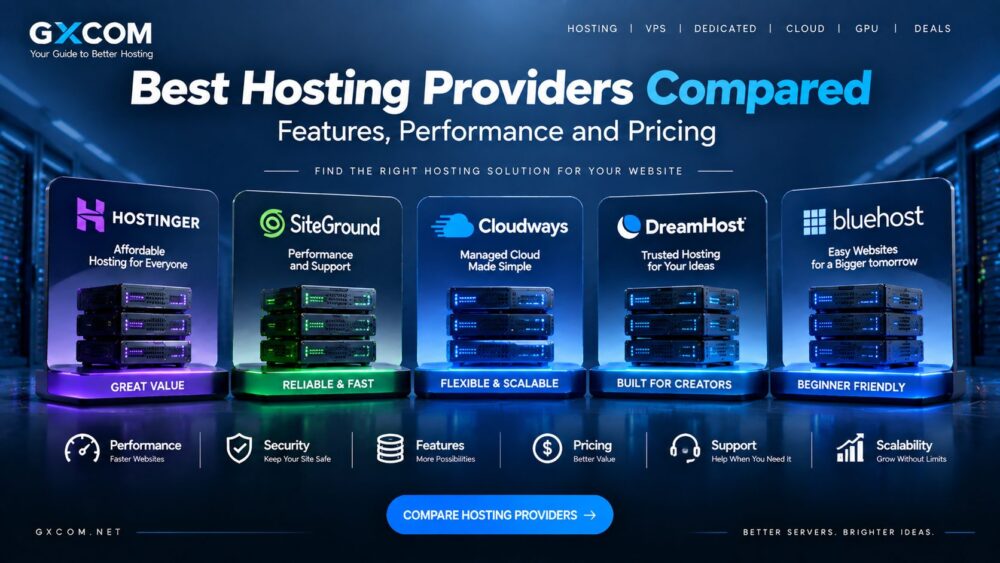
Best Hosting Providers Compared: Quick Overview
| Provider | Best For | Hosting Types | Main Advantage |
|---|---|---|---|
| Hostinger | Affordable websites | Shared, VPS, Website Hosting | Competitive pricing |
| SiteGround | Business websites | Shared, Managed WordPress | Performance and support |
| Cloudways | Managed cloud hosting | Cloud Hosting | Simplified cloud management |
| DreamHost | WordPress websites | Shared, VPS, Managed WordPress | Long-term hosting experience |
| Bluehost | Beginners | Shared, WordPress Hosting | Easy setup |
How to Compare Hosting Providers
Hosting providers should be compared based on the factors that directly affect website performance and long-term costs.
The most important comparison points include:
- Server performance
- Storage technology
- Bandwidth limitations
- Data center locations
- Security features
- Backup options
- Customer support
- Migration services
- Renewal pricing
- Upgrade options
A low introductory price may not always represent the best long-term value. Renewal costs, included features and resource limitations should also be considered.
1. Hostinger Hosting Comparison
Hostinger is widely recognized for affordable hosting plans designed for individuals, small businesses and website owners looking for cost-effective solutions.
The company provides several hosting categories, including:
- Shared hosting
- WordPress hosting
- VPS hosting
- Website builder solutions
Hostinger focuses on combining competitive pricing with modern server technologies such as SSD and NVMe storage.
Advantages include:
- Affordable entry pricing
- Beginner-friendly control panel
- Multiple hosting options
- Global data center locations
Potential users should compare promotional pricing with renewal rates before choosing a long-term plan.
Learn more through our Hostinger review.
2. SiteGround Hosting Comparison
SiteGround is known for managed hosting features and performance-focused infrastructure.
It is commonly selected by businesses and website owners who value support, security tools and managed services.
Key features include:
- Managed WordPress hosting
- Website migration tools
- Security monitoring
- Caching technologies
- Automatic updates
SiteGround plans are generally positioned above budget hosting providers, making them more suitable for users prioritizing service quality and management features.
3. Cloudways Hosting Comparison
Cloudways focuses on managed cloud hosting, allowing users to deploy websites on cloud infrastructure without managing every server configuration manually.
The platform supports cloud providers including:
- DigitalOcean
- AWS
- Google Cloud
- Vultr
- Linode
Cloudways is designed for users who want cloud performance with simplified management.
Advantages include:
- Managed cloud environment
- Flexible provider selection
- Performance optimization tools
- Scalable infrastructure
4. DreamHost Hosting Comparison
DreamHost provides hosting solutions with a strong focus on WordPress websites and long-term hosting services.
Its products include:
- Shared hosting
- Managed WordPress hosting
- VPS hosting
- Dedicated hosting
DreamHost can be suitable for users looking for a traditional hosting provider with multiple upgrade paths.
5. Bluehost Hosting Comparison
Bluehost is commonly associated with beginner-friendly website hosting and WordPress solutions.
It provides tools designed to simplify website creation, domain management and hosting setup.
Typical users include:
- New website owners
- Small business websites
- Personal blogs
- Beginner WordPress users
Performance Comparison Between Hosting Providers
Hosting performance depends on more than the provider name.
Important technical factors include:
- Server hardware
- CPU allocation
- Memory resources
- Storage technology
- Web server configuration
- Content delivery network support
Providers offering NVMe storage, optimized server software and modern infrastructure usually provide better performance potential.
Pricing Comparison: Hosting Providers
| Hosting Type | Typical Price Range | Suitable Users |
|---|---|---|
| Shared Hosting | Low | Blogs and small websites |
| Managed WordPress Hosting | Medium | Business websites |
| VPS Hosting | Medium to High | Growing applications |
| Cloud Hosting | Variable | Scalable projects |
| Dedicated Hosting | High | Enterprise workloads |
The cheapest plan is not always the most economical choice if your website quickly outgrows available resources.
Hosting Providers Compared for WordPress
WordPress users should consider:
- Automatic updates
- Caching features
- Backup systems
- Security tools
- Migration support
- Performance optimization
Beginners may prefer managed WordPress hosting, while experienced users may choose VPS or cloud hosting for greater control.
Hosting Providers Compared for Business Websites
Business websites often require more than basic hosting.
Important factors include:
- Reliable uptime
- Fast loading speed
- Security protection
- Scalable resources
- Professional support
A hosting provider that supports future growth can reduce the need for migration later.
Shared Hosting vs VPS Hosting
Shared hosting is affordable because multiple websites share server resources.
VPS hosting provides more isolated resources and greater control.
For new websites, shared hosting is often sufficient. Growing websites and applications may benefit from VPS infrastructure.
Explore our VPS hosting comparison resources for more information.
Cloud Hosting vs Traditional Hosting
Cloud hosting uses distributed infrastructure, allowing more flexible scaling compared with traditional hosting environments.
Traditional hosting plans usually provide fixed resource packages with predictable pricing.
The better choice depends on whether your website needs flexibility or simplicity.
How to Choose the Right Hosting Provider
Before selecting a hosting provider, consider:
- Your website traffic
- Technical experience
- Required features
- Growth expectations
- Monthly budget
A personal blog and an international eCommerce website may require completely different hosting solutions.
Hosting Providers Compared: Final Recommendation Checklist
The Best Hosting Providers Compared depends on your specific needs rather than a single universal winner.
Budget-focused users may prioritize affordable plans, while businesses may value performance, support and scalability.
Before purchasing, compare features, performance, pricing and future upgrade options.
GXCOM.NET will continue publishing hosting provider comparisons to help users choose reliable infrastructure for their websites and applications.