


Hostwinds Review: Windows VPS, Linux VPS and Dedicated Hosting Choices
Choosing a virtual private server involves more than comparing CPU cores and monthly prices. Windows licensing, Linux administration, backup policies, and support responsibilities can change the real cost of hosting an application. This Hostwinds review…

Best Gaming VPS Hosting: CPU, NVMe and Low-Latency Servers Compared
Choosing the best gaming VPS hosting requires more than comparing virtual CPU counts or advertised network speeds. Multiplayer servers need responsive processors, sufficient memory, reliable storage, and stable connections. A gaming VPS gives administrators control…


Web Hosting Server Location: How Data Centers Affect Latency and Website Performance
Choosing a hosting provider involves more than comparing storage, CPU resources, and introductory discounts. The physical location of your website’s server can influence how quickly visitors connect to your website and receive content. Web hosting…

Fully Managed vs Semi-Managed Hosting: What’s Included and Who Handles What?
Choosing managed hosting sounds straightforward until you compare the services included in different plans. One provider may handle operating system updates, monitoring, and backups, while another offers technical assistance only for selected infrastructure tasks. Understanding…
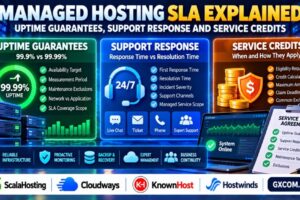
Managed Hosting SLA Explained: Uptime Guarantees, Support Response and Service Credits
A hosting provider may advertise 99.9% uptime, around-the-clock support, and reliable managed services. However, these claims do not automatically tell you what happens when your website goes offline or a critical support ticket remains unresolved.…


Redis Object Cache vs Page Cache: Which Makes WordPress Faster?
Caching is one of the most effective ways to improve WordPress performance, but not every caching method solves the same problem. Redis object caching and page caching operate at different layers of the application. Understanding…
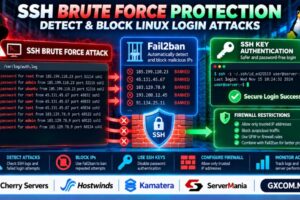
SSH Brute Force Protection: How to Detect and Block Login Attacks on Linux
Thousands of automated bots scan internet-facing Linux servers for exposed SSH services. Once they find port 22 open, they may repeatedly attempt usernames and passwords to gain unauthorized access. Effective SSH brute force protection starts…

HTTP to HTTPS Redirect Guide: Fix Redirect Loops and Mixed Content
Switching from HTTP to HTTPS is essential for protecting website connections, but an incorrect redirect can cause ERR_TOO_MANY_REDIRECTS, broken pages, or mixed content warnings. This HTTP to HTTPS redirect guide explains how to configure permanent…

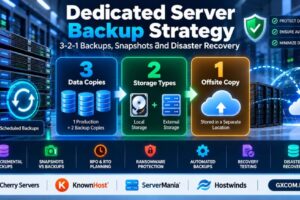
Dedicated Server Backup Strategy: 3-2-1 Backups, Snapshots and Disaster Recovery
A dedicated server gives you control over hardware resources, applications, and data. But what happens if its storage fails, a database becomes corrupted, or ransomware encrypts your files? Without a reliable dedicated server backup strategy,…

How Much RAM Does a Dedicated Server Need? Workload Sizing Guide
How much RAM does a dedicated server need? Is 16GB enough, or should you choose 32GB, 64GB, or even 128GB? The answer depends on your workload. Too little memory can cause slow applications, excessive swapping,…

10Gbps vs 1Gbps Dedicated Server: Bandwidth, Port Speed and Real Network Performance
A dedicated server advertised with a 10Gbps network port sounds significantly faster than a server with a 1Gbps connection. In theory, the port supports ten times the line rate. But does that translate into ten…

Windows vs Linux Dedicated Server: Licensing, Management and Total Cost Compared
Choosing between a Windows and Linux dedicated server is not simply a matter of personal preference. The operating system affects application compatibility, licensing obligations, server administration, security workflows, and the total cost of running a…

Vultr vs Kamatera: Cloud Server Customization, Global Locations and Billing Flexibility
Choosing a cloud server provider is not simply about finding the lowest advertised monthly price. Two virtual machines with similar CPU and RAM specifications can differ in processor allocation, storage architecture, network connectivity, regional availability,…

ScalaHosting vs KnownHost: Managed VPS Support, Control Panels and Renewal Costs
Moving from shared hosting to a managed VPS can improve resource control, server flexibility, and operational independence. But the upgrade also introduces important decisions about control panels, support coverage, backups, security, and long-term costs. That…

Shared vCPU vs Dedicated vCPU VPS: Performance Isolation, CPU Limits and Real Costs
Two VPS plans can advertise the same number of virtual CPUs and deliver very different performance under sustained load. A 4-vCPU server might handle occasional traffic spikes comfortably but struggle with continuous background processing. Another…