Choosing between managed VPS and unmanaged VPS is an important decision when upgrading from shared hosting or building a growing online project.
Both solutions provide dedicated virtual server resources, better performance and more control than traditional shared hosting. However, the biggest difference is who manages the server environment.
In this Managed VPS vs Unmanaged VPS comparison, we explain the differences in management, pricing, performance, security, technical requirements and suitable users.
Updated: September 2026. VPS features and pricing vary depending on providers and configurations.
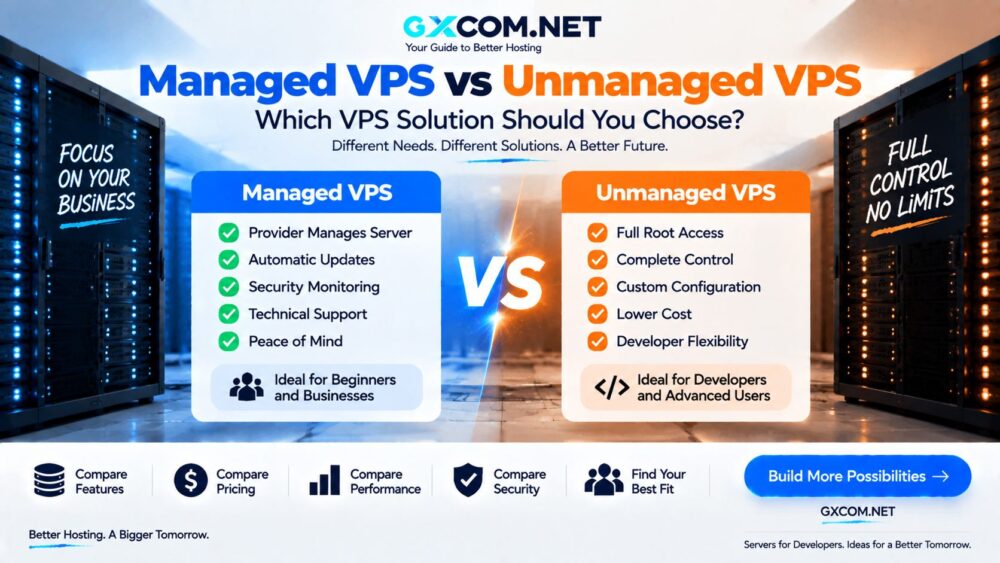
Managed VPS vs Unmanaged VPS Overview
| Feature | Managed VPS | Unmanaged VPS |
|---|---|---|
| Server Management | Provider handles many tasks | User manages server |
| Technical Skill | Beginner friendly | Requires technical knowledge |
| Price | Higher | Lower |
| Control | Limited customization | Full root access |
| Security Updates | Often assisted by provider | User responsibility |
What Is Managed VPS Hosting?
Managed VPS hosting is a virtual private server service where the hosting provider takes responsibility for many server administration tasks.
Depending on the provider, managed VPS services may include:
- Operating system updates
- Security monitoring
- Server configuration
- Technical support
- Performance optimization
- Backup assistance
Managed VPS is designed for users who want VPS performance without spending significant time managing server operations.
What Is Unmanaged VPS Hosting?
Unmanaged VPS hosting provides users with a virtual server and full administrative control.
The customer is responsible for:
- Server setup
- Software installation
- Security configuration
- System updates
- Server optimization
Unmanaged VPS is popular among developers, system administrators and technical users who need complete flexibility.
Managed VPS vs Unmanaged VPS: Key Differences
1. Server Management
The biggest difference between managed and unmanaged VPS hosting is administration responsibility.
With managed VPS:
- The provider handles many technical tasks
- Users spend less time maintaining servers
- Support is usually more extensive
With unmanaged VPS:
- Users configure the server themselves
- Users control the entire software environment
- Technical maintenance is required
2. Technical Knowledge Requirements
Managed VPS is suitable for users who want a simpler hosting experience.
Unmanaged VPS usually requires knowledge of:
- Linux administration
- SSH commands
- Server security
- Web server configuration
- Database management
3. Pricing Difference
Managed VPS plans usually cost more because providers include administration services.
| Hosting Type | Typical Monthly Cost |
|---|---|
| Managed VPS | $20-$150+ |
| Unmanaged VPS | $5-$50+ |
4. Server Control
Unmanaged VPS provides maximum control because users receive root access.
Users can customize:
- Operating systems
- Software packages
- Security rules
- Development environments
Managed VPS offers convenience but may limit some advanced configurations.
Performance Comparison
| Performance Factor | Managed VPS | Unmanaged VPS |
|---|---|---|
| Hardware Resources | Similar | Similar |
| Optimization | Provider assisted | User controlled |
| Customization | Moderate | High |
| Scalability | Good | Excellent |
Security Comparison
Security responsibility is another major difference.
Managed VPS Security
- Security monitoring
- Software updates
- Technical assistance
- Configuration support
Unmanaged VPS Security
- User installs security tools
- User manages updates
- User configures firewall rules
- User monitors vulnerabilities
Who Should Choose Managed VPS?
Managed VPS is suitable for:
- Small businesses
- Website owners without server experience
- Ecommerce websites
- Companies needing technical support
- Users who value convenience
Who Should Choose Unmanaged VPS?
Unmanaged VPS is suitable for:
- Developers
- System administrators
- Linux experts
- Software engineers
- Users needing complete control
Managed VPS Advantages
- Less server maintenance
- Professional technical support
- Easier management
- Reduced configuration work
- Suitable for non-technical users
Managed VPS Disadvantages
- Higher monthly cost
- Less server customization
- Dependency on provider support
Unmanaged VPS Advantages
- Lower cost
- Full root access
- Maximum customization
- Complete software control
- Developer flexibility
Unmanaged VPS Disadvantages
- Requires technical skills
- Security management responsibility
- More maintenance work
- Troubleshooting takes more time
Managed VPS vs Unmanaged VPS for Different Users
| User Type | Recommended Option |
|---|---|
| Beginner Website Owner | Managed VPS |
| Small Business | Managed VPS |
| Developer | Unmanaged VPS |
| Startup Technical Team | Unmanaged VPS |
| Ecommerce Business | Managed VPS |
Popular Providers for Managed VPS
Some providers offering managed VPS solutions include:
- Liquid Web
- KnownHost
- ScalaHosting
- Hostwinds
- InMotion Hosting
Popular Providers for Unmanaged VPS
Common unmanaged VPS providers include:
How to Choose Between Managed and Unmanaged VPS
- Evaluate your technical skills
- Consider your monthly budget
- Determine how much control you need
- Review support requirements
- Consider future growth
Managed VPS vs Unmanaged VPS: Final Verdict
Managed VPS and unmanaged VPS serve different types of users.
Managed VPS is designed for users who want VPS performance with less server administration, while unmanaged VPS is better suited for developers and technical users who need complete control.
When choosing a VPS solution, consider your technical experience, budget, security requirements and project goals.
The right VPS management option can provide the balance between performance, flexibility and maintenance effort that your website or application needs.