Choosing between shared hosting and VPS hosting is an important decision for website owners who want the right balance between cost, performance and scalability. Both hosting solutions can run websites successfully, but they are designed for different types of users and traffic requirements.
In this Shared Hosting vs VPS Hosting comparison, we analyze the differences in performance, pricing, security, control, scalability and technical requirements to help you decide which hosting solution fits your website.
Shared hosting focuses on affordability and simplicity, while VPS hosting provides dedicated virtual resources and greater control for growing websites.
Updated: September 2026. Hosting performance and pricing vary depending on provider, plan and server location.
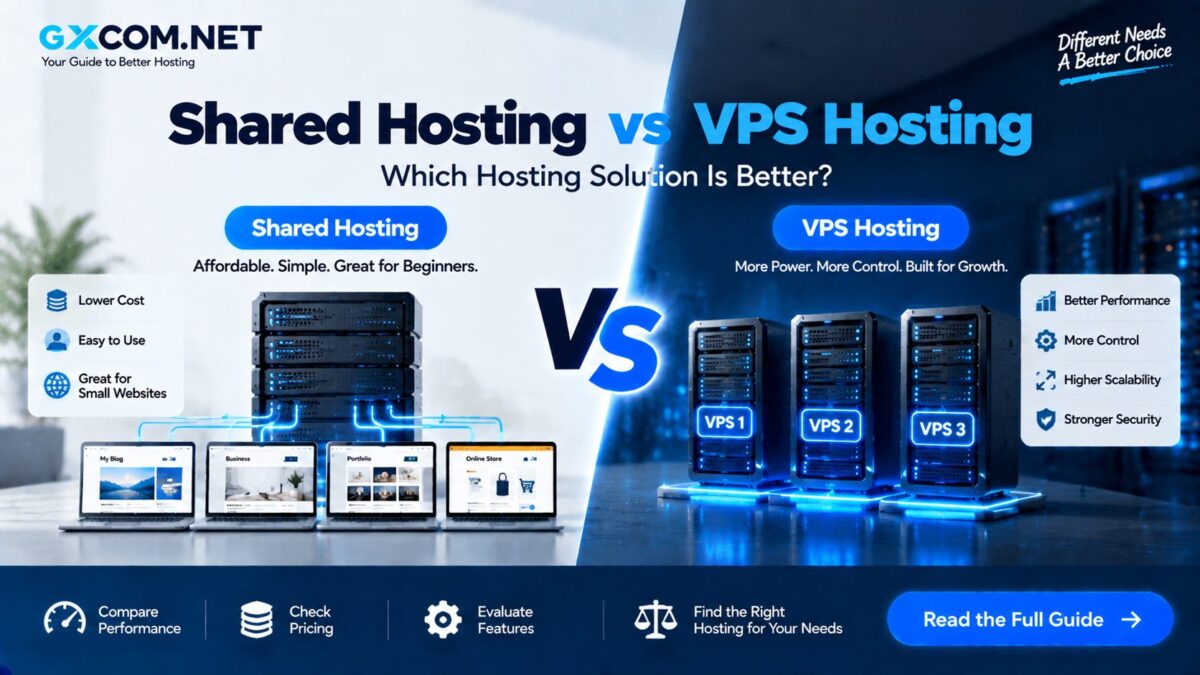
Shared Hosting vs VPS Hosting Overview
| Feature | Shared Hosting | VPS Hosting |
|---|---|---|
| Server Environment | Multiple websites share one server | Virtual private server resources |
| Performance | Suitable for small websites | Higher performance potential |
| Control | Limited | More customization options |
| Scalability | Limited upgrades | Flexible resource upgrades |
| Price | Lower | Higher |
| Best For | Beginners and small websites | Growing websites and applications |
What Is Shared Hosting?
Shared hosting is an entry-level hosting solution where multiple websites use resources from the same physical server.
Resources are shared between websites, including:
- CPU processing power
- RAM memory
- Storage
- Network bandwidth
Because server costs are distributed among many customers, shared hosting providers can offer affordable plans.
Typical shared hosting features include:
- Control panel access
- One-click application installation
- Free SSL certificates
- Email accounts
- Basic backups
Shared hosting is commonly used by beginners, bloggers and small businesses.
What Is VPS Hosting?
VPS (Virtual Private Server) hosting uses virtualization technology to divide one physical server into multiple isolated virtual environments.
Each VPS receives dedicated resources such as:
- CPU allocation
- RAM resources
- Storage space
- Operating system environment
Compared with shared hosting, VPS hosting provides greater control and better resource isolation.
Learn more about VPS solutions in our VPS Hosting Guide.
Main Differences Between Shared Hosting and VPS Hosting
1. Performance Comparison
Performance is one of the biggest differences between shared hosting and VPS hosting.
Shared Hosting Performance
Shared hosting performance depends on the available resources of the physical server and the activity of other websites on the same server.
It works well for:
- Personal blogs
- Small company websites
- Portfolio websites
- New online projects
However, traffic spikes from other websites may affect available resources.
VPS Hosting Performance
VPS hosting provides dedicated virtual resources, allowing websites to achieve more stable performance.
Advantages include:
- Dedicated CPU and RAM allocation
- Better traffic handling
- Improved application performance
- More predictable resources
Resource Allocation Comparison
| Resource | Shared Hosting | VPS Hosting |
|---|---|---|
| CPU | Shared with other users | Dedicated allocation |
| RAM | Shared resources | Private allocation |
| Storage | Shared environment | Independent environment |
| Bandwidth | Shared limits | More flexible |
Pricing Comparison
| Hosting Type | Average Monthly Cost | Target Users |
|---|---|---|
| Shared Hosting | $2-$15/month | Beginners and small websites |
| VPS Hosting | $10-$100+/month | Growing websites and developers |
Shared hosting is cheaper because server resources are distributed among many customers.
VPS hosting costs more because users receive dedicated virtual resources and greater control.
Scalability Comparison
| Feature | Shared Hosting | VPS Hosting |
|---|---|---|
| Traffic Growth | Limited capacity | Better expansion options |
| Resource Upgrade | Plan upgrade required | Flexible resource adjustment |
| Growing Websites | May require migration | Better suited |
Security Comparison
Shared Hosting Security
Shared hosting providers usually provide basic security protection.
Common features include:
- SSL certificates
- Malware scanning
- Firewall protection
- Account security tools
VPS Hosting Security
VPS hosting provides stronger isolation because each virtual server operates independently.
Users can configure:
- Custom firewall rules
- Security software
- Access permissions
- Server configurations
Management Comparison
Shared Hosting Management
Shared hosting is designed for simplicity.
Users usually manage websites through graphical control panels without requiring server administration skills.
VPS Hosting Management
VPS hosting provides more control but may require technical knowledge.
Users may need to manage:
- Operating system updates
- Server configuration
- Security settings
- Software installation
Users who prefer professional management can choose managed VPS hosting.
Shared Hosting vs VPS Hosting for WordPress
| Website Type | Recommended Hosting |
|---|---|
| New WordPress Blog | Shared Hosting |
| Small Business Website | Shared Hosting |
| High Traffic WordPress Site | VPS Hosting |
| Ecommerce Website | VPS Hosting |
When Should You Choose Shared Hosting?
Shared hosting is suitable for:
- New websites
- Personal blogs
- Small business websites
- Low traffic projects
- Testing websites
It provides an affordable way to start an online presence.
When Should You Upgrade to VPS Hosting?
VPS hosting may be a better option when your website experiences:
- Increasing traffic
- Slower loading speeds
- Higher resource requirements
- Need for custom software
- Growing business demands
Advantages of Shared Hosting
Affordable Pricing
Shared hosting remains one of the lowest-cost hosting solutions.
Beginner Friendly
No advanced server knowledge is required.
Easy Website Setup
Most providers offer simple installation tools.
Advantages of VPS Hosting
Better Performance
Dedicated resources provide more stable website performance.
Greater Control
Users can customize their server environment.
Improved Scalability
VPS hosting supports website growth more effectively.
Common Mistakes When Choosing Hosting
Choosing VPS Too Early
Small websites may not need the additional cost and complexity of VPS hosting.
Staying on Shared Hosting Too Long
Growing websites may suffer performance issues if they remain on limited hosting plans.
Ignoring Future Growth
Choose a hosting solution that matches both current and future requirements.
Shared Hosting vs VPS Hosting: Which Solution Is Better?
The better choice depends on your website requirements, budget and technical experience.
Shared hosting is ideal for beginners, blogs and small websites that need affordable and simple hosting.
VPS hosting is better suited for growing websites, ecommerce platforms and applications requiring more resources and control.
For many website owners, starting with shared hosting and upgrading to VPS hosting as traffic grows is a practical approach.