Linux servers power a large part of the modern internet, including websites, cloud applications, databases and hosting platforms. For developers and website owners, understanding basic Linux server management is an important skill when working with VPS, cloud servers or dedicated infrastructure.
Managing a Linux server may seem complicated at first, but learning essential commands, security settings and maintenance practices can help users operate servers more effectively.
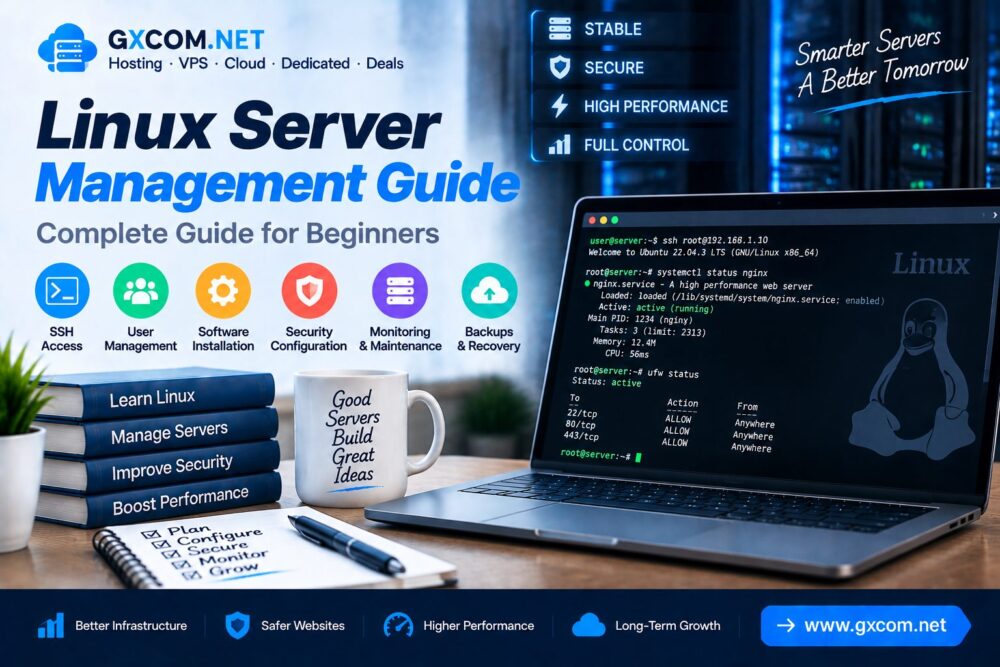
This Linux Server Management Guide explains the fundamentals of Linux server administration, including SSH access, user management, security configuration, software installation and performance monitoring.
What Is Linux Server Management?
Linux server management refers to the process of configuring, maintaining and monitoring a Linux-based server environment.
Common server management tasks include:
- Connecting through SSH
- Managing users and permissions
- Installing software packages
- Configuring security settings
- Monitoring server resources
- Creating backups
Why Learn Linux Server Management?
Linux is widely used for web hosting, cloud computing and enterprise infrastructure because of its flexibility and reliability.
Understanding Linux server management helps users:
- Control server environments
- Improve website performance
- Troubleshoot technical problems
- Configure custom applications
- Manage VPS and cloud servers
Linux Server Management Basics
| Area | Description |
|---|---|
| SSH | Remote server access |
| Users | Account and permission management |
| Packages | Software installation and updates |
| Firewall | Network security control |
| Monitoring | Resource performance tracking |
1. Connect to Linux Server Using SSH
SSH (Secure Shell) is the most common method for managing Linux servers remotely.
To connect to a server, users typically need:
- Server IP address
- Username
- Password or SSH key
- SSH client
Common SSH command:
ssh username@server-ip
SSH allows administrators to perform server tasks without physical access.
2. Understand Basic Linux Commands
Linux server management requires knowledge of basic command-line operations.
| Command | Purpose |
|---|---|
| ls | List files and folders |
| cd | Change directory |
| mkdir | Create folders |
| nano | Edit files |
| systemctl | Manage services |
| apt/yum | Install software packages |
3. Manage Linux Users and Permissions
User management is an important part of server administration.
Good permission management helps prevent unauthorized access.
Common tasks include:
- Creating users
- Removing inactive accounts
- Managing administrator privileges
- Setting file permissions
4. Keep Linux Server Software Updated
Regular updates improve security, stability and compatibility.
Server updates usually include:
- Operating system patches
- Security fixes
- Software improvements
- Bug fixes
Keeping software updated is one of the simplest server security practices.
5. Configure Linux Firewall Protection
A firewall controls network traffic entering and leaving a server.
Common Linux firewall solutions include:
- UFW
- iptables
- firewalld
Firewall configuration can help protect servers from unauthorized access.
6. Secure SSH Access
SSH is powerful but requires proper security configuration.
Recommended practices:
- Use SSH keys
- Disable unnecessary accounts
- Change default settings
- Limit login attempts
- Monitor access logs
7. Install and Manage Server Software
Linux servers can run different applications depending on their purpose.
Common server software includes:
- Web servers
- Database systems
- Programming environments
- Control panels
- Monitoring tools
8. Monitor Linux Server Performance
Performance monitoring helps identify resource problems before they affect users.
Important metrics include:
| Resource | Monitor |
|---|---|
| CPU | Processor usage |
| RAM | Memory consumption |
| Storage | Disk usage |
| Network | Traffic activity |
9. Create Regular Server Backups
Backups protect important data from hardware failures, software errors or security incidents.
A good backup strategy includes:
- Automatic backups
- Off-site storage
- Database backups
- Regular recovery testing
10. Linux Server Management for VPS Users
Many VPS users need basic Linux management skills because VPS hosting provides more control than shared hosting.
Linux VPS management commonly includes:
- Server configuration
- Application installation
- Security management
- Performance optimization
Users comparing VPS solutions can explore our best VPS reviews.
Linux Server Security Checklist
| Security Action | Recommendation |
|---|---|
| SSH Keys | Recommended |
| Firewall | Required |
| Software Updates | Required |
| Backups | Required |
| Monitoring | Recommended |
Linux Server Management Tools
| Tool Type | Purpose |
|---|---|
| SSH Client | Remote access |
| Control Panel | Server management interface |
| Monitoring Tools | Performance tracking |
| Backup Tools | Data protection |
Linux Server vs Managed Hosting
| Feature | Linux Server | Managed Hosting |
|---|---|---|
| Control | High | Limited |
| Maintenance | User responsibility | Provider managed |
| Customization | Flexible | Limited |
| Technical Skill | Required | Lower requirement |
Frequently Asked Questions
Is Linux server management difficult for beginners?
Linux server management requires learning basic commands and concepts, but beginners can gradually build skills through practice.
What is SSH used for in Linux servers?
SSH allows administrators to securely access and manage remote Linux servers.
Do VPS users need Linux knowledge?
Linux knowledge is helpful for VPS users who want greater control over server configuration and applications.
How often should Linux servers be updated?
Servers should be updated regularly to maintain security and stability.
Final Thoughts
Linux server management is an essential skill for anyone working with VPS, cloud or dedicated infrastructure.
By learning SSH, security configuration, software management and monitoring practices, users can operate Linux servers more confidently.
A strong understanding of Linux administration provides a solid foundation for managing modern hosting environments and building reliable online services.