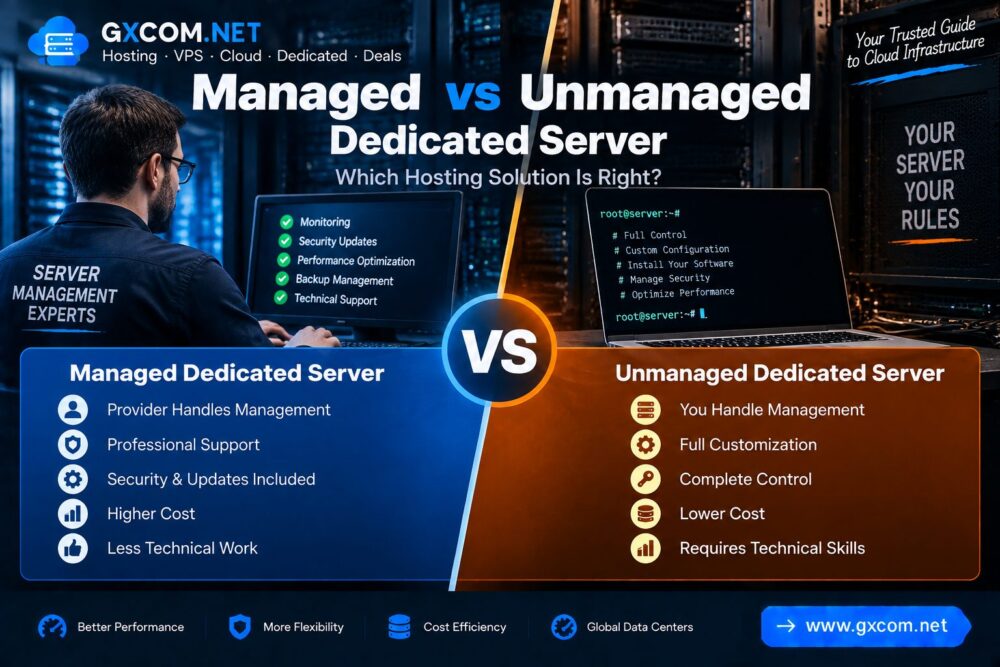
Choosing the right dedicated hosting provider is important for businesses, developers and technical users who need full control over their server environment.
Self managed hosting gives users direct access to physical hardware while allowing complete control over operating systems, applications and server configurations.
This guide compares leading unmanaged hosting providers, their features, hardware options and which type of users they are best suited for.

What Is Self Managed Dedicated Hosting?
Self managed dedicated hosting means customers receive an entire physical server but handle most administration tasks themselves.
Unlike managed solutions, users are responsible for:
- Server configuration
- Operating system management
- Security updates
- Software installation
- Performance optimization
How We Compare Hosting Providers
When evaluating dedicated hosting companies, important factors include:
- Hardware quality
- Network performance
- Data center locations
- Pricing structure
- Management flexibility
- Security options
- Customer support
Best Unmanaged Dedicated Server Providers
1. Hetzner
Hetzner is a popular European hosting provider known for affordable dedicated servers and strong infrastructure.
Key features:
- Competitive pricing
- European data centers
- Powerful hardware options
- Flexible server configurations
Suitable for developers, startups and businesses looking for cost-effective dedicated infrastructure.
2. OVHcloud
OVHcloud provides dedicated servers with large-scale infrastructure and multiple global locations.
Key features:
- Worldwide data centers
- High bandwidth options
- DDoS protection features
- Multiple server configurations
OVHcloud is commonly used for websites, applications and enterprise workloads.
3. Leaseweb
Leaseweb focuses on professional hosting infrastructure with global network coverage.
Key features:
- Enterprise infrastructure
- Global connectivity
- Dedicated hardware options
- Flexible deployment choices
4. InterServer
InterServer offers dedicated server solutions with straightforward configurations.
Key features:
- Custom server options
- Reliable infrastructure
- Flexible hosting plans
- Technical support
5. Liquid Web
Liquid Web provides premium hosting infrastructure designed for businesses requiring higher levels of performance.
Key features:
- High-performance servers
- Business-focused solutions
- Advanced infrastructure
- Professional support
Provider Comparison Table
| Provider | Best For | Main Advantage |
|---|---|---|
| Hetzner | Budget infrastructure | Affordable hardware |
| OVHcloud | Global hosting | Large network |
| Leaseweb | Enterprise users | Global connectivity |
| InterServer | Flexible setups | Custom options |
| Liquid Web | Business hosting | Premium support |
Important Hardware Features
CPU Performance
Processor performance affects application speed and server workload handling.
Memory Capacity
More RAM helps support databases, applications and high traffic websites.
Storage Technology
| Storage | Usage |
|---|---|
| HDD | Large storage requirements |
| SSD | General performance workloads |
| NVMe SSD | High speed applications |
Self Managed Hosting vs Managed Hosting
| Feature | Self Managed | Managed |
|---|---|---|
| Control | Maximum | Limited |
| Maintenance | User handled | Provider handled |
| Cost | Lower | Higher |
| Technical Skill | Required | Less required |
Security Considerations
Users managing dedicated infrastructure should pay attention to server security.
- Configure firewalls
- Use secure authentication
- Install updates regularly
- Monitor server activity
- Create backups
Read our server security guide for additional protection methods.
Who Should Choose Self Managed Hosting?
This hosting approach is suitable for:
- Experienced developers
- System administrators
- Technology companies
- Businesses with IT teams
- Users requiring custom environments
Dedicated Server vs VPS Hosting
Users upgrading from virtual servers should understand the differences between VPS and physical infrastructure.
A dedicated machine provides exclusive hardware resources, while VPS solutions share physical infrastructure through virtualization.
Learn more with our VPS hosting guide.
How to Choose the Right Provider
- Check hardware specifications
- Compare network locations
- Review bandwidth options
- Consider support requirements
- Evaluate upgrade flexibility
Common Mistakes When Choosing Providers
- Selecting only by price
- Ignoring network quality
- Choosing insufficient hardware
- Skipping backup planning
- Ignoring security requirements
Frequently Asked Questions
What is an unmanaged hosting provider?
An unmanaged hosting provider supplies dedicated hardware while customers manage software, configuration and maintenance.
Is self managed hosting cheaper?
It is usually more affordable because administration services are not included.
Who needs dedicated infrastructure?
Businesses, developers and applications requiring exclusive resources may benefit from dedicated servers.
Do I need Linux skills?
Linux knowledge is helpful for users managing their own server environment.
Final Thoughts
Self managed dedicated hosting provides maximum control, flexibility and hardware resources for experienced users.
The right provider depends on your performance requirements, technical ability, budget and infrastructure goals.
By comparing hardware, network quality and management options, businesses can choose a hosting solution that supports long-term growth.