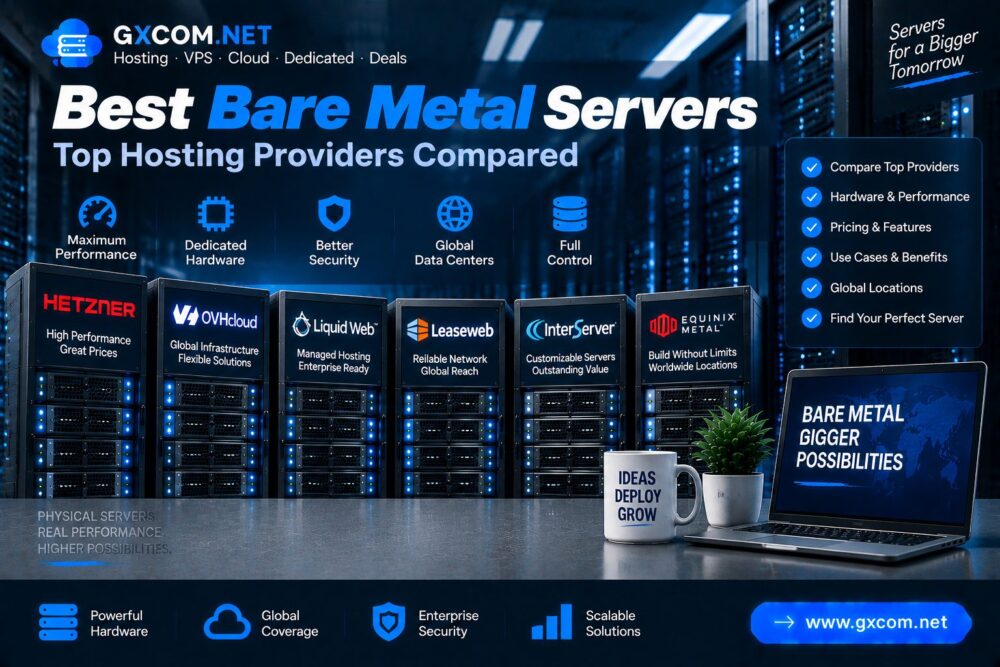
Choosing the right server infrastructure is an important decision for businesses, developers and organizations that require reliable performance and complete control.
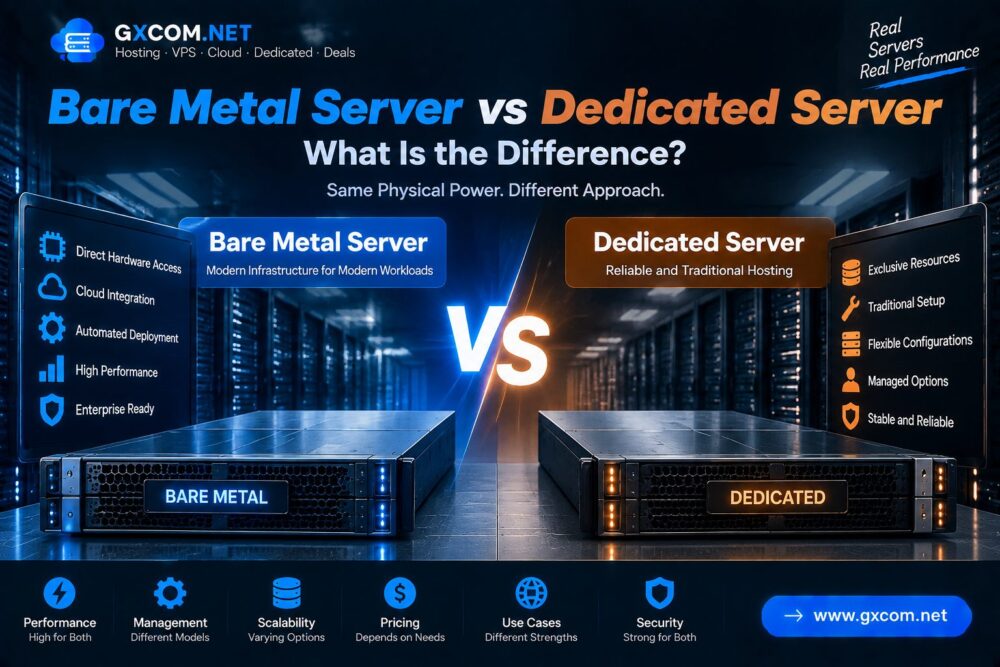
Bare metal servers and dedicated servers both provide exclusive physical hardware, but they differ in deployment methods, management models, automation capabilities and typical use cases.
This Bare Metal Server vs Dedicated Server comparison explains the key differences and helps you choose the right hosting solution.
What Is a Bare Metal Server?
A bare metal server is a physical server dedicated to one customer without virtualization layers between applications and hardware.
Users receive direct access to:
- CPU resources
- RAM memory
- Storage devices
- Network resources
- Operating system environment
Bare metal infrastructure is commonly used for high-performance computing, enterprise applications, artificial intelligence workloads and cloud-native deployments.
What Is a Dedicated Server?
A dedicated server is a physical server rented from a hosting provider and assigned exclusively to one customer.
Dedicated servers are commonly used for:
- High traffic websites
- Business applications
- Gaming servers
- Database hosting
- Enterprise platforms
Traditional dedicated hosting focuses on providing reliable physical hardware with full administrative control.
Bare Metal Server vs Dedicated Server: Quick Comparison
| Feature | Bare Metal Server | Dedicated Server |
|---|---|---|
| Hardware | Physical server | Physical server |
| Resource Sharing | No sharing | No sharing |
| Virtualization | Usually none | Usually none |
| Deployment | Cloud-style automation | Traditional provisioning |
| Scalability | Higher flexibility | Hardware upgrade based |
| Typical Users | Enterprise and cloud workloads | Websites and applications |
Hardware Performance Differences
Both solutions provide dedicated physical resources, but the surrounding infrastructure can affect performance.
Bare Metal Performance
Bare metal servers are designed for workloads requiring maximum hardware efficiency.
Common advantages include:
- Direct hardware access
- Predictable performance
- Low latency
- High computing capacity
Dedicated Server Performance
Dedicated servers also provide exclusive hardware resources and are suitable for many business applications.
Common workloads include:
- Web hosting
- E-commerce platforms
- Business software
- Database systems
Deployment and Management Differences
| Feature | Bare Metal | Dedicated Server |
|---|---|---|
| Deployment | Often automated | Traditional setup |
| Cloud Integration | Strong | Limited |
| Management Tools | API and automation focused | Control panel and server tools |
| Customization | Very high | Very high |
Bare Metal vs Dedicated Server Pricing
Pricing depends on hardware configuration, provider services and management options.
| Cost Factor | Bare Metal | Dedicated Server |
|---|---|---|
| Hardware | Dedicated | Dedicated |
| Management | May require technical skills | Managed options available |
| Pricing Model | Infrastructure focused | Hosting focused |
Scalability Comparison
Scalability is one of the main differences between traditional dedicated hosting and modern bare metal infrastructure.
Bare Metal Scalability
- Cloud integration
- Automated deployment
- API management
- Flexible infrastructure models
Dedicated Server Scalability
- Hardware upgrades
- Additional servers
- Migration planning
- Traditional hosting expansion
Bare Metal Server vs Dedicated Server Use Cases
| Workload | Recommended Option |
|---|---|
| AI and Machine Learning | Bare Metal |
| Enterprise Applications | Both |
| High Traffic Websites | Dedicated Server |
| Cloud Native Applications | Bare Metal |
| Gaming Servers | Dedicated Server |
| Large Databases | Both |
Security Comparison
Both bare metal and dedicated servers provide strong resource isolation because hardware is not shared with other customers.
Security practices should include:
- Firewall configuration
- Regular updates
- Secure authentication
- Backup management
- System monitoring
Learn more in our
server security guide
.
Bare Metal Server vs Dedicated Server for Businesses
| Business Requirement | Recommended Choice |
|---|---|
| Maximum hardware performance | Bare Metal |
| Simple website hosting | Dedicated Server |
| Cloud application deployment | Bare Metal |
| Traditional business software | Dedicated Server |
| Custom infrastructure | Both options |
Bare Metal Server vs Dedicated Server: Which One Should You Choose?
The right choice depends on your technical requirements and business goals.
Choose bare metal servers when you need:
- High-performance computing
- Cloud integration
- Automated infrastructure
- Advanced deployment options
Choose dedicated servers when you need:
- Reliable website hosting
- Traditional server management
- Business applications
- Simple infrastructure control
Related Dedicated Hosting Resources
Learn more about dedicated infrastructure:
Frequently Asked Questions
Are bare metal servers the same as dedicated servers?
Both provide dedicated physical hardware, but bare metal platforms often include stronger automation and cloud integration features.
Is bare metal faster than dedicated hosting?
Performance depends on hardware configuration and workload requirements. Both can deliver high performance with suitable hardware.
Who should use bare metal servers?
Organizations running demanding workloads, AI applications and enterprise infrastructure often choose bare metal solutions.
Who should use dedicated servers?
Dedicated servers are commonly used by websites, businesses and applications requiring exclusive resources.
Final Thoughts
Bare metal servers and dedicated servers both provide powerful physical infrastructure, but they serve different requirements.
Bare metal solutions focus on performance, automation and modern infrastructure needs, while dedicated servers remain a reliable choice for traditional hosting workloads.
Understanding your applications, scalability requirements and management preferences will help you select the right server solution.