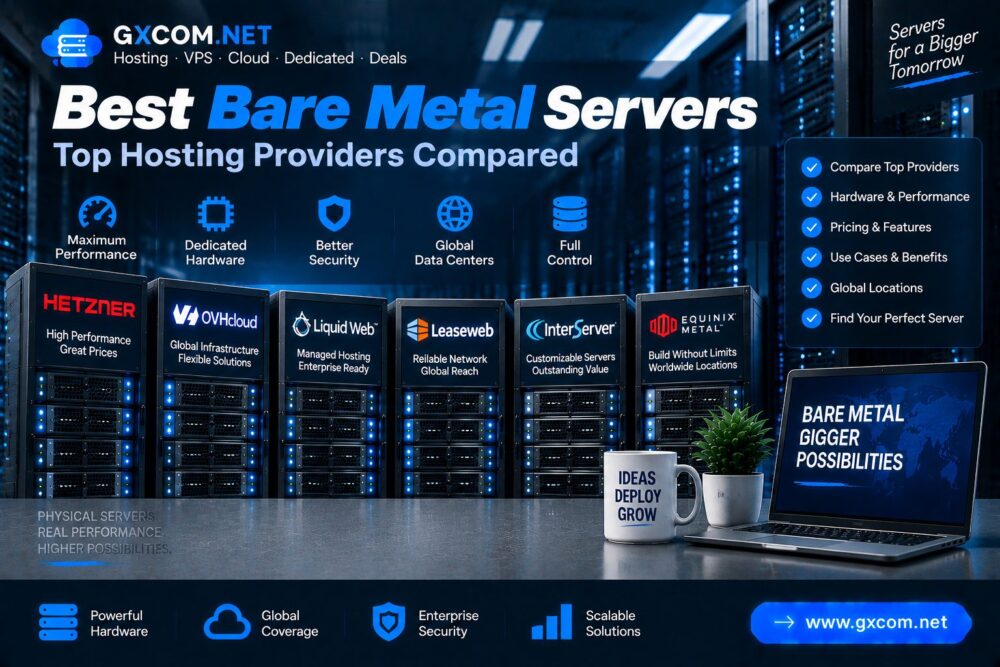
Bare metal servers provide businesses, developers and enterprises with direct access to physical server hardware without virtualization layers.
Unlike cloud servers or virtual private servers, bare metal infrastructure delivers dedicated computing resources with maximum performance, flexibility and control.
This Bare Metal Server Guide explains what bare metal servers are, how they work, their benefits, common use cases and how to choose the right solution.
What Is a Bare Metal Server?
A bare metal server is a physical machine dedicated entirely to a single customer or organization.
The user receives direct access to the server hardware, including:
- CPU processors
- RAM memory
- Storage devices
- Network resources
- Operating system environment
Because there is no virtualization layer between applications and hardware, bare metal servers can deliver consistent performance for demanding workloads.
How Bare Metal Servers Work
Traditional cloud environments usually divide physical servers into multiple virtual machines. Bare metal servers provide direct hardware access instead.
| Infrastructure Type | Resource Access |
|---|---|
| Shared Hosting | Shared resources |
| VPS Hosting | Virtualized resources |
| Cloud Server | Virtual infrastructure |
| Bare Metal Server | Dedicated physical hardware |
Bare Metal Server vs Dedicated Server
Bare metal servers and dedicated servers are similar because both provide exclusive physical hardware.
| Feature | Bare Metal Server | Dedicated Server |
|---|---|---|
| Hardware | Physical server | Physical server |
| Virtualization | Usually none | Usually none |
| Cloud Integration | Strong | Limited |
| Deployment | Often automated | Traditional provisioning |
| Target Users | Enterprise and cloud workloads | Websites and applications |
For traditional dedicated hosting options, read our
dedicated server hosting guide
.
Benefits of Bare Metal Servers
1. Maximum Performance
Bare metal servers provide direct hardware access without sharing resources with other virtual machines.
Advantages include:
- Consistent CPU performance
- High memory availability
- Low latency workloads
- Predictable resource usage
2. Full Hardware Control
Organizations can customize hardware and software environments according to specific requirements.
Common customization options include:
- Operating system selection
- Storage configuration
- Network settings
- Security policies
3. Better Resource Isolation
Because resources are not shared with other customers, bare metal servers provide strong workload isolation.
This makes them suitable for applications requiring stable performance and security.
Bare Metal Server Use Cases
Enterprise Applications
Large organizations often use bare metal infrastructure for business-critical applications requiring reliability and consistent performance.
Artificial Intelligence and Machine Learning
AI workloads often require powerful processors, large memory capacity and specialized hardware.
Bare metal environments can support:
- Machine learning models
- Data processing
- GPU computing
- High-performance workloads
Database Hosting
Large databases benefit from dedicated hardware resources.
Common workloads include:
- Enterprise databases
- Analytics platforms
- Data warehouses
Gaming Servers
Online gaming platforms require low latency and stable performance, making bare metal servers a popular choice.
Bare Metal Server Performance
Performance depends on hardware configuration and workload requirements.
CPU Selection
Processors affect application speed and computing capability.
Consider:
- CPU cores
- Clock speed
- Processor generation
- Workload type
Memory Requirements
| RAM | Suitable Workloads |
|---|---|
| 32GB | Small applications |
| 64GB-128GB | Business applications |
| 256GB+ | Enterprise workloads |
Storage Options
| Storage | Usage |
|---|---|
| HDD | Large capacity storage |
| SSD | General performance workloads |
| NVMe SSD | High-speed applications |
Bare Metal Server vs Cloud Server
| Feature | Bare Metal | Cloud Server |
|---|---|---|
| Hardware | Physical | Virtualized |
| Performance | Maximum | Flexible |
| Scalability | Hardware upgrade | Rapid scaling |
| Control | Very high | High |
| Cost Model | Fixed resources | Usage based |
Bare Metal Server Security
Bare metal servers provide strong isolation, but security management remains important.
Recommended practices:
- Configure firewall protection
- Apply security updates
- Use encrypted connections
- Monitor system activity
- Create backups
Learn more in our
server security guide
.
Managed vs Unmanaged Bare Metal Servers
| Feature | Managed | Unmanaged |
|---|---|---|
| Administration | Provider assistance | User responsibility |
| Technical Skills | Lower requirement | Higher requirement |
| Control | Moderate | Maximum |
Experienced administrators may prefer unmanaged solutions for greater flexibility.
Bare Metal Server Pricing Factors
Pricing depends on several factors:
- CPU model
- Memory capacity
- Storage type
- Network bandwidth
- Data center location
- Management services
How to Choose a Bare Metal Server
- Identify workload requirements
- Select appropriate hardware
- Consider scalability needs
- Review network performance
- Evaluate provider support
- Plan security requirements
Common Bare Metal Server Mistakes
- Choosing hardware only by price
- Ignoring future expansion
- Underestimating storage requirements
- Skipping security planning
- Not evaluating provider reliability
Frequently Asked Questions
What is a bare metal server?
A bare metal server is a physical server dedicated to one customer without sharing hardware resources through virtualization.
Is bare metal better than cloud?
The right choice depends on workload requirements. Bare metal focuses on maximum performance, while cloud platforms provide flexible scaling.
Who needs bare metal servers?
Organizations running demanding applications, databases, AI workloads and enterprise systems often use bare metal infrastructure.
Are bare metal servers expensive?
Costs vary depending on hardware specifications, provider location and included services.
Final Thoughts
Bare metal servers provide powerful dedicated infrastructure for organizations requiring high performance, security and hardware control.
Compared with virtualized environments, bare metal solutions offer predictable resources and strong workload isolation.
Understanding your applications, performance requirements and budget will help you determine whether bare metal infrastructure is the right choice.