Bare metal servers provide businesses and enterprises with direct access to physical hardware, delivering high performance, predictable resources and complete infrastructure control.
Unlike virtualized cloud environments, bare metal solutions provide dedicated hardware without sharing computing resources with other users.
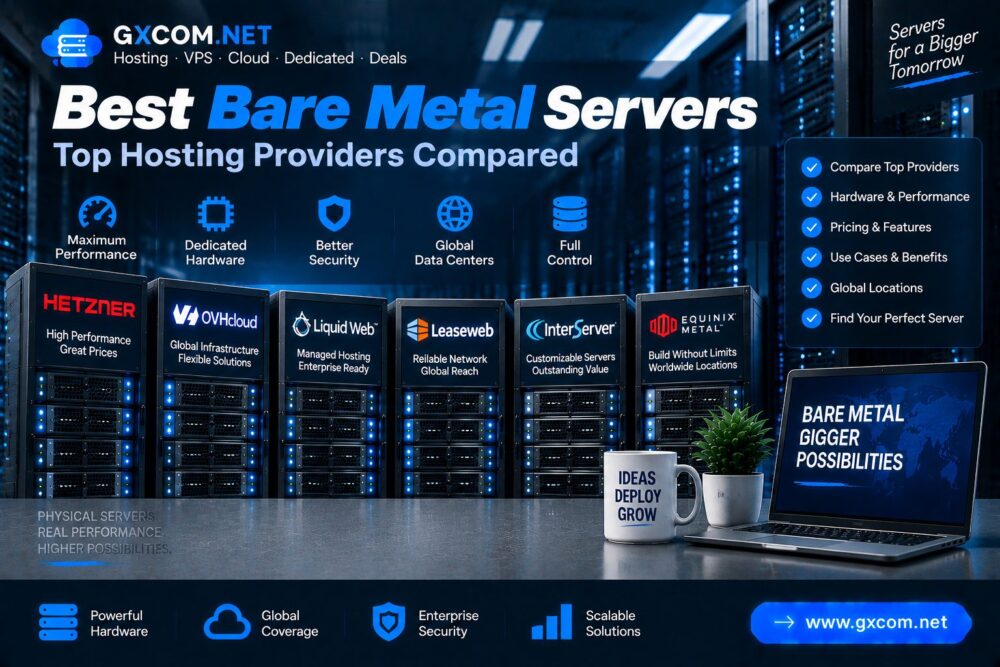
This guide compares the best bare metal servers from leading hosting providers, including hardware options, performance, pricing factors and key features.
What Makes a Good Bare Metal Server Provider?
Choosing a bare metal provider requires evaluating more than server specifications.
Important factors include:
- CPU performance
- Memory capacity
- Storage technology
- Network quality
- Data center locations
- Deployment speed
- Security options
- Technical support
Best Bare Metal Server Providers
1. Hetzner
Hetzner is a European hosting provider known for affordable dedicated infrastructure and powerful server configurations.
Key features:
- Competitive pricing
- Modern processors
- NVMe storage options
- European data centers
- Developer-friendly infrastructure
Hetzner is popular among developers, startups and businesses looking for cost-effective bare metal solutions.
2. OVHcloud
OVHcloud provides bare metal infrastructure with global data centers and extensive hardware options.
Key features:
- Global infrastructure
- High bandwidth connectivity
- DDoS protection
- Flexible configurations
- Enterprise deployment options
3. Liquid Web
Liquid Web provides premium managed infrastructure designed for businesses requiring professional support.
Key features:
- Managed bare metal solutions
- Enterprise support
- High-performance hardware
- Business-focused hosting
4. Leaseweb
Leaseweb offers global bare metal infrastructure for businesses requiring reliable connectivity and scalable deployments.
Key features:
- Worldwide locations
- Enterprise network
- Large bandwidth options
- Flexible hardware selection
5. InterServer
InterServer provides customizable bare metal hosting solutions with flexible server configurations.
Key features:
- Custom hardware options
- Linux and Windows support
- Flexible deployment
- Competitive pricing
6. Equinix Metal
Equinix Metal provides automated bare metal infrastructure designed for cloud-native applications and enterprise workloads.
Key features:
- Global infrastructure
- Automated provisioning
- Developer-focused platform
- High-performance hardware
Bare Metal Server Provider Comparison
| Provider | Best For | Main Advantage |
|---|---|---|
| Hetzner | Developers | Affordable hardware |
| OVHcloud | Global projects | Large infrastructure |
| Liquid Web | Businesses | Managed support |
| Leaseweb | Enterprise users | Global connectivity |
| InterServer | Flexible projects | Custom configurations |
| Equinix Metal | Cloud-native applications | Automation |
Bare Metal Server Hardware Features
CPU Performance
The processor determines how efficiently workloads are handled.
Consider:
- CPU cores
- Clock frequency
- Processor generation
- Application requirements
RAM Capacity
Memory affects application stability and multitasking performance.
Higher memory configurations are useful for:
- Databases
- Artificial intelligence workloads
- Enterprise applications
- Analytics platforms
Storage Options
| Storage | Recommended Usage |
|---|---|
| HDD | Large capacity storage |
| SSD | General applications |
| NVMe SSD | High performance workloads |
Bare Metal Server Performance
Performance is one of the main reasons organizations choose bare metal infrastructure.
Advantages include:
- No shared hardware resources
- Predictable performance
- Lower latency
- Direct hardware access
Bare Metal Server vs Cloud Server
| Feature | Bare Metal | Cloud Server |
|---|---|---|
| Hardware | Physical server | Virtualized environment |
| Performance | Maximum | Flexible |
| Scaling | Hardware based | Rapid scaling |
| Control | Full control | High control |
Learn more about infrastructure differences in our
Bare Metal Server Guide
.
Bare Metal Server vs Dedicated Server
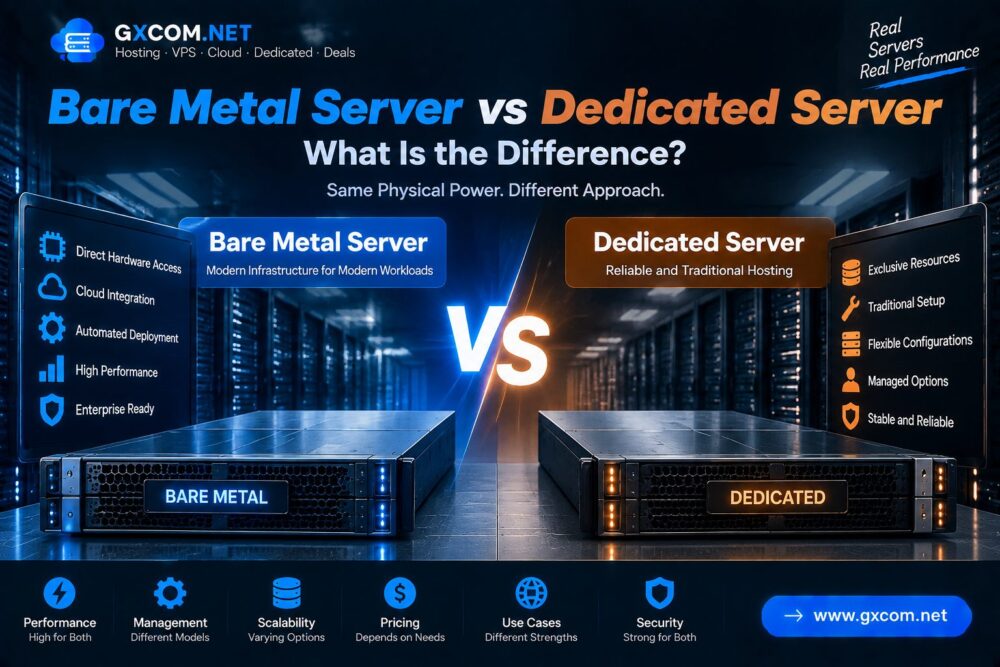
Bare metal servers and dedicated servers both provide exclusive physical hardware.
| Feature | Bare Metal | Dedicated Server |
|---|---|---|
| Hardware Access | Direct | Direct |
| Cloud Integration | Stronger | Traditional hosting |
| Automation | Often available | Limited |
Bare Metal Security Features
Security remains important even when using dedicated physical hardware.
- Firewall management
- Access control
- System monitoring
- Backup planning
- Security updates
Read our
server security guide
for additional protection methods.
Who Should Choose Bare Metal Servers?
- Enterprise applications
- AI and machine learning projects
- Large databases
- Gaming platforms
- High-performance computing workloads
- Cloud-native applications
Managed vs Unmanaged Bare Metal Hosting
| Feature | Managed | Unmanaged |
|---|---|---|
| Administration | Provider assistance | User responsibility |
| Control | Moderate | Maximum |
| Technical Skills | Lower requirement | Required |
Users requiring complete control can view our
unmanaged dedicated server guide
.
How to Choose the Best Bare Metal Server
- Identify workload requirements
- Select suitable hardware
- Check network performance
- Review provider locations
- Evaluate support quality
- Consider future expansion
Common Mistakes When Choosing Bare Metal Hosting
- Choosing only based on price
- Ignoring hardware specifications
- Underestimating bandwidth needs
- Skipping security planning
- Not considering future growth
Frequently Asked Questions
What is the best bare metal server?
The best option depends on workload requirements, budget, location and technical needs.
Are bare metal servers faster than cloud servers?
Bare metal servers can provide higher and more predictable performance because they use dedicated physical hardware.
Who needs bare metal hosting?
Businesses running demanding applications, databases, AI workloads and enterprise platforms often choose bare metal infrastructure.
Is bare metal hosting expensive?
Pricing depends on hardware configuration, provider location and included services.
Final Thoughts
The best bare metal servers combine powerful hardware, reliable networks and flexible infrastructure options.
Choosing the right provider depends on performance requirements, workload type, budget and future scalability plans.
By comparing providers, hardware features and deployment options, businesses can select a bare metal solution that supports long-term infrastructure growth.