Microsoft Azure and Amazon Web Services (AWS) are two of the world’s largest cloud computing platforms, providing businesses with scalable infrastructure, cloud applications, databases and enterprise solutions.
For companies planning digital transformation, choosing between Azure vs AWS can be challenging because both platforms offer powerful services, global infrastructure and advanced security features.
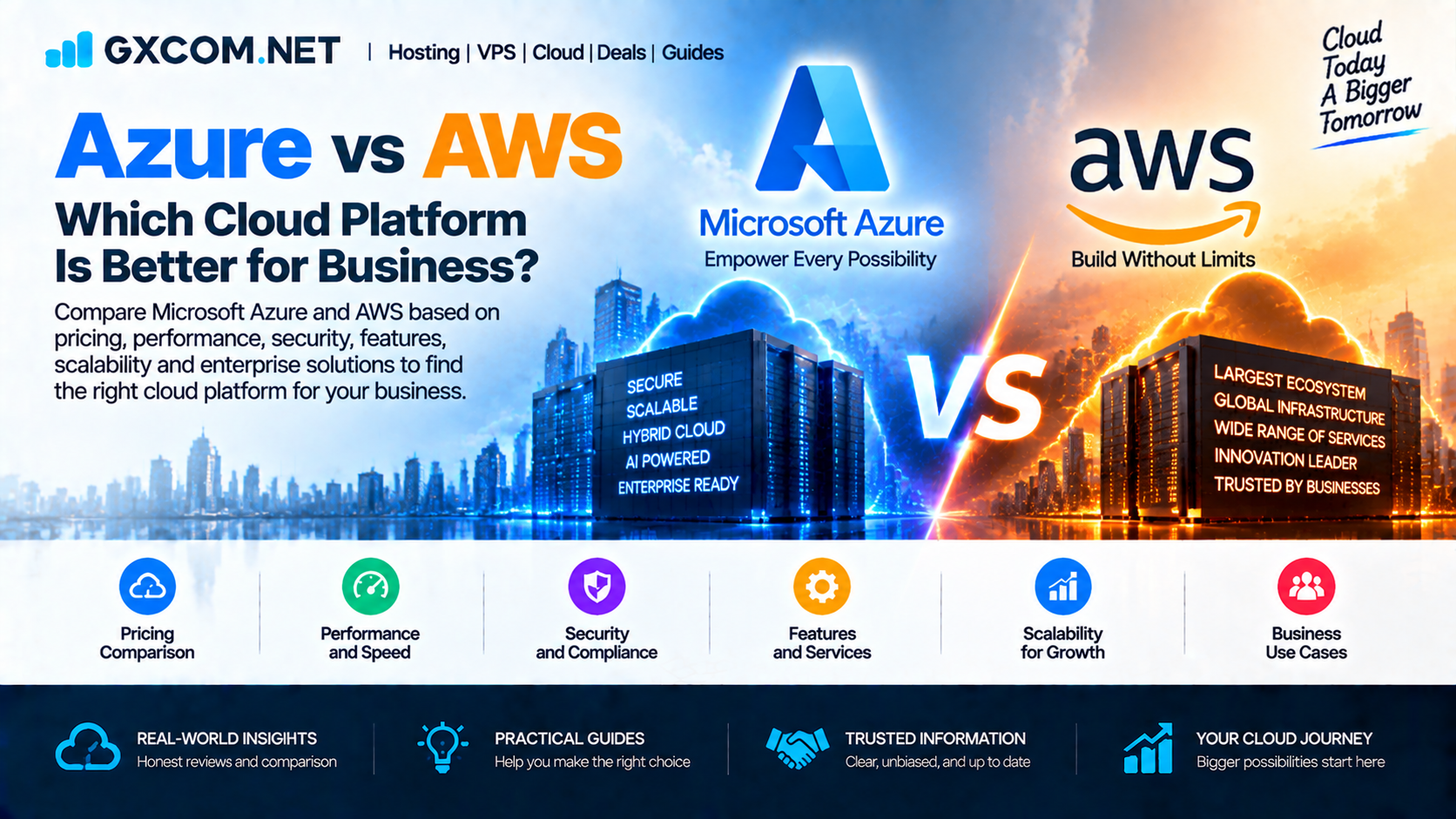
This Azure vs AWS comparison analyzes pricing, performance, security, features, scalability and business use cases to help you choose the right cloud platform.
Quick Comparison: Azure vs AWS
| Feature | Azure | AWS |
|---|---|---|
| Market Position | Second largest cloud provider | Largest cloud provider |
| Best Strength | Enterprise integration | Cloud ecosystem |
| Hybrid Cloud | Excellent | Strong |
| AI Services | Strong | Strong |
| Best For | Enterprise businesses | All cloud workloads |
What Is Microsoft Azure?
Microsoft Azure is Microsoft’s cloud computing platform that provides infrastructure, applications and enterprise cloud services.
Azure is especially popular among companies already using Microsoft technologies such as Windows Server, Microsoft 365 and Active Directory.
Main Azure services include:
- Azure Virtual Machines
- Azure Storage
- Azure SQL Database
- Azure Kubernetes Service
- Azure AI Services
Read our detailed Microsoft Azure review for complete pricing and feature analysis.
What Is AWS?
Amazon Web Services is the world’s largest cloud platform, offering hundreds of cloud services for businesses, developers and enterprises.
AWS provides:
- Cloud servers
- Storage solutions
- Databases
- Machine learning services
- Enterprise infrastructure
Azure vs AWS Pricing Comparison
Both Azure and AWS use flexible pay-as-you-go pricing models.
| Pricing Factor | Azure | AWS |
|---|---|---|
| Pricing Model | Usage based | Usage based |
| Discount Options | Enterprise agreements | Reserved instances |
| Cost Management | Good | More complex |
Azure vs AWS Performance
Both cloud platforms provide excellent performance through global data centers and advanced networking infrastructure.
Azure Performance Advantages
- Strong enterprise networking
- Excellent hybrid cloud performance
- Microsoft ecosystem optimization
- Global cloud regions
AWS Performance Advantages
- Largest cloud infrastructure
- Many availability zones
- Wide range of computing options
- Large service ecosystem
Azure vs AWS Features Comparison
| Category | Azure | AWS |
|---|---|---|
| Compute | Azure Virtual Machines | Amazon EC2 |
| Storage | Azure Storage | Amazon S3 |
| Database | Azure SQL | Amazon RDS |
| Kubernetes | AKS | EKS |
Enterprise Business Comparison
Azure has a strong advantage among enterprises because of its integration with Microsoft’s existing business ecosystem.
Companies using Windows environments often find Azure easier to integrate with existing systems.
AWS has a larger overall cloud ecosystem and supports a wider range of applications and industries.
Security Comparison: Azure vs AWS
Both platforms provide enterprise-level security.
- Identity management
- Encryption
- Compliance certifications
- Threat detection
- Network protection
Hybrid Cloud: Azure vs AWS
Azure has a strong advantage in hybrid cloud environments.
Microsoft provides tools that allow companies to connect local servers with Azure cloud services.
AI and Machine Learning Comparison
| Category | Azure | AWS |
|---|---|---|
| AI Platform | Azure AI | Amazon Bedrock |
| Machine Learning | Strong | Strong |
| Enterprise AI | Excellent | Excellent |
Advantages of Microsoft Azure
- Excellent Microsoft integration
- Strong enterprise solutions
- Leading hybrid cloud capabilities
- Advanced security features
- Strong business support
Advantages of AWS
- Largest cloud ecosystem
- Most available services
- Strong global infrastructure
- Large developer community
- Extensive documentation
Who Should Choose Azure?
Azure is ideal for:
- Large enterprises
- Companies using Microsoft products
- Government organizations
- Hybrid cloud projects
- Business applications
Who Should Choose AWS?
AWS is suitable for:
- Technology companies
- Startups
- SaaS applications
- Global websites
- Complex cloud workloads
Azure vs AWS: Which Cloud Platform Is Better?
There is no universal winner between Azure and AWS. The better choice depends on your business requirements.
Azure is often the preferred choice for enterprises already using Microsoft technologies and needing hybrid cloud solutions.
AWS is a strong option for companies requiring the largest cloud ecosystem and maximum service flexibility.
Businesses comparing other cloud platforms can also explore our best AWS alternatives guide.
Final Verdict
Azure vs AWS is one of the most important cloud platform decisions for modern businesses.
Microsoft Azure offers excellent enterprise integration, hybrid cloud capabilities and business-focused solutions.
AWS provides unmatched service variety, global infrastructure and cloud flexibility.
The right platform depends on your technology environment, budget and long-term business strategy.
Frequently Asked Questions
Is Azure better than AWS?
Azure is better for Microsoft-focused enterprises, while AWS offers a larger cloud ecosystem.
Which is cheaper, Azure or AWS?
Pricing depends on workload, services and discounts. Both platforms can be cost-effective when optimized properly.
Which cloud provider is better for business?
Both Azure and AWS are excellent choices. The best option depends on existing technology and business requirements.
Is Azure good for enterprise cloud?
Yes. Azure is widely used by enterprises because of its Microsoft integration and hybrid cloud capabilities.