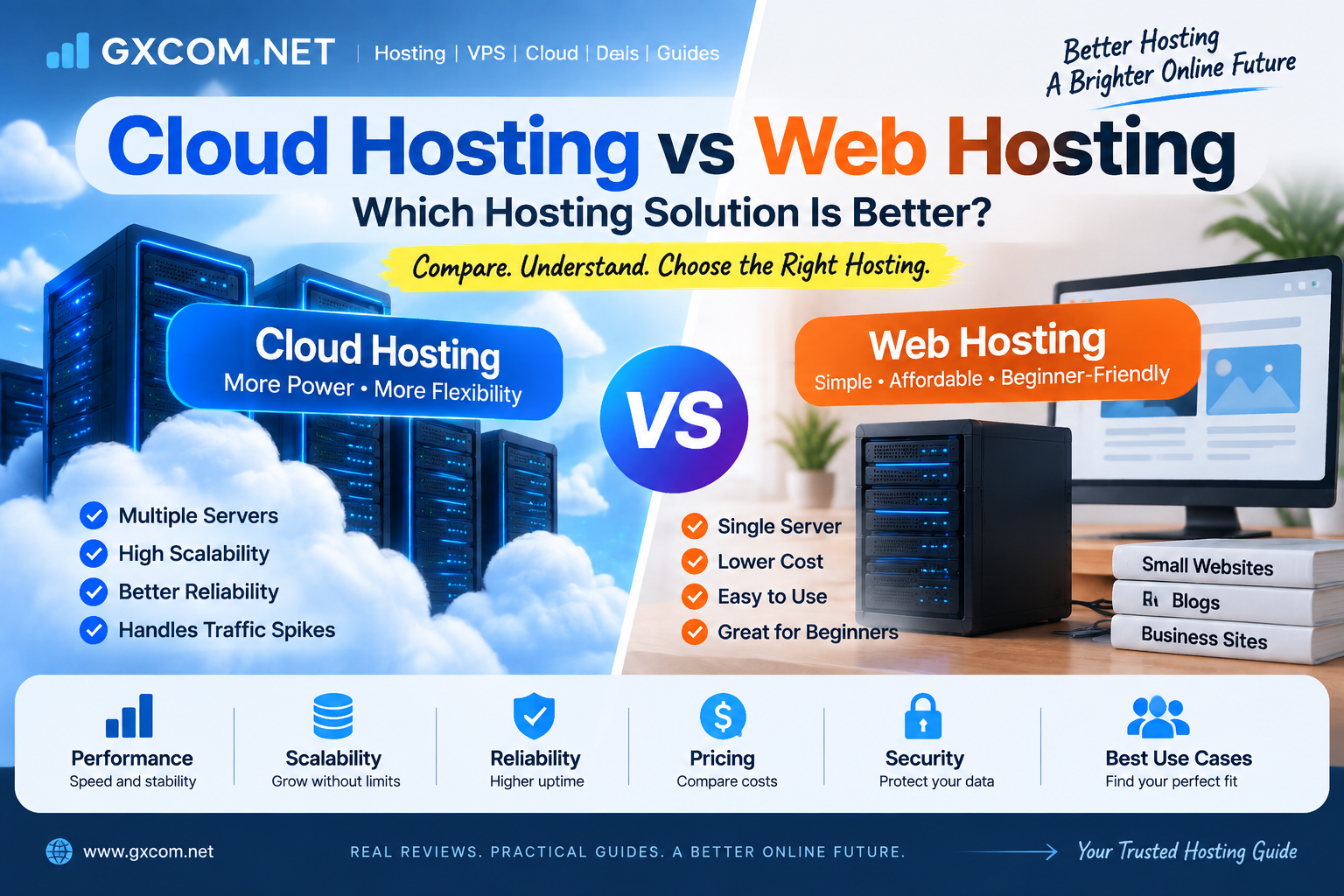
Cloud hosting has become one of the most popular solutions for websites, applications and businesses that need better scalability, reliability and performance.
Unlike traditional hosting that depends on a single physical server, cloud hosting uses multiple connected servers to provide flexible resources and improved availability.
With many cloud hosting providers offering different features and pricing models, choosing the right solution can be challenging.
This guide compares the best cloud hosting providers based on performance, pricing, scalability, reliability, security and overall value.
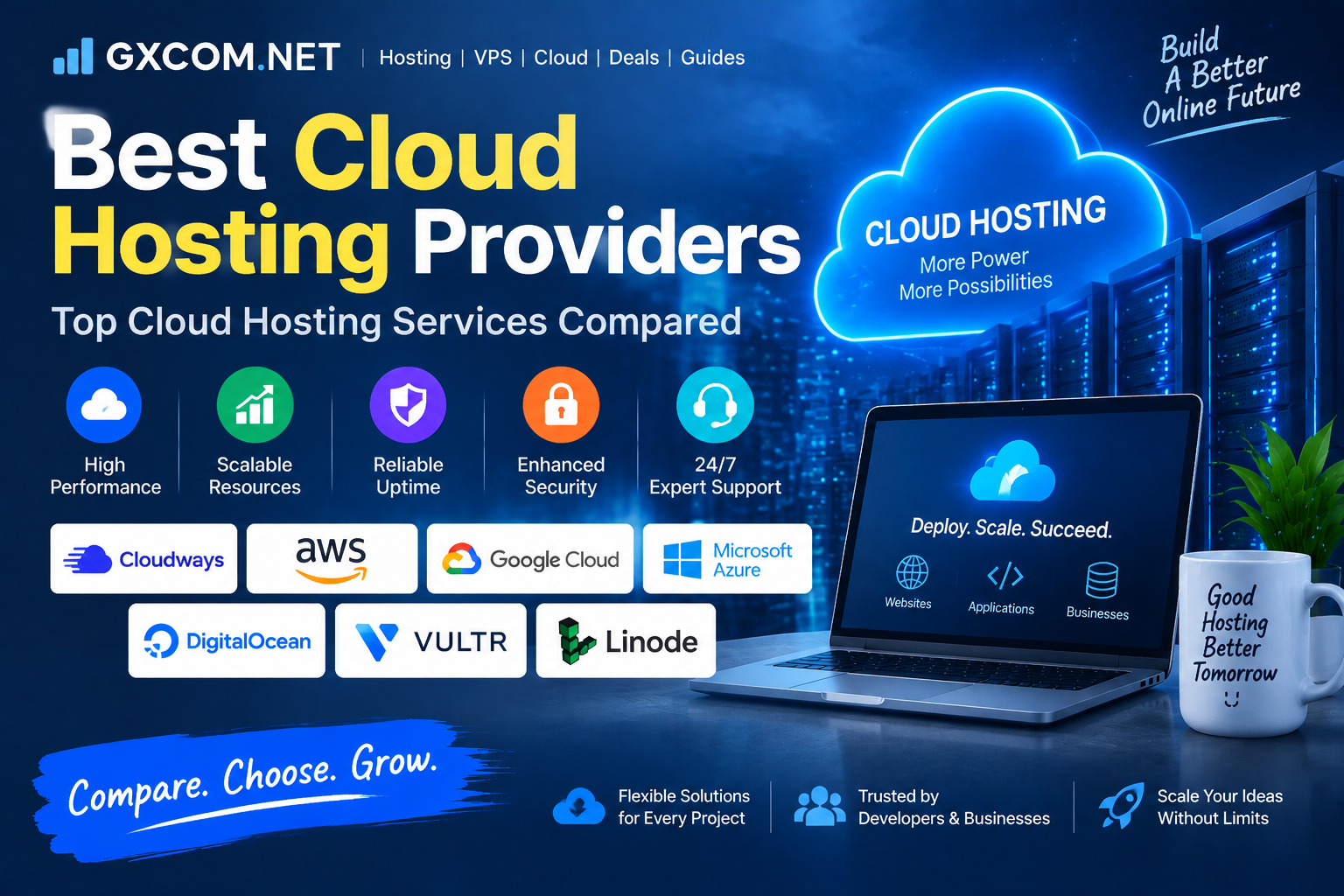
Quick Verdict: Best Cloud Hosting Providers
| Provider | Best For | Main Advantage |
|---|---|---|
| Cloudways | Managed cloud hosting | Easy cloud management |
| Amazon AWS | Enterprise applications | Global cloud infrastructure |
| Google Cloud | Advanced cloud projects | Powerful technology platform |
| Microsoft Azure | Business users | Enterprise integration |
| DigitalOcean | Developers | Simple cloud deployment |
What Is Cloud Hosting?
Cloud hosting is a hosting method that distributes website and application resources across multiple connected servers.
This approach provides advantages over traditional single-server hosting, including:
- Better reliability
- Flexible resource scaling
- Improved performance
- Higher availability
- Global infrastructure options
For users comparing traditional solutions, see our cloud hosting vs web hosting comparison.
1. Cloudways: Best Managed Cloud Hosting Provider
Cloudways is one of the most popular managed cloud hosting platforms for users who want cloud infrastructure without complicated server administration.
It allows customers to deploy websites on leading cloud platforms while Cloudways manages many technical tasks.
Best For
- Business websites
- WordPress websites
- Agencies
- Growing online projects
Main Advantages
- Managed cloud environment
- Easy server management
- Multiple cloud providers
- Scalable resources
2. Amazon AWS: Best Enterprise Cloud Platform
Amazon Web Services (AWS) is one of the world’s largest cloud computing platforms.
AWS provides hundreds of cloud services including computing, storage, databases and networking solutions.
It is widely used by startups, enterprises and developers building large-scale applications.
Learn more about AWS solutions in our AWS cloud resources.
3. Google Cloud: Best Technology-Focused Cloud Provider
Google Cloud provides powerful infrastructure, data analytics and machine learning capabilities.
It is popular among developers and businesses that need advanced cloud technologies.
4. Microsoft Azure: Best Cloud Hosting for Businesses
Microsoft Azure provides enterprise cloud services with strong integration with Microsoft products and business systems.
Many organizations choose Azure because of its security features and enterprise capabilities.
Explore more information in our Azure cloud section.
5. DigitalOcean: Simple Cloud Hosting for Developers
DigitalOcean focuses on simplicity, making cloud deployment easier for developers and startups.
Its cloud servers are popular for web applications, testing environments and developer projects.
Benefits of Cloud Hosting
Scalability
Cloud hosting allows users to increase or decrease resources based on website traffic and application requirements.
Reliability
Because resources are distributed across multiple servers, cloud hosting can reduce downtime risks.
Performance
Cloud platforms often provide powerful infrastructure with modern processors, SSD storage and global data centers.
Security
Many cloud providers offer security tools including monitoring, backups and network protection.
Cloud Hosting vs Traditional Hosting
| Feature | Cloud Hosting | Traditional Hosting |
|---|---|---|
| Infrastructure | Multiple connected servers | Single server |
| Scalability | High flexibility | Limited |
| Reliability | Higher availability | Depends on one server |
| Pricing | Usage-based options | Fixed plans |
How to Choose the Best Cloud Hosting Provider
1. Check Performance
Consider CPU, RAM, storage technology, network speed and server locations.
2. Compare Pricing Models
Cloud hosting providers may charge monthly plans, hourly usage or resource-based pricing.
3. Review Scalability
A good cloud provider should allow easy upgrades when your website grows.
4. Consider Support
Technical support is important, especially for businesses running critical applications.
Who Should Use Cloud Hosting?
Cloud hosting is suitable for:
- Business websites
- Ecommerce platforms
- Web applications
- Developers
- Growing online services
Cloud Hosting Provider Comparison Factors
| Factor | Importance |
|---|---|
| Performance | Website speed and user experience |
| Scalability | Supports future growth |
| Security | Protects websites and applications |
| Support | Helps solve technical issues |
Final Verdict
The best cloud hosting provider depends on your website goals, technical requirements and budget.
Cloudways is a strong choice for users who want managed cloud hosting, AWS and Google Cloud provide powerful infrastructure, while Azure offers excellent enterprise solutions.
Before choosing a cloud hosting service, compare performance, pricing, scalability and support to find the right platform for your project.
Frequently Asked Questions
What is the best cloud hosting provider?
The best provider depends on your needs. Cloudways, AWS, Google Cloud, Azure and DigitalOcean are popular cloud hosting options.
Is cloud hosting better than shared hosting?
Cloud hosting generally provides better scalability and reliability compared with traditional shared hosting.
Who needs cloud hosting?
Businesses, developers and websites expecting growth can benefit from cloud hosting.
Is cloud hosting expensive?
Cloud hosting pricing varies widely depending on resources, provider and usage requirements.