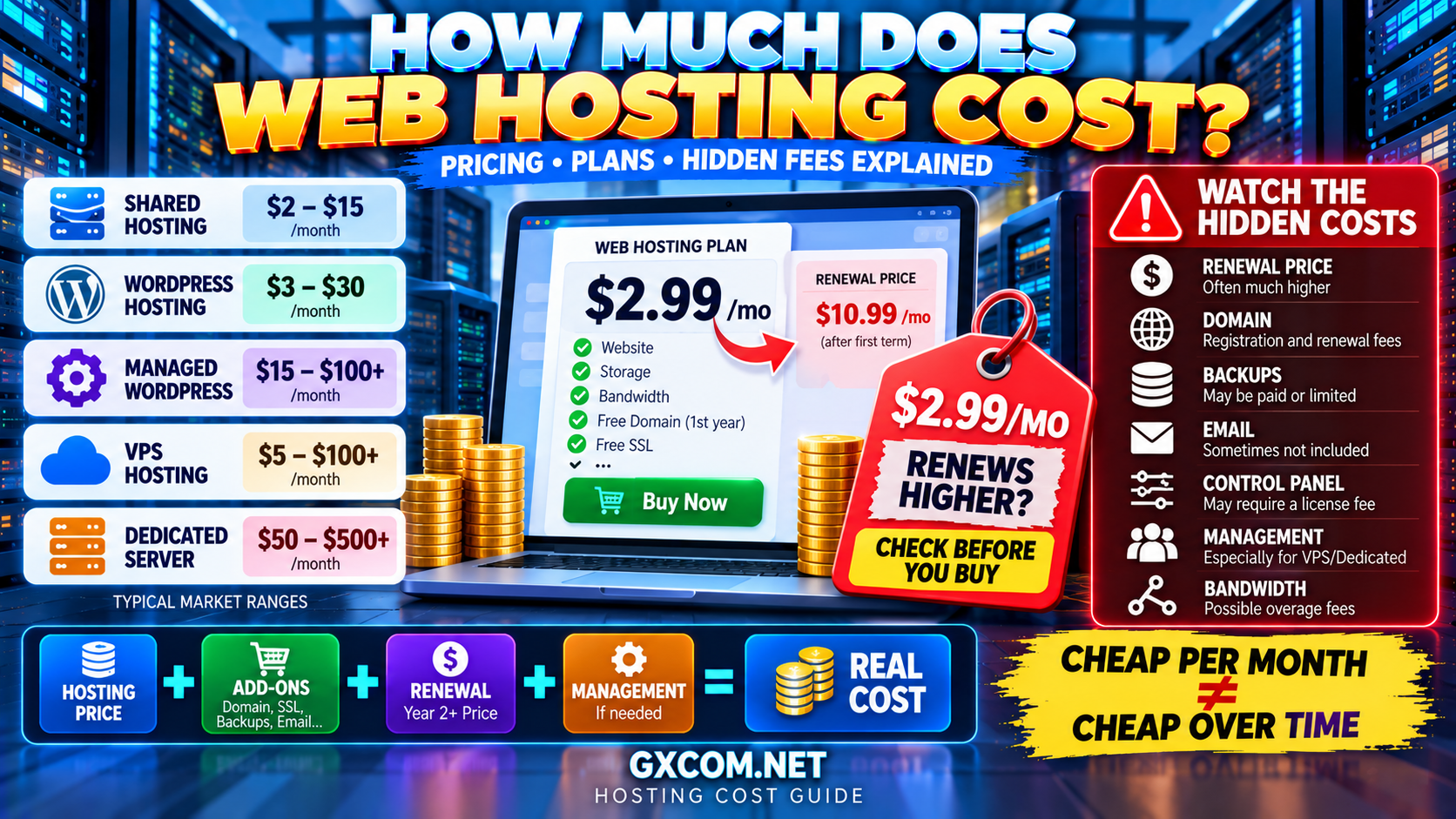
A web hosting plan may look affordable when you first sign up, but the amount you pay at renewal can be significantly different. Introductory discounts, billing terms, domain fees, and optional services all influence the long-term cost of running a website.
Understanding web hosting renewal costs helps you avoid unexpected bills and compare providers based on what you will actually spend over several years—not just the advertised starting offer.
This guide explains how hosting renewals work, which add-ons deserve attention, and how to calculate your real hosting budget before committing.
What Are Web Hosting Renewal Costs?
Web hosting renewal costs are the charges required to continue your hosting service after the current billing period ends.
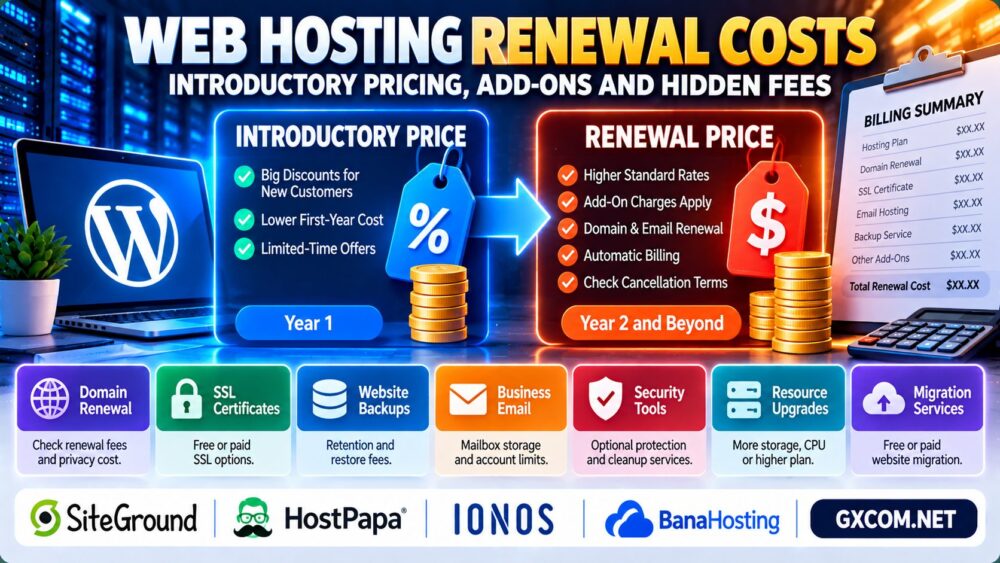
Many providers offer introductory discounts to new customers. When that promotional term expires, the subscription may renew at the provider's standard rate.
For example, a plan advertised with a discounted first-year price may cost more during its second year. The exact difference depends on the provider, plan, billing term, and applicable promotions.
Some services also renew separately. Your domain registration, email hosting, backups, or security tools may follow different billing schedules.
That is why comparing only the initial checkout total can produce a misleading picture of affordability.
Introductory Pricing vs Renewal Pricing
Introductory pricing is a promotional rate available under specific conditions, often for new accounts or qualifying initial billing terms.
Renewal pricing is the amount charged when the service continues after that promotional period.
Before purchasing a hosting plan, examine these five details:
- Promotional eligibility: Is the discount limited to new customers?
- Initial billing term: Does the offer require annual or multi-year prepayment?
- Standard renewal rate: What will the same plan cost after the discount ends?
- Automatic renewal: Will the provider charge your saved payment method automatically?
- Cancellation deadline: How early must you cancel to avoid another billing period?
Compare the same billing duration across providers. A discounted multi-year purchase and a standard monthly subscription are not directly comparable without calculating their total costs.
Our Best Web Hosting Services Guide provides a broader starting point for evaluating hosting features alongside pricing.
Seven Hosting Add-Ons That Can Increase Your Bill
1. Domain Registration and Renewal
Some hosting packages include a domain registration promotion for an initial period. The domain may renew separately at a different rate.
Check the renewal fee, supported domain extensions, transfer conditions, and whether domain privacy is included.
2. SSL Certificates
Free domain-validated SSL certificates may be sufficient for many websites. However, some providers sell optional commercial certificates or managed certificate services.

Confirm whether HTTPS can be maintained without purchasing an unnecessary upgrade.
3. Website Backups
Backup availability does not always mean free restoration. Providers may charge for additional retention, on-demand backups, or recovery assistance.
Check backup frequency, retention periods, restore permissions, and whether you can download independent copies.
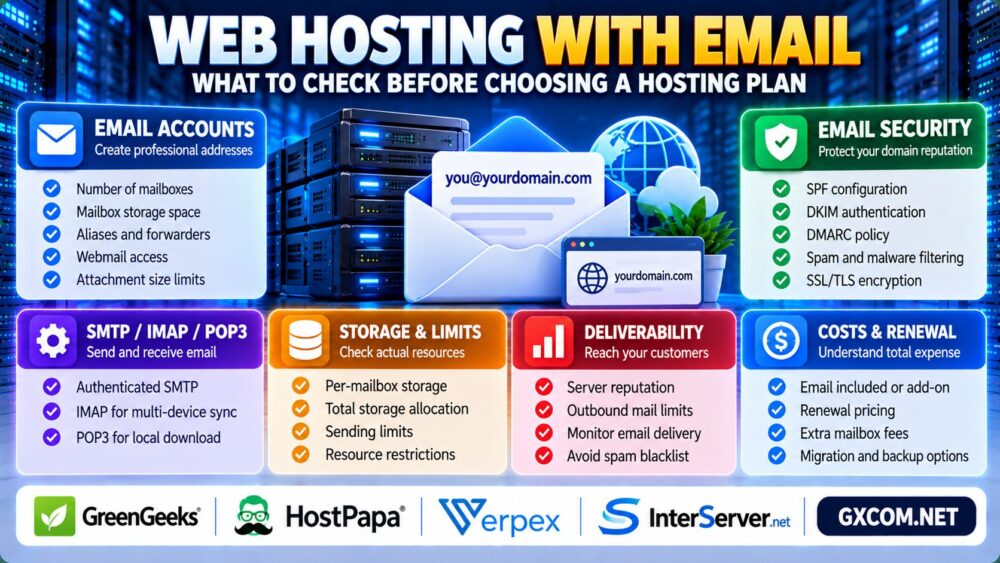
4. Business Email Hosting
Domain-based email accounts may be included, limited, or sold separately.
Evaluate mailbox storage, account limits, spam filtering, and whether your business needs a dedicated email service.
5. Malware Protection and Security Tools
Some security features are included in the hosting platform, while others are optional subscriptions.
Distinguish basic server security from paid malware scanning, cleanup services, and additional monitoring.
6. Storage and Resource Upgrades
Storage, CPU usage, memory, file counts, and account limits can affect whether your current plan remains suitable.
A low introductory rate is less valuable if you quickly need a more expensive tier.
7. Website Migration Services
Migration assistance may be included for qualifying websites or offered as a separate service.
Confirm whether the provider handles files, databases, email accounts, DNS changes, and post-migration testing.
How to Calculate the True Cost of Web Hosting
A useful comparison considers the entire period you expect to keep the website online.
Total Hosting Cost = Initial Hosting Charges + Renewal Charges + Required Add-Ons + One-Time Fees + Applicable Taxes.
Consider this hypothetical example:
| Expense | Year 1 | Year 2 |
|---|---|---|
| Hosting subscription | $36 | $120 |
| Domain registration or renewal | $0 | $18 |
| Optional backup service | $24 | $24 |
| Total | $60 | $162 |
These figures are illustrative, not actual provider quotations. In this example, the combined two-year cost is $222, excluding taxes and any additional services.
Compare that total against alternative plans with equivalent features rather than choosing whichever provider advertises the lowest starting price.
How to Compare Hosting Providers Beyond the First-Year Discount
When reviewing hosting options, evaluate renewal terms alongside reliability, support, performance, and included features.
SiteGround is one option to investigate for WordPress-focused hosting, while HostPapa may be relevant to small-business website requirements.
IONOS and BanaHosting are additional candidates for comparing hosting packages, billing structures, and included services.
These providers should be evaluated using their current official plan details. Do not assume that promotional terms, email features, backup services, or renewal conditions are identical across plans.
For promotion-focused comparisons, explore our Web Hosting Deals Guide, but always calculate the cost after the initial offer expires.
Should You Renew Your Hosting or Switch Providers?
Renewing may be sensible when your website performs reliably, support meets expectations, and the total renewal cost remains competitive.
Consider switching when recurring charges no longer match the value delivered, essential features require expensive upgrades, or persistent technical problems remain unresolved.
Before moving, compare the potential savings against migration time, compatibility testing, downtime risk, and administrative effort.
WordPress users can review our WordPress Hosting Migration Guide for a practical transition process.
Also consider whether your workload has outgrown basic shared hosting. Our VPS vs Shared Hosting Comparison explains when additional resources and control may justify a different hosting category.
Web Hosting Renewal Checklist
- Find the standard renewal price before checkout.
- Compare identical billing periods.
- Check domain and email renewal charges separately.
- Identify optional add-ons selected during checkout.
- Verify backup and restoration costs.
- Review resource limits and upgrade requirements.
- Check cancellation, refund, and auto-renewal terms.
- Record renewal dates and retain billing confirmations.
If your main priority is affordability, compare the total ownership cost with the options discussed in our Cheap Hosting Offers Guide.

Frequently Asked Questions
Why does web hosting cost more after the first year?
Many providers offer introductory discounts that expire after the initial billing period. The subscription may then renew at the standard rate.
Are web hosting renewal prices fixed?
Not necessarily. Providers may change standard prices or plan terms, subject to their agreements and applicable requirements.
Does free domain registration mean free renewal?
No. A promotional domain registration may be free only for an initial period. Always check subsequent renewal charges.
Can I avoid hosting renewal fees by switching providers?
Switching may reduce future costs, but the replacement service has its own charges. Migration expenses and renewal terms should be included in the comparison.
Are website backups included in hosting plans?
Backup policies vary. Some plans include scheduled backups, while others charge for additional storage, retention, or restoration.
Is annual hosting cheaper than monthly hosting?
Sometimes, but not always over the full ownership period. Compare the total amount due, renewal rates, flexibility, and refund terms.
Final Verdict: Compare Total Cost, Not Just Introductory Price
The best way to evaluate web hosting renewal costs is to calculate the complete expense of keeping your website online over time.
Review promotional restrictions, standard renewal charges, required add-ons, and service quality before purchasing or renewing.
A genuinely affordable hosting plan is one that continues to deliver suitable performance, support, and features at a sustainable long-term cost.