Choosing the right hosting infrastructure can directly impact website performance, security, scalability, and operational costs.
Many businesses compare Managed Cloud Hosting and traditional Cloud Hosting because both provide flexible cloud resources, but they are designed for different levels of technical involvement.
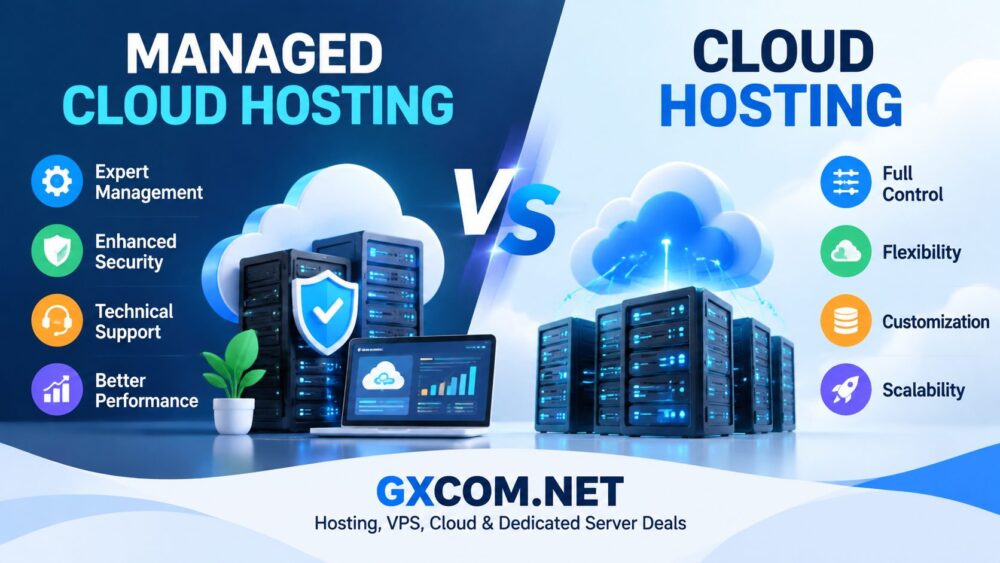
Cloud Hosting gives businesses powerful infrastructure with more control, while Managed Cloud Hosting adds professional management, monitoring, security, and technical support. Understanding the differences can help you select the right solution for your website, application, or online business.
What Is Cloud Hosting?
Cloud Hosting uses a network of interconnected servers to deliver computing resources instead of relying on a single physical server.
This architecture improves reliability because workloads can be distributed across multiple servers when demand changes.
Unlike traditional shared hosting, Cloud Hosting provides better scalability and resource flexibility. Businesses can increase CPU, RAM, and storage as their traffic grows.
Cloud Hosting is commonly used by:
- Growing websites
- Ecommerce platforms
- SaaS applications
- Developer projects
- High-traffic blogs
What Is Managed Cloud Hosting?
Managed Cloud Hosting provides cloud infrastructure together with professional management services. The hosting provider handles many technical tasks, allowing businesses to focus on their products and customers instead of server administration.
A Managed Cloud Hosting plan usually includes:
- Server setup and configuration
- Security monitoring
- Automatic updates
- Performance optimization
- Backup management
- Technical support
- Server troubleshooting
For companies without dedicated system administrators, Managed Cloud Hosting can reduce maintenance complexity and improve operational efficiency.
Managed Cloud Hosting vs Cloud Hosting: Key Differences
| Feature | Cloud Hosting | Managed Cloud Hosting |
|---|---|---|
| Server Management | User manages configuration and maintenance | Provider handles technical management |
| Technical Skills | Requires server knowledge | Suitable for non-technical users |
| Security | User manages security settings | Includes professional security monitoring |
| Support | Usually infrastructure support | More advanced technical assistance |
| Cost | Generally lower | Higher due to management services |
| Control | More customization freedom | Less direct server management |
Performance and Scalability Comparison
Both solutions use cloud infrastructure, meaning they can provide excellent scalability compared with traditional hosting solutions.
Cloud Hosting gives experienced users the ability to optimize resources manually. Developers can configure applications, adjust server settings, and customize environments based on specific requirements.
Managed Cloud Hosting focuses on convenience. The provider monitors performance and helps optimize the environment, which can be valuable when businesses experience rapid growth.
If your website receives unpredictable traffic spikes or runs critical applications, choosing the right cloud solution is important. You can also compare different options through our guide to Best Cloud Hosting Providers.
Security: Which Hosting Solution Is Safer?
Security depends on how the infrastructure is configured and maintained.
With Cloud Hosting, businesses are responsible for tasks such as security updates, firewall configuration, malware protection, and system monitoring.
Managed Cloud Hosting usually includes additional security services, such as proactive monitoring, automated updates, and professional maintenance.
For businesses handling customer information, online transactions, or important applications, managed services can reduce security risks caused by configuration mistakes.
Cost Comparison: Cloud Hosting vs Managed Cloud Hosting
Cloud Hosting is usually more affordable because customers only pay for infrastructure resources. However, businesses must consider the cost of managing servers internally.
Managed Cloud Hosting costs more because the provider includes technical expertise and ongoing maintenance.
The actual value depends on your business needs:
- Small businesses may benefit from managed services to save time.
- Developers may prefer cloud infrastructure with full control.
- Growing companies may choose managed solutions to reduce operational workload.
Which Solution Should Your Business Choose?
Choose Cloud Hosting If:
- You have technical experience
- You need full server control
- You want flexible customization
- You manage your own infrastructure
Choose Managed Cloud Hosting If:
- You want professional server management
- You do not have an internal IT team
- You need reliable technical support
- Your website or application is business-critical
Managed Cloud Hosting vs Cloud Hosting: Final Thoughts
Both Managed Cloud Hosting and Cloud Hosting provide scalable and reliable infrastructure, but they serve different audiences.
Cloud Hosting is ideal for developers and businesses that want maximum control over their environment. Managed Cloud Hosting is better suited for companies that prefer convenience, security, and expert assistance.
Before choosing a solution, consider your technical skills, budget, growth plans, and the importance of server management. For businesses looking for flexible infrastructure, exploring Cloud VPS Hosting and other cloud solutions can also help identify the right option.