



Gaming VPS with Dedicated CPU Cores: When Shared vCPU Becomes a Bottleneck
A gaming VPS with dedicated CPU cores can improve performance consistency when shared virtual CPUs become overloaded. However, dedicated resources are not automatically necessary for every Minecraft, Rust, or ARK server. The right choice depends…
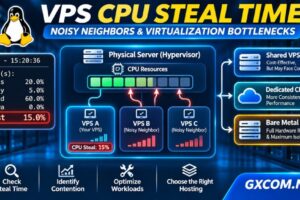
VPS CPU Steal Time Explained: Detect Noisy Neighbors and Virtualization Bottlenecks
VPS CPU steal time is an important performance metric when a virtual private server feels slow despite having available CPU resources. Applications may respond inconsistently, database queries may take longer, and website latency may increase…


Cheap VPS Overselling Explained: Shared CPU, RAM Limits and Noisy Neighbors
A cheap VPS advertising four CPU cores, 8GB RAM, and NVMe storage can look like an incredible bargain. But why does a server with impressive specifications sometimes struggle to load a basic WordPress website? One…
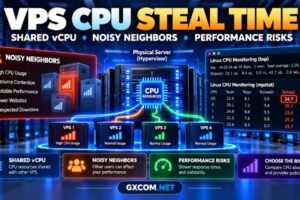
VPS CPU Steal Time Explained: Shared vCPU, Noisy Neighbors and Performance Risks
VPS CPU steal time can explain why a virtual private server feels slow even when its advertised CPU specifications appear sufficient. A VPS with four or eight virtual CPU cores may still experience inconsistent performance…

Cloud VPS with Dedicated CPU: Compute Isolation, Burstable Performance and Costs
Why Dedicated CPU Matters for Cloud VPS Hosting A cloud VPS can have enough memory and fast storage yet still feel unpredictable when several virtual machines compete for processor time. Slow database queries, inconsistent API…


Gaming VPS CPU Steal and Shared Resources: Performance Risks Explained
A gaming VPS can advertise multiple vCPUs, generous RAM, and NVMe storage yet still struggle with unpredictable game server lag. One possible explanation is gaming VPS CPU steal, a virtualization metric that reveals when a…

Shared vCPU vs Dedicated vCPU VPS: Performance Isolation, CPU Limits and Real Costs
Two VPS plans can advertise the same number of virtual CPUs and deliver very different performance under sustained load. A 4-vCPU server might handle occasional traffic spikes comfortably but struggle with continuous background processing. Another…