Virtual private servers have become a popular alternative to shared hosting because they provide dedicated resources, better performance and greater control. However, not all VPS solutions use the same infrastructure.
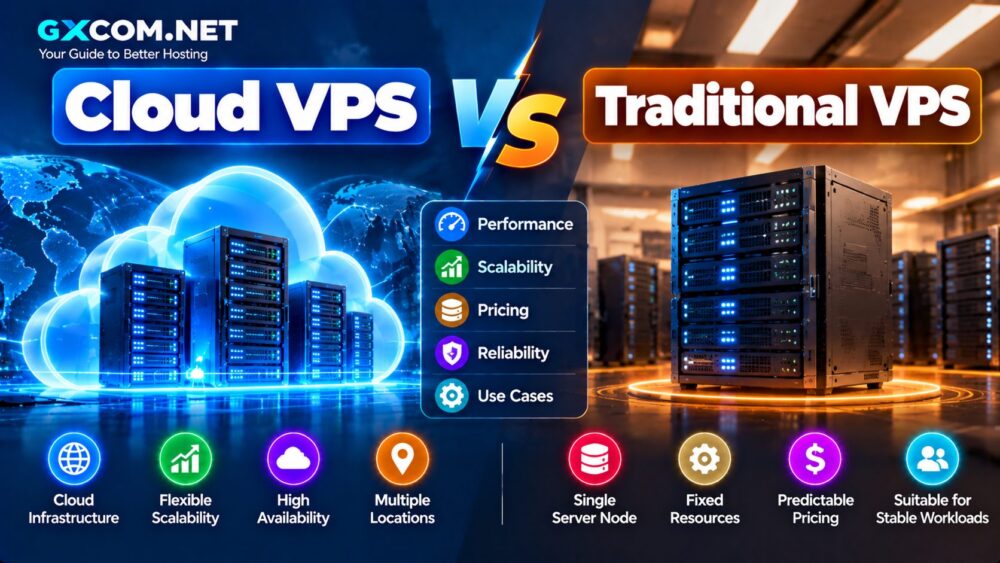
The main difference between Cloud VPS and Traditional VPS is how resources are delivered. Traditional VPS hosting usually runs virtual machines on a single physical server, while Cloud VPS uses cloud infrastructure designed for flexibility, scalability and distributed resources.
This guide compares Cloud VPS vs Traditional VPS in terms of architecture, performance, scalability, pricing, reliability and which users should choose each option.
Cloud VPS vs Traditional VPS Quick Comparison
| Feature | Cloud VPS | Traditional VPS |
|---|---|---|
| Infrastructure | Cloud-based virtual infrastructure | Usually one physical server node |
| Scalability | Flexible resource expansion | Usually requires migration or upgrade |
| Availability | Designed around cloud platforms | Depends heavily on host server |
| Deployment | Fast automated provisioning | Traditional VPS setup |
| Pricing | Often usage-based or flexible | Usually fixed monthly plans |
| Best For | Applications and growing projects | Websites and stable workloads |
What Is Traditional VPS Hosting?
A traditional VPS is created by dividing a physical server into multiple isolated virtual servers using virtualization technology.
Each VPS receives allocated resources such as:
- CPU cores
- RAM
- Storage space
- Bandwidth
- Operating system access
The customer receives root access and can install applications, configure software and manage the server environment.
Traditional VPS hosting is widely used for:
- Business websites
- WordPress websites
- Small applications
- Development servers
- Private services
The main limitation is that the VPS remains connected to the physical server where it was created.
What Is Cloud VPS Hosting?
Cloud VPS uses cloud infrastructure instead of relying on a single physical server.
A Cloud VPS runs inside a cloud computing environment where resources are managed through a network of physical servers.
Typical Cloud VPS features include:
- Virtual CPU resources
- Cloud SSD or NVMe storage
- Flexible server deployment
- Snapshots and backups
- Multiple data center locations
- API management
- Easy scaling options
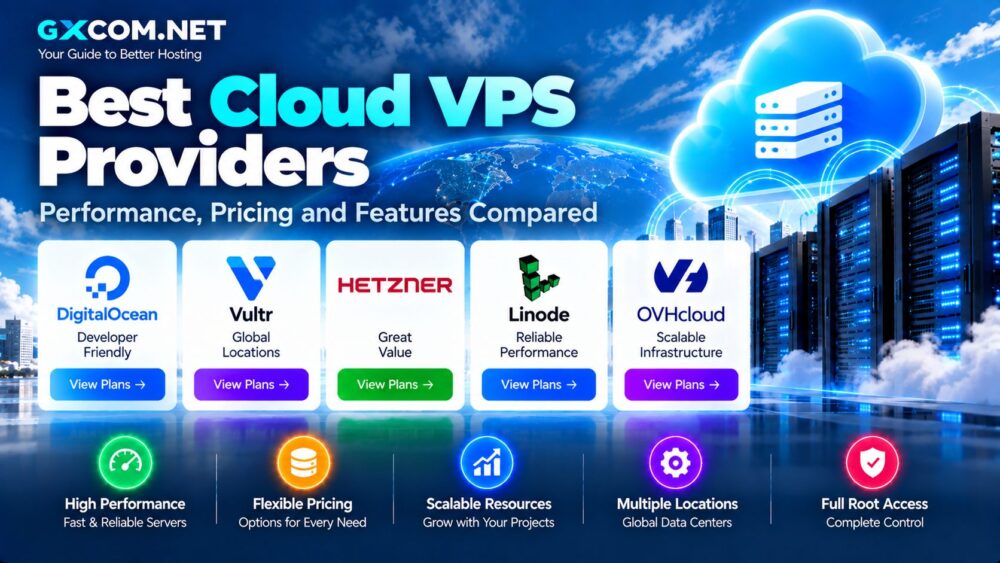
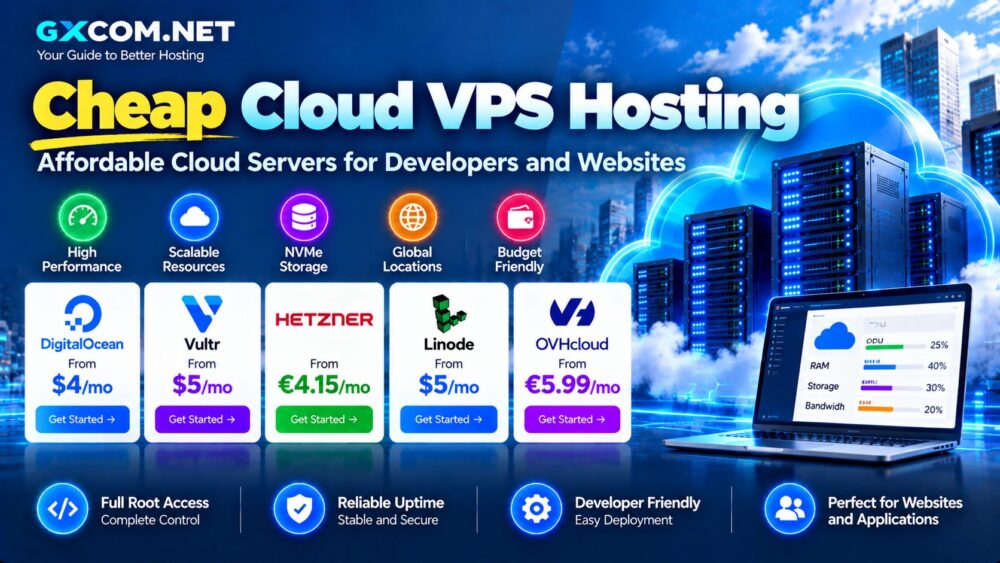
Popular Cloud VPS providers include DigitalOcean, Vultr, Hetzner Cloud, Linode (Akamai Cloud) and OVHcloud.
Infrastructure Difference: Cloud VPS vs Traditional VPS
Traditional VPS Architecture
A traditional VPS normally works like this:
Physical Server
       |
Virtualization Layer
       |
Multiple VPS Accounts
Each VPS shares the underlying physical hardware.
If the physical server experiences hardware problems, all VPS instances on that machine may be affected.
Cloud VPS Architecture
Cloud VPS uses a broader infrastructure model:
Cloud Infrastructure
        |
Compute + Storage + Network Resources
        |
Cloud VPS Instance
This approach provides more flexibility because computing resources are managed through a cloud platform rather than a single server node.
Performance Comparison
Performance depends on hardware quality, virtualization technology, storage, network and workload optimization.
CPU Performance
Both Cloud VPS and Traditional VPS can provide dedicated virtual CPU resources.
The difference is that cloud platforms often provide newer hardware generations and easier upgrades.
Storage Performance
Modern Cloud VPS providers frequently use SSD or NVMe storage.
Fast storage improves:
- Database operations
- Application loading
- File processing
- Website responsiveness
Network Performance
Cloud VPS platforms usually provide multiple regions and modern networking infrastructure.
This allows users to deploy servers closer to their customers.
Scalability: Cloud VPS Has the Advantage
Scalability is one of the biggest differences between Cloud VPS and Traditional VPS.
Traditional VPS Scaling
With traditional VPS hosting, upgrading often requires:
- Changing plans
- Moving to another server
- Manual migration
- Possible downtime
Cloud VPS Scaling
Cloud platforms usually make scaling easier:
- Increase CPU
- Add RAM
- Expand storage
- Create additional instances
- Deploy new servers quickly
This makes Cloud VPS attractive for websites and applications with unpredictable growth.
Reliability and Availability
Traditional VPS reliability depends heavily on the physical server and hosting provider infrastructure.
A quality VPS provider can still deliver excellent uptime through:
- Hardware monitoring
- Redundant systems
- Backups
- Professional data centers
Cloud VPS platforms are designed around cloud infrastructure, making it easier to provide flexible recovery options.
However, cloud does not automatically guarantee zero downtime. Application design, configuration and provider reliability remain important.
Cloud VPS vs Traditional VPS Pricing
Pricing models are another major difference.
| Pricing Factor | Cloud VPS | Traditional VPS |
|---|---|---|
| Billing | Monthly or hourly options | Usually monthly |
| Scaling Cost | Flexible resource adjustment | Upgrade plans |
| Entry Price | Often competitive | Usually predictable |
| Resource Control | Highly flexible | Fixed allocation |
Cloud VPS pricing can become higher when users consume additional resources, bandwidth or storage.
Traditional VPS can be more predictable because customers usually pay a fixed monthly amount.
Cloud VPS vs Traditional VPS for Websites
Both options can host websites successfully.
Traditional VPS Works Well For:
- Company websites
- Blogs
- Stable traffic websites
- Small online projects
Cloud VPS Works Well For:
- High-growth websites
- Multiple applications
- Traffic fluctuation
- International audiences
- Scalable platforms
If your website traffic is stable and predictable, traditional VPS may provide excellent value.
If growth and flexibility are priorities, Cloud VPS provides a smoother upgrade path.
Cloud VPS vs Traditional VPS for Developers
Developers often prefer Cloud VPS because cloud platforms provide:
- API access
- Automation tools
- Multiple regions
- Fast deployment
- Container support
- Scalable infrastructure
Traditional VPS can still be suitable for developers who need a simple dedicated environment with predictable costs.
Cloud VPS vs Traditional VPS for Business
Businesses should evaluate:
- Growth expectations
- Application requirements
- Technical resources
- Budget
- Support needs
A small business website may not need cloud flexibility immediately.
A growing ecommerce platform or SaaS application may benefit significantly from cloud infrastructure.
Managed Cloud VPS vs Managed VPS
Management level is another important factor.
Unmanaged VPS users handle:
- Security updates
- Server configuration
- Software installation
- Optimization
Managed VPS services provide assistance with:
- Maintenance
- Security
- Monitoring
- Technical support
Users without Linux administration experience should consider managed solutions.
Common Cloud VPS Mistakes
Choosing Only Based on Price
The cheapest VPS may not provide enough CPU, RAM or network performance.
Ignoring Technical Requirements
Cloud VPS usually requires more technical knowledge than shared hosting.
Overestimating Scalability Needs
Not every website needs complex cloud infrastructure.
Ignoring Backup Strategy
Always understand how backups and recovery work.
Which One Should You Choose?
Choose Traditional VPS if:
- You need predictable monthly costs
- Your workload is stable
- You do not require frequent scaling
- You want a simple server environment
Choose Cloud VPS if:
- Your website or application is growing
- You need flexible resources
- You want multiple deployment locations
- You need cloud automation
- You expect changing workloads
Cloud VPS vs Traditional VPS: Final Thoughts
Cloud VPS and Traditional VPS are both powerful hosting solutions, but they are designed for different needs.
Traditional VPS provides dedicated virtual resources with predictable pricing and straightforward management. Cloud VPS adds cloud infrastructure advantages such as flexible scaling, fast deployment and broader infrastructure options.
For simple websites and stable workloads, a traditional VPS can still be an excellent choice. For applications, businesses and projects expecting growth, Cloud VPS provides more flexibility.
The right choice depends on your workload, technical ability, budget and future expansion plans.