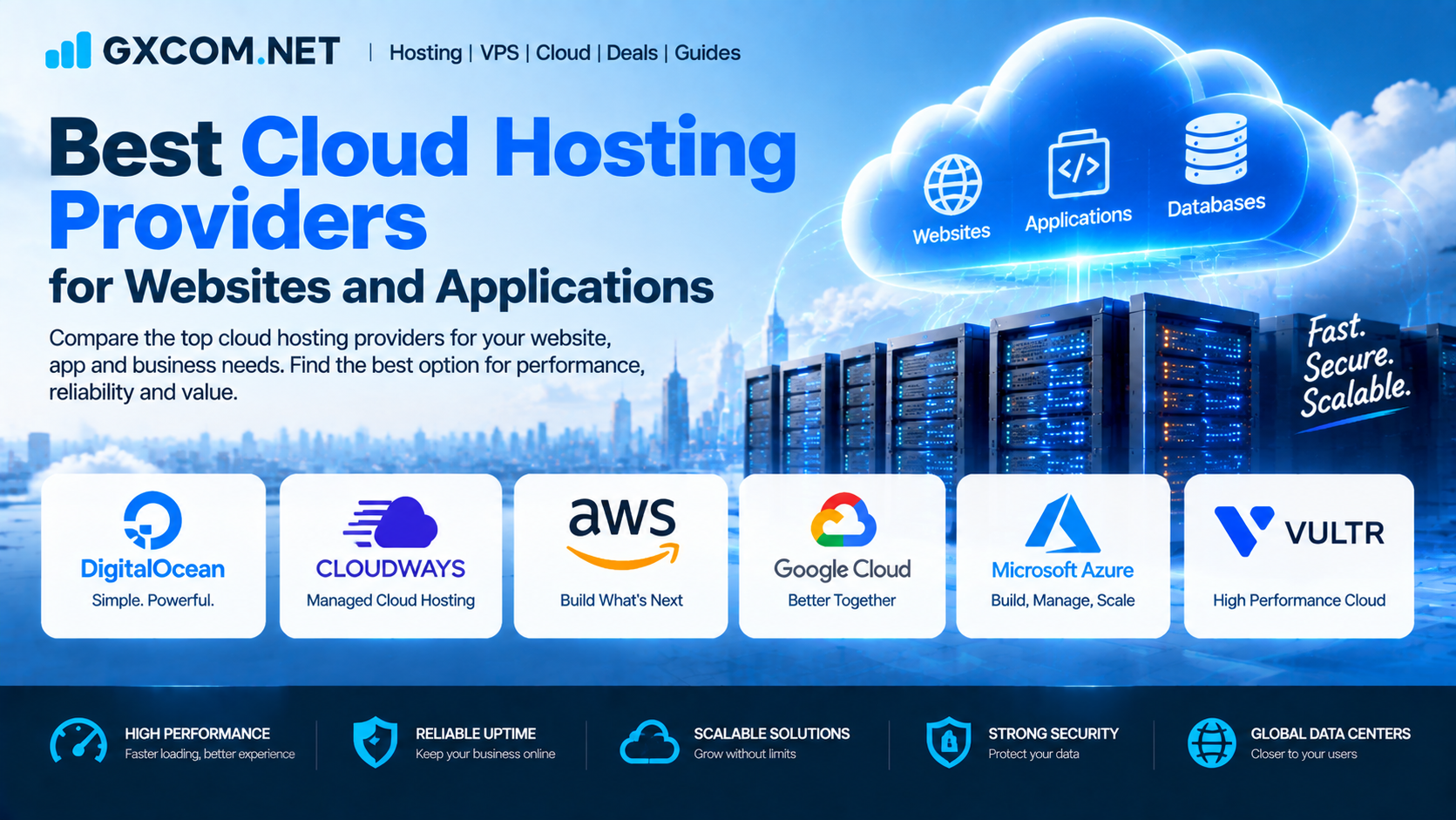
Cloud hosting has become one of the most popular solutions for websites, applications and businesses that need better scalability, reliability and performance compared with traditional hosting.
Unlike traditional single-server hosting, cloud hosting uses distributed infrastructure to provide flexible resources, improved availability and easier scaling.
This guide compares the best cloud hosting providers based on performance, pricing, features, security, scalability and ease of use.
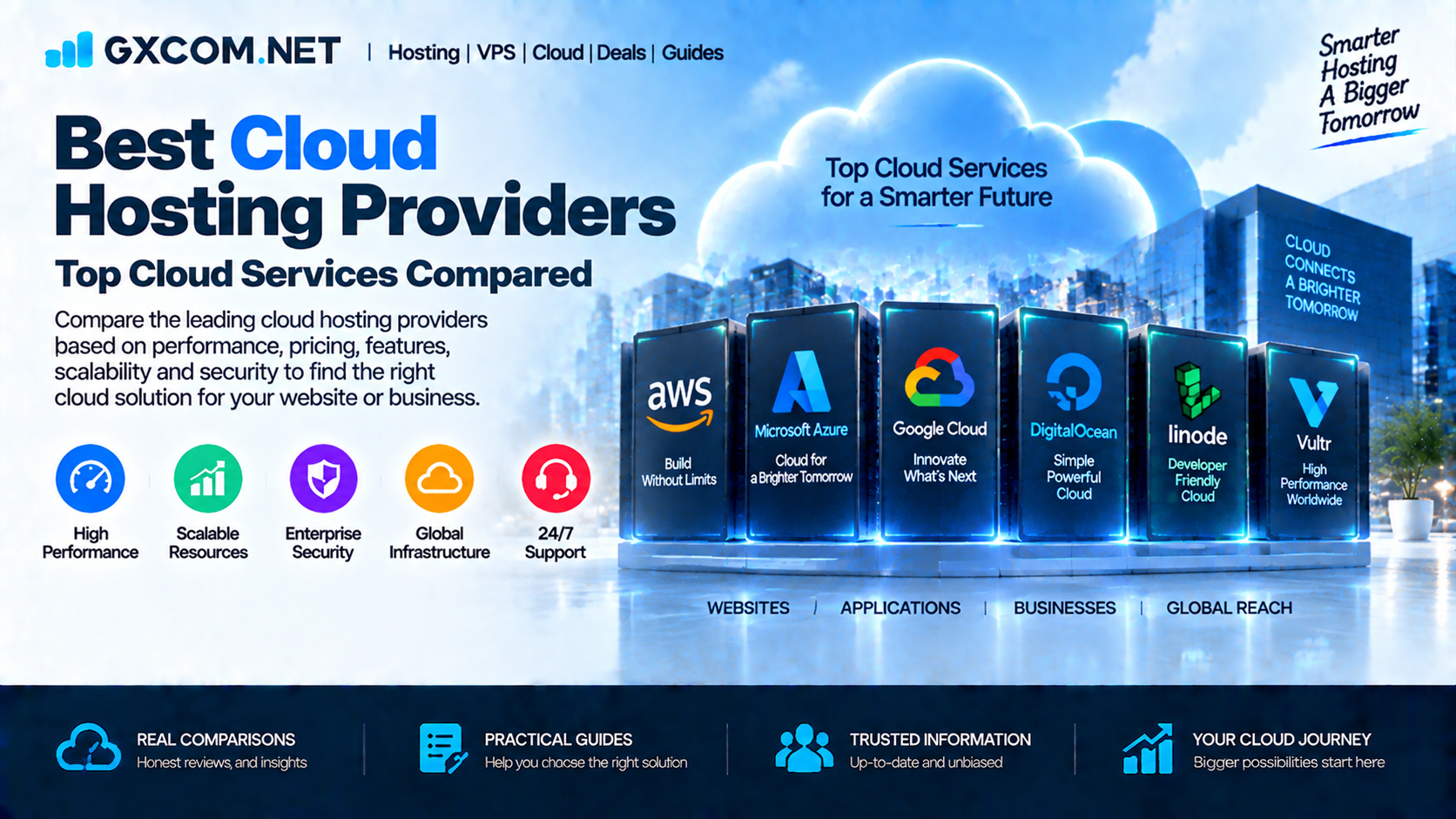
Quick Comparison: Best Cloud Hosting Providers
| Provider | Best For | Main Advantage |
|---|---|---|
| Cloudways | Managed cloud hosting | Simple cloud management |
| AWS | Enterprise applications | Largest cloud ecosystem |
| Google Cloud | AI and data workloads | Advanced infrastructure |
| Microsoft Azure | Business cloud solutions | Enterprise integration |
| DigitalOcean | Developers and startups | Simple cloud servers |
| Vultr | Affordable cloud hosting | Flexible pricing |
What Is Cloud Hosting?
Cloud hosting is a hosting solution that uses multiple interconnected servers instead of relying on a single physical machine.
This architecture allows websites and applications to access more resources when traffic increases.
Common cloud hosting features include:
- Scalable resources
- High availability
- Flexible pricing
- Cloud backups
- Advanced security
Users comparing different cloud solutions can explore our Cloud hosting resources for more guides.
1. Cloudways: Best Managed Cloud Hosting Provider
Cloudways is a popular managed cloud hosting platform that simplifies cloud server management.
It allows users to deploy websites on major cloud infrastructures while handling technical tasks through an easy dashboard.
Key Features
- Managed cloud servers
- Automatic backups
- Performance optimization
- Security monitoring
- Multiple cloud providers
Best For
Small businesses, agencies and website owners who want cloud performance without complex server administration.
2. Amazon Web Services (AWS): Best Enterprise Cloud Platform
AWS is the largest cloud computing platform and provides hundreds of services for businesses worldwide.
AWS offers:
- Cloud servers
- Storage solutions
- Database services
- AI infrastructure
- Enterprise cloud tools
Read our detailed AWS hosting review for pricing and feature analysis.
3. Google Cloud: Best Cloud Platform for AI and Data
Google Cloud provides powerful infrastructure with strong advantages in artificial intelligence, machine learning and analytics.
Advantages
- Advanced AI services
- High-speed global network
- Kubernetes expertise
- Data analytics tools
Learn more in our Google Cloud hosting review.
4. Microsoft Azure: Best Cloud Hosting for Businesses
Microsoft Azure is designed for enterprises requiring cloud infrastructure, hybrid cloud solutions and Microsoft ecosystem integration.
Advantages
- Enterprise security
- Hybrid cloud support
- Business integration
- Global infrastructure
5. DigitalOcean: Best Cloud Hosting for Developers
DigitalOcean focuses on simplicity, predictable pricing and developer-friendly cloud services.
Advantages
- Easy deployment
- Simple dashboard
- Affordable cloud servers
- Developer tools
6. Vultr: Affordable Cloud Hosting Provider
Vultr provides flexible cloud servers with competitive pricing and global locations.
Advantages
- Affordable plans
- Multiple server locations
- Flexible configurations
- Fast deployment
Cloud Hosting Providers Comparison
| Feature | Managed Cloud | Traditional Hosting |
|---|---|---|
| Scalability | Excellent | Limited |
| Performance | High | Moderate |
| Management | Provider support available | User responsibility |
| Flexibility | High | Lower |
Cloud Hosting Performance
The best cloud hosting providers offer strong performance through distributed infrastructure.
Important performance factors include:
- CPU and RAM resources
- SSD storage
- Network speed
- Global locations
- Content delivery options
Cloud Hosting Security Features
Reliable cloud providers include security features such as:
- Data encryption
- Firewalls
- DDoS protection
- Monitoring systems
- Backup solutions
Cloud Hosting vs Traditional Hosting
| Feature | Cloud Hosting | Traditional Hosting |
|---|---|---|
| Infrastructure | Multiple servers | Single server |
| Scaling | Flexible | Limited |
| Reliability | Higher | Lower |
| Pricing | Usage based | Fixed plans |
How to Choose the Best Cloud Hosting Provider?
Consider Your Website Requirements
Small websites may need simple cloud hosting, while applications require advanced infrastructure.
Compare Pricing Models
Different providers use different billing systems, including monthly plans and usage-based pricing.
Evaluate Support
Managed cloud services can reduce technical workload.
Check Scalability
Choose a provider that can grow with your business.
Who Should Use Cloud Hosting?
- Business websites
- Ecommerce platforms
- Web applications
- Startups
- Developers
- Enterprise projects
Final Verdict
The best cloud hosting provider depends on your technical requirements, budget and business goals.
Cloudways is suitable for users who want managed cloud hosting, while AWS, Google Cloud and Azure provide enterprise-level infrastructure.
DigitalOcean and Vultr offer simpler and more affordable cloud options for developers and smaller projects.
Choosing the right cloud hosting provider can improve website performance, reliability and future scalability.
Frequently Asked Questions
What is the best cloud hosting provider?
The best provider depends on your needs. Cloudways, AWS, Google Cloud and Azure are popular choices.
Is cloud hosting better than shared hosting?
Cloud hosting usually provides better scalability and reliability compared with shared hosting.
Is cloud hosting expensive?
Cloud hosting prices vary depending on resources and provider features.
Which cloud hosting is best for beginners?
Managed cloud platforms are usually easier for beginners than self-managed cloud infrastructure.