

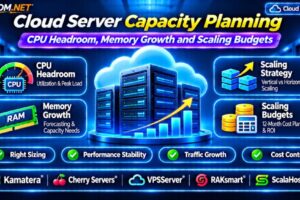
Cloud Server Capacity Planning: CPU Headroom, Memory Growth and Scaling Budgets
Cloud server capacity planning helps businesses determine how much CPU, memory, storage, and network capacity their applications need without overspending. Underprovisioned servers create slow responses and outages, while oversized infrastructure wastes money every month. Effective…
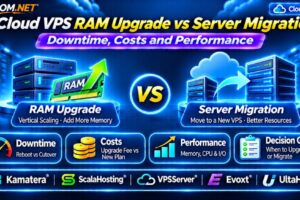
Cloud VPS RAM Upgrade vs Server Migration: Downtime, Costs and Performance
Cloud VPS RAM upgrade vs server migration is a common decision when websites, databases, or business applications begin running out of memory. Increasing RAM on an existing virtual server seems straightforward, but moving to a…

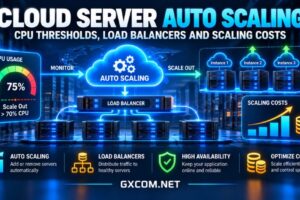
Cloud Server Auto Scaling: CPU Thresholds, Load Balancers and Scaling Costs
How Cloud Server Auto Scaling Works Cloud server auto scaling helps applications adjust computing capacity when traffic or processing demand changes. Instead of permanently paying for enough servers to handle the busiest hour, businesses can…

Cloud Load Balancer vs Vertical Scaling: High Availability, Traffic Spikes and Cost
Your website becomes slow during a traffic spike. Should you upgrade to a larger cloud server or place a load balancer in front of multiple smaller instances? Both approaches can improve capacity, but they solve…

Cloud Server Scaling Explained: Vertical vs Horizontal Scaling for Growing Applications
Cloud server scaling becomes essential when an application starts receiving more traffic, processing larger workloads, or serving more customers. But when your current infrastructure reaches its limits, should you upgrade one server or deploy several…
