Choosing the right hosting solution can directly affect website performance, reliability and future growth. Many website owners compare Shared Hosting vs Cloud Hosting because both options provide affordable ways to launch websites, but they use very different infrastructure models.
Shared hosting is designed for affordability and simplicity, while cloud hosting focuses on flexibility, scalability and resource availability.
In this guide, we compare shared hosting and cloud hosting based on performance, pricing, security, scalability, management requirements and which type of website each solution is best suited for.
Updated: September 2026. Hosting performance and pricing vary by provider, plan and server location.
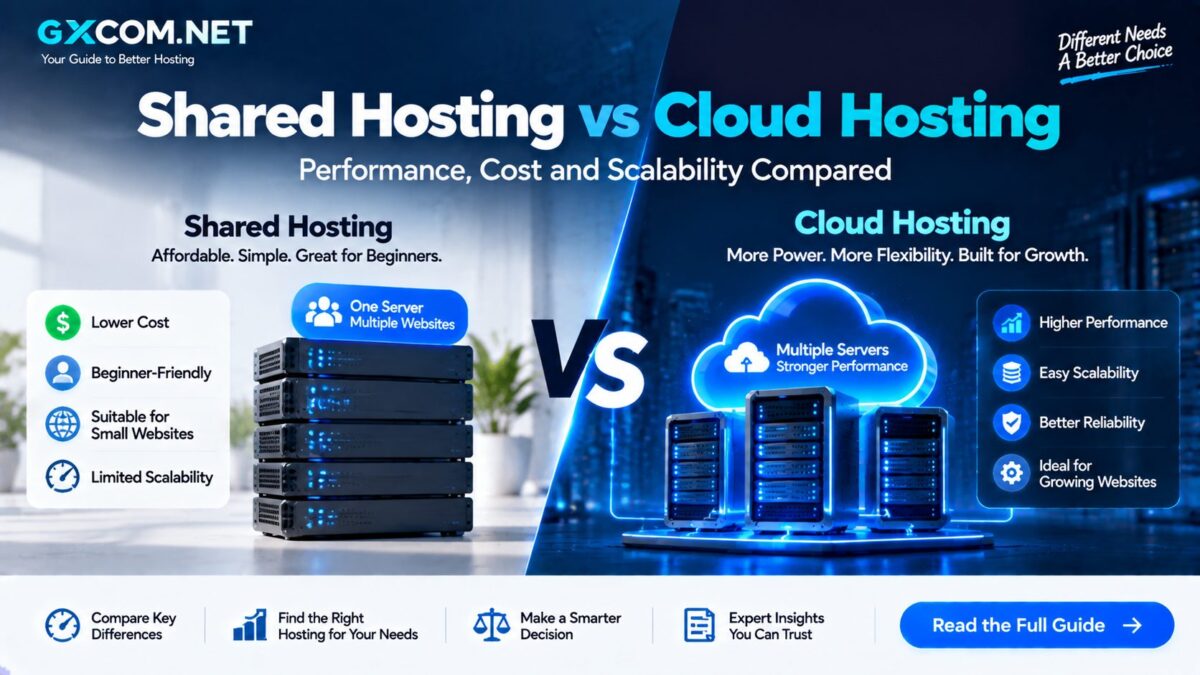
Shared Hosting vs Cloud Hosting Overview
| Feature | Shared Hosting | Cloud Hosting |
|---|---|---|
| Infrastructure | Single server shared by multiple websites | Multiple connected cloud servers |
| Performance | Suitable for small websites | Higher resource flexibility |
| Scalability | Limited | Easy resource expansion |
| Price | Lower | Usually higher |
| Management | Beginner-friendly | Requires more technical understanding |
| Best For | Blogs and small websites | Growing websites and businesses |
What Is Shared Hosting?
Shared hosting is the most common entry-level hosting solution.
Multiple websites share resources from the same physical server, including:
- CPU
- RAM
- Storage
- Network resources
Because server costs are divided among many customers, shared hosting is usually the most affordable option.
Shared hosting commonly includes:
- Control panel access
- One-click WordPress installation
- Free SSL certificates
- Email hosting
- Basic backups
It is popular among beginners, bloggers and small business websites.
What Is Cloud Hosting?
Cloud hosting uses a network of interconnected servers instead of relying on a single physical server.
Website resources can be distributed across multiple servers, improving flexibility and reliability.
Cloud hosting commonly provides:
- Flexible resource allocation
- Scalable computing power
- Better traffic handling
- High availability infrastructure
- Advanced management options
Cloud hosting is often selected by websites expecting growth or unpredictable traffic.
Shared Hosting vs Cloud Hosting: Main Differences
1. Performance Comparison
Performance is one of the biggest differences between shared and cloud hosting.
Shared Hosting Performance
Shared hosting performance depends on the resources available on the server and the activity of other websites sharing the same environment.
It works well for:
- Personal blogs
- Portfolio websites
- Small company websites
- New projects
However, websites may experience slower performance during traffic spikes or when server resources become limited.
Cloud Hosting Performance
Cloud hosting provides access to distributed infrastructure.
Advantages include:
- Better resource availability
- Improved traffic handling
- Flexible upgrades
- More stable performance
Cloud hosting is often better suited for websites experiencing increasing traffic.
Scalability Comparison
Scalability is one of the strongest advantages of cloud hosting.
| Feature | Shared Hosting | Cloud Hosting |
|---|---|---|
| Resource Upgrade | Limited plan upgrades | Flexible scaling |
| Traffic Growth | May require migration | Can handle expansion |
| Resource Control | Low | Higher |
Small websites may never need advanced scalability, but growing businesses often benefit from cloud infrastructure.
Pricing Comparison
| Hosting Type | Typical Cost | Best For |
|---|---|---|
| Shared Hosting | $2-$15/month | Beginners and small websites |
| Cloud Hosting | $10-$100+/month | Growing websites and businesses |
Shared hosting is cheaper because server resources are shared among many users.
Cloud hosting costs more because users receive flexible infrastructure and additional scalability.
Reliability Comparison
Shared Hosting Reliability
Shared hosting depends on a single server environment.
If the server experiences problems, multiple websites may be affected.
Cloud Hosting Reliability
Cloud hosting distributes resources across multiple servers.
This architecture can improve availability and reduce dependency on one physical machine.
Security Comparison
Shared Hosting Security
Shared hosting providers usually include basic security features:
- SSL certificates
- Malware scanning
- Firewalls
- Account isolation
However, users share the same server environment.
Cloud Hosting Security
Cloud hosting often provides more advanced security options.
Features may include:
- Dedicated resources
- Advanced firewall rules
- Private networking
- Security monitoring
Management Comparison
Shared Hosting Management
Shared hosting is designed for simplicity.
Users usually manage websites through easy control panels.
Cloud Hosting Management
Cloud hosting may require more technical knowledge.
Managed cloud providers can simplify administration by handling:
- Server configuration
- Security updates
- Performance optimization
Learn more about managed solutions in our Managed Hosting Guide.
Shared Hosting vs Cloud Hosting for WordPress
WordPress websites can run on both shared and cloud hosting.
| Website Type | Recommended Option |
|---|---|
| Personal Blog | Shared Hosting |
| Small Business Website | Shared or Cloud Hosting |
| High Traffic Blog | Cloud Hosting |
| Ecommerce Website | Cloud Hosting |
When Should You Choose Shared Hosting?
Shared hosting is suitable for:
- New websites
- Personal blogs
- Small businesses
- Low traffic websites
- Testing projects
Users who prioritize low cost and simplicity often choose shared hosting.
When Should You Choose Cloud Hosting?
Cloud hosting is suitable for:
- Growing websites
- Ecommerce platforms
- Business applications
- High traffic websites
- Projects requiring scalability
Popular Shared Hosting Providers
Popular shared hosting providers include:
- Hostinger
- SiteGround
- DreamHost
- Namecheap
Read our Best Shared Hosting Providers guide.
Popular Cloud Hosting Providers
Popular cloud hosting platforms include:
- AWS
- Google Cloud
- Azure
- DigitalOcean
- Vultr
- Cloudways
Common Mistakes When Choosing Hosting
Choosing Only Based on Price
The cheapest hosting may not support future website growth.
Ignoring Traffic Growth
Websites should consider future resource requirements.
Not Checking Upgrade Options
A good hosting provider should provide a clear upgrade path.
Shared Hosting vs Cloud Hosting: Which Should You Choose?
The best choice depends on your website size, budget and future plans.
Shared hosting is an affordable solution for beginners, personal websites and small businesses that need simple hosting.
Cloud hosting is better suited for websites requiring stronger performance, scalability and flexible resources.
If you are launching a new website with limited traffic, shared hosting can provide excellent value. If your website is growing or your business depends on online availability, cloud hosting offers more room for expansion.