Shared hosting and reseller hosting are often confused because both use shared server infrastructure, but they serve completely different purposes.
Shared hosting is designed for individuals and businesses that need a place to host their own websites. Reseller hosting is designed for entrepreneurs, freelancers and agencies that want to sell hosting services to their own customers.
In this Reseller Hosting vs Shared Hosting comparison, we analyze the differences in purpose, features, pricing, control, business opportunities and which hosting model is suitable for different users.
Updated: September 2026. Hosting plans and reseller features vary by provider.
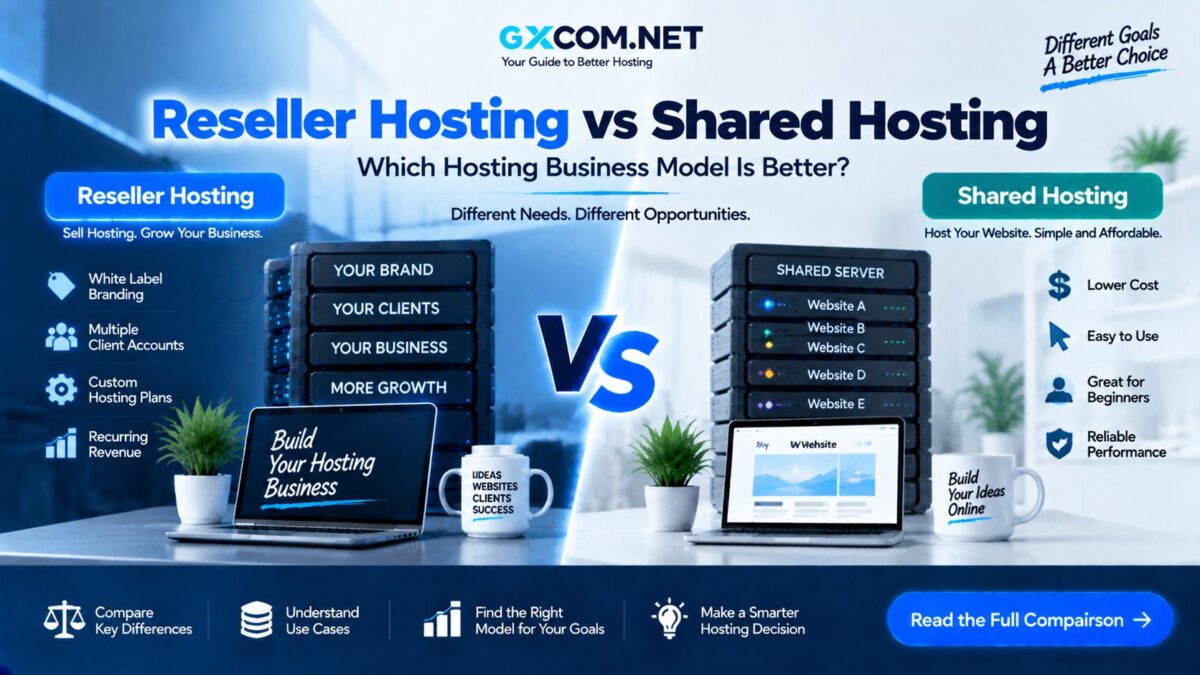
Reseller Hosting vs Shared Hosting Overview
| Feature | Reseller Hosting | Shared Hosting |
|---|---|---|
| Main Purpose | Sell hosting services | Host personal websites |
| Target Users | Agencies, freelancers, entrepreneurs | Website owners and beginners |
| Customer Accounts | Create multiple hosting accounts | Usually one website account |
| Branding | White label support | No reseller branding |
| Business Potential | Can generate recurring revenue | No direct hosting business |
| Cost | Higher | Lower |
What Is Shared Hosting?
Shared hosting is the most common entry-level hosting solution.
Multiple websites share resources from the same physical server, including:
- CPU
- RAM
- Storage
- Bandwidth
The hosting provider manages the server infrastructure, while customers use the hosting environment to run their own websites.
Shared hosting typically includes:
- Control panel access
- Website installation tools
- Email hosting
- SSL certificates
- Basic security features
Learn more in our Shared Hosting Guide.
What Is Reseller Hosting?
Reseller hosting allows users to purchase hosting resources from a provider and resell them under their own brand.
The reseller becomes a middle layer between the infrastructure provider and end customers.
Typical reseller hosting features include:
- White label branding
- Multiple customer accounts
- WHM management
- Resource allocation
- Custom hosting packages
- Client management tools
Reseller hosting is commonly used by:
- Web design agencies
- Freelance developers
- Digital marketing companies
- IT service providers
- Hosting entrepreneurs
The Biggest Difference: Website Hosting vs Hosting Business
The fundamental difference between shared hosting and reseller hosting is the business purpose.
| Model | Goal |
|---|---|
| Shared Hosting | Host your own website |
| Reseller Hosting | Sell hosting services to customers |
A shared hosting customer is purchasing a service.
A reseller hosting customer is purchasing resources to create another hosting service.
Feature Comparison
1. Branding and White Label Options
Shared Hosting
Shared hosting customers use the hosting provider's brand and platform.
There is normally no option to create custom hosting packages or sell services under a personal brand.
Reseller Hosting
Reseller hosting provides white label capabilities.
Users can often create:
- Custom hosting plans
- Private nameservers
- Company branding
- Customer dashboards
Customer Management Comparison
| Feature | Shared Hosting | Reseller Hosting |
|---|---|---|
| Manage Customers | No | Yes |
| Create Accounts | No | Yes |
| Allocate Resources | Limited | Flexible |
| Billing Management | No | Usually Available |
Pricing Comparison
| Hosting Type | Typical Monthly Cost | Purpose |
|---|---|---|
| Shared Hosting | $2-$15/month | Personal website hosting |
| Reseller Hosting | $10-$100+/month | Hosting business |
Shared hosting is cheaper because users only pay for website hosting resources.
Reseller hosting costs more because it includes tools for managing multiple customers and selling hosting services.
Performance Comparison
Shared Hosting Performance
Shared hosting performance depends on the resources available on the server.
It is suitable for:
- Blogs
- Portfolio websites
- Small company websites
- Low traffic projects
Reseller Hosting Performance
Reseller hosting performance depends on the provider's infrastructure and how resources are distributed among customer accounts.
A quality reseller plan should provide:
- Reliable server hardware
- Account isolation
- Sufficient storage
- Stable network performance
Security Comparison
Shared Hosting Security
Shared hosting providers usually handle:
- Server security
- Network protection
- Basic monitoring
Reseller Hosting Security
Resellers must consider both their own account security and customer website security.
Important features include:
- Security monitoring
- Backup options
- Account isolation
- SSL support
Business Opportunity Comparison
Shared Hosting Business Potential
Shared hosting does not provide a direct hosting business model.
Users typically purchase hosting only for their own websites.
Reseller Hosting Business Potential
Reseller hosting allows users to create hosting packages and sell them to customers.
Potential business models include:
- Website design plus hosting
- Monthly maintenance packages
- Agency hosting services
- Small hosting brands
Who Should Choose Shared Hosting?
Shared hosting is suitable for:
- Beginners
- Blogger websites
- Small businesses
- Personal projects
- Simple websites
Who Should Choose Reseller Hosting?
Reseller hosting is suitable for:
- Web designers
- Developers
- Marketing agencies
- Freelancers
- Entrepreneurs
Advantages of Shared Hosting
Lower Cost
Shared hosting provides one of the cheapest ways to launch a website.
Simple Management
No advanced server knowledge is required.
Beginner Friendly
Most providers include easy control panels and setup tools.
Advantages of Reseller Hosting
Create Recurring Revenue
Businesses can earn monthly income by selling hosting services.
Expand Service Packages
Agencies can combine hosting with website development and maintenance.
Build a Hosting Brand
White label features allow businesses to create their own hosting identity.
Common Mistakes When Choosing Between Them
Using Shared Hosting for a Hosting Business
Shared hosting does not provide the tools required to manage multiple customers.
Choosing Reseller Hosting Without Customers
Reseller hosting requires a clear business plan and target market.
Ignoring Support Requirements
Hosting businesses need reliable infrastructure and customer support processes.
Reseller Hosting vs Shared Hosting: Which Is Better?
Neither hosting model is universally better because they solve different problems.
Shared hosting is the better choice for individuals and businesses that simply need affordable website hosting.
Reseller hosting is the better choice for agencies, developers and entrepreneurs who want to sell hosting services and build recurring revenue.
If your goal is running a website, shared hosting provides simplicity and low cost. If your goal is building a hosting business, reseller hosting provides the tools and flexibility required to manage customers.
Conclusion
Shared hosting and reseller hosting target completely different audiences.
Shared hosting focuses on website owners who need reliable and affordable hosting. Reseller hosting focuses on businesses that want to create their own hosting services.
Understanding these differences helps you choose the right hosting model for your goals.