Cloud servers are no longer limited to large enterprises with massive infrastructure budgets. Today, developers, startups and small businesses can access affordable cloud computing resources without investing in physical hardware.
The challenge is finding Cheap Cloud Servers that provide the right balance between price, performance, reliability and scalability.
A low-cost cloud server should not only have an attractive monthly price. CPU performance, RAM, storage speed, network quality, data center locations and billing flexibility all affect the real value of a cloud server.
This guide compares affordable cloud computing options from leading providers and explains how to choose the right low-cost cloud infrastructure for websites, applications and development projects.
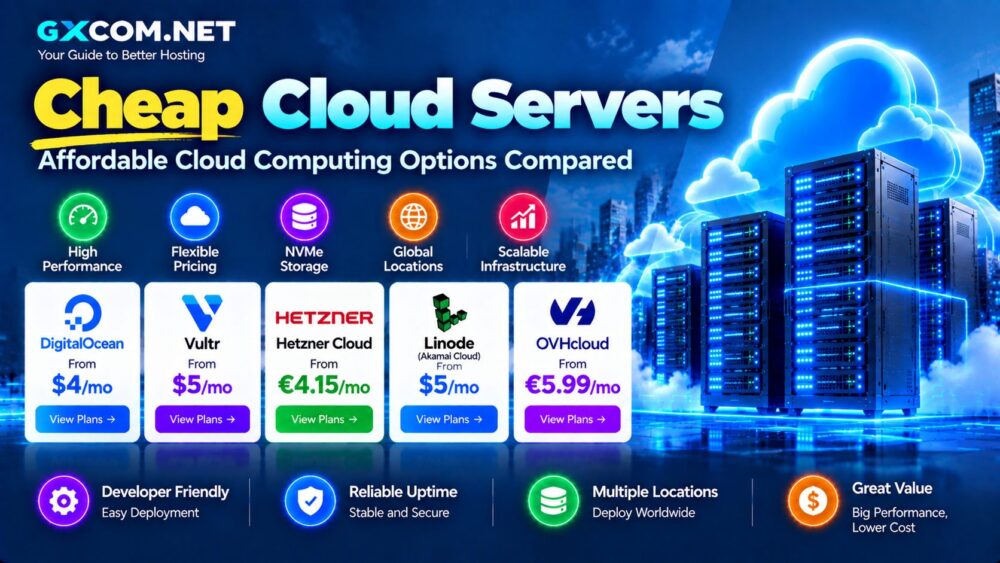
Cheap Cloud Servers Compared
| Provider | Main Advantage | Best For |
|---|---|---|
| DigitalOcean | Simple developer-focused cloud servers | Startups and applications |
| Vultr | Global locations and flexible deployment | International projects |
| Hetzner Cloud | Strong price-to-performance ratio | Technical users |
| Linode (Akamai Cloud) | Developer-friendly infrastructure | Cloud applications |
| OVHcloud | Large infrastructure options | Businesses and advanced users |
What Are Cheap Cloud Servers?
A cloud server is a virtual machine running on cloud infrastructure instead of a traditional physical server.
Affordable cloud servers provide access to computing resources including:
- Virtual CPU cores
- RAM allocation
- SSD or NVMe storage
- Network resources
- Operating system control
- Root access
Common uses include:
- Web applications
- Business websites
- Development environments
- APIs
- Database servers
- Testing platforms
- Small SaaS projects
Unlike shared hosting, cloud servers provide greater control and resource flexibility.
Cheap Cloud Servers vs Cloud VPS
| Feature | Cloud Servers | Cloud VPS |
|---|---|---|
| Main Purpose | General cloud computing | Virtual private server hosting |
| Target Users | Developers and businesses | Websites and applications |
| Scaling | Highly flexible | Usually resource upgrades |
| Infrastructure | Cloud compute platform | Cloud VPS environment |
For users specifically looking for virtual private servers, see our Cheap Cloud VPS Hosting guide.
1. DigitalOcean Cheap Cloud Servers
DigitalOcean is one of the most popular entry-level cloud server providers for developers.
Its Droplet cloud servers allow users to deploy virtual machines quickly with different combinations of CPU, memory and storage.
Features include:
- Simple cloud dashboard
- Developer API
- Multiple global regions
- SSD storage
- Kubernetes support
DigitalOcean is commonly used for:
- Web applications
- Development projects
- Testing environments
- Small production systems
Best for: developers who want simple and predictable cloud infrastructure.
2. Vultr Affordable Cloud Servers
Vultr provides flexible cloud computing instances across many international locations.
The platform focuses on fast deployment and global availability.
Key features include:
- Worldwide data centers
- Cloud compute instances
- NVMe storage options
- One-click applications
- Flexible billing
Vultr is useful for businesses needing servers closer to users in different regions.
Best for: global applications and developers.
3. Hetzner Cheap Cloud Servers
Hetzner Cloud is known for offering strong hardware value at competitive prices.
The platform provides:
- Cloud instances
- NVMe storage
- Fast networking
- European data centers
- Simple management tools
Popular workloads include:
- Linux applications
- Docker servers
- Private services
- Development environments
Hetzner is particularly attractive for experienced users who can manage their own servers.
Best for: technical users seeking affordable infrastructure.
4. Linode Affordable Cloud Computing
Linode, now part of Akamai Cloud, provides developer-focused cloud computing services.
Its cloud servers support:
- Linux workloads
- Application hosting
- Block storage
- Kubernetes deployments
- Networking tools
Linode is suitable for developers who want straightforward cloud infrastructure without excessive complexity.
5. OVHcloud Budget Cloud Servers
OVHcloud provides cloud infrastructure alongside VPS and dedicated server products.
Advantages include:
- Large infrastructure network
- Multiple regions
- Advanced networking
- Competitive infrastructure pricing
OVHcloud can support businesses that need flexibility beyond basic cloud instances.
How Much Do Cheap Cloud Servers Cost?
Cloud server pricing depends on the resources you choose.
| Cloud Server Level | Typical Usage |
|---|---|
| Entry Cloud Server | Testing, small websites and development |
| Mid-Level Cloud Server | Applications and business projects |
| High Resource Cloud Server | Databases, SaaS and enterprise workloads |
Cloud providers may charge based on:
- CPU usage
- Memory allocation
- Storage capacity
- Bandwidth
- Snapshots
- Additional services
Pay-As-You-Go vs Monthly Cloud Server Pricing
One advantage of cloud computing is flexible billing.
Pay-As-You-Go Pricing
You pay according to actual resource usage.
This model works well for:
- Testing environments
- Variable workloads
- Short-term projects
Monthly Pricing
Fixed monthly plans provide easier budgeting.
This is suitable for:
- Business websites
- Production applications
- Long-term projects
Cheap Cloud Servers for Websites
Cloud servers can be an upgrade path for websites that have exceeded shared hosting limits.
Suitable examples include:
- High-traffic websites
- WordPress platforms
- Membership websites
- Online communities
- Ecommerce applications
However, many small websites may not require full cloud infrastructure. Managed hosting or Cloud VPS can sometimes be simpler choices.
Cheap Cloud Servers for Developers
Developers choose affordable cloud servers because they provide:
- Root access
- Custom environments
- Server automation
- Container support
- Testing infrastructure
- API access
Cloud servers are especially useful for developers building modern applications.
NVMe Storage and Cloud Server Performance
Storage performance can significantly affect cloud server responsiveness.
NVMe storage improves:
- Database operations
- Application loading
- File processing
- Server response times
However, storage alone does not determine performance. CPU, RAM, network quality and software optimization are equally important.
Managed vs Unmanaged Cloud Servers
Many affordable cloud servers are unmanaged.
Unmanaged Cloud Servers
Users manage:
- Operating system updates
- Security settings
- Server configuration
- Applications
Managed Cloud Servers
The provider helps with:
- Maintenance
- Security
- Optimization
- Troubleshooting
Developers often prefer unmanaged servers, while businesses without technical teams may prefer managed services.
How to Choose Affordable Cloud Servers
Compare resources. CPU and RAM determine whether the server can handle your workload.
Check storage technology. NVMe can improve demanding applications.
Review bandwidth limits. Traffic costs can affect total spending.
Select the right region. Deploy servers close to your users.
Understand management requirements. Choose a service matching your technical skills.
Consider future growth. Scaling should not require rebuilding everything.
Common Cheap Cloud Server Mistakes
Choosing Only the Lowest Price
The cheapest server may not provide enough performance.
Ignoring Security
Cloud servers require proper updates and access controls.
Buying Too Many Resources
Unused capacity increases costs.
Forgetting Backup Strategy
Always understand backup and recovery options.
Cheap Cloud Servers: Final Thoughts
Affordable cloud servers make modern computing infrastructure accessible to developers, startups and small businesses.
DigitalOcean and Vultr provide simple developer-friendly cloud platforms. Hetzner focuses on strong price-to-performance value. Linode offers a straightforward cloud environment, while OVHcloud provides broader infrastructure options.
The best cheap cloud server is not always the one with the lowest monthly price. The right choice balances performance, scalability, reliability and total operating cost.
Before choosing a provider, compare your workload requirements and review our Best Cloud Server Providers guide for a broader infrastructure comparison.