Cloud VPS hosting combines the flexibility of cloud infrastructure with the control of a virtual private server. It provides dedicated virtual resources, scalable configurations and more control than traditional shared hosting.
The challenge is choosing the right provider. The Best Cloud VPS Providers should offer reliable performance, competitive pricing, flexible scaling options and features that match your workload.
This guide compares leading cloud VPS providers based on infrastructure, pricing models, performance, features and ideal use cases.
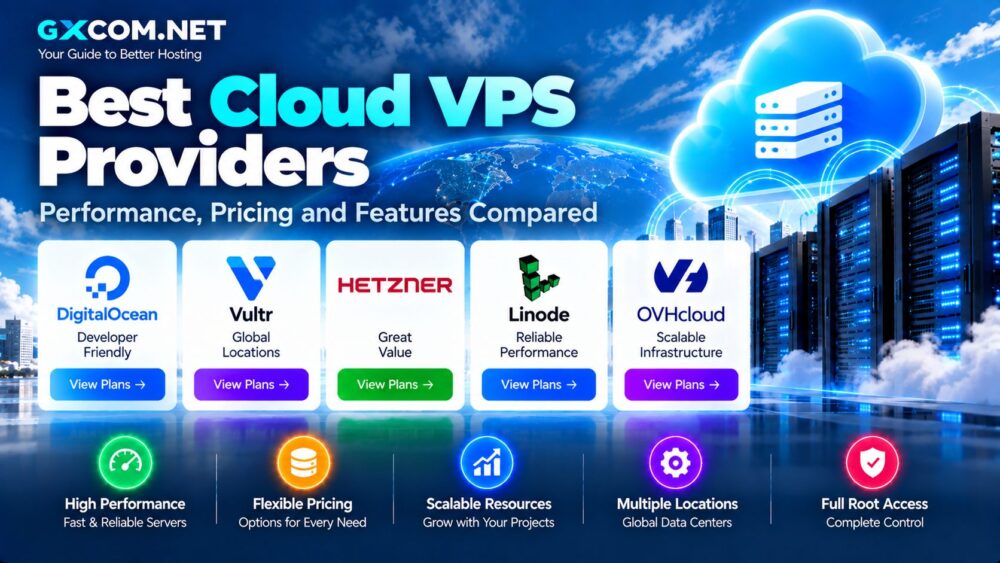
Best Cloud VPS Providers Compared
| Provider | Main Strength | Best For |
|---|---|---|
| DigitalOcean | Developer-friendly cloud VPS platform | Applications and startups |
| Vultr | Global cloud VPS locations | Developers and flexible deployments |
| Hetzner Cloud | Strong price-to-performance ratio | Technical users |
| Linode (Akamai Cloud) | Developer-focused infrastructure | Cloud applications |
| OVHcloud | Large infrastructure network | Businesses and advanced users |
What Is Cloud VPS?
A Cloud VPS is a virtual private server running on cloud infrastructure.
Unlike traditional VPS hosting that may rely on a single physical server, cloud VPS platforms are built on distributed cloud environments designed for flexibility and scalability.
A typical Cloud VPS includes:
- Dedicated virtual CPU resources
- Assigned RAM
- SSD or NVMe storage
- Full root access
- Linux distributions
- Custom server configuration
- Scalable resources
Cloud VPS is commonly used for:
- Web applications
- SaaS platforms
- Development environments
- Game servers
- APIs
- Business websites
Cloud VPS vs Traditional VPS
| Feature | Traditional VPS | Cloud VPS |
|---|---|---|
| Infrastructure | Often based on one physical server | Cloud infrastructure |
| Scalability | Usually requires migration | More flexible scaling |
| Availability | Depends on host node | Designed for cloud environments |
| Deployment | Traditional provisioning | Fast cloud deployment |
| Best For | General VPS hosting | Applications and scalable workloads |
For a detailed comparison, see our Cloud VPS vs Traditional VPS guide.
1. DigitalOcean Cloud VPS
DigitalOcean is one of the most recognized cloud VPS platforms among developers.
The platform focuses on simplicity, allowing users to deploy cloud servers called Droplets within minutes.
Key features include:
- Multiple global data centers
- SSD-based cloud servers
- Flexible configurations
- API management
- Kubernetes support
- Developer tools
DigitalOcean is popular among:
- Software developers
- Startups
- SaaS companies
- Web application builders
Best for: developers who want simple cloud VPS deployment.
2. Vultr Cloud VPS
Vultr provides cloud VPS servers across many worldwide locations.
The platform focuses on flexible infrastructure with multiple server types and operating systems.
Features include:
- Global cloud locations
- SSD and NVMe options
- One-click applications
- Flexible billing
- Dedicated cloud products
Vultr is suitable for users who need servers close to their customers.
Best for: developers, agencies and international applications.
3. Hetzner Cloud VPS
Hetzner Cloud has become popular among technical users because of its competitive infrastructure pricing.
The platform provides:
- Cloud servers
- Fast networking
- NVMe storage options
- European data centers
- Simple cloud management
Hetzner is commonly used for:
- Linux servers
- Docker environments
- Self-hosted services
- Development projects
The main consideration is that users generally need stronger Linux administration skills.
Best for: experienced technical users seeking infrastructure value.
4. Linode (Akamai Cloud)
Linode, now part of Akamai Cloud, has a long history in developer-focused cloud hosting.
The platform provides:
- Linux cloud instances
- Block storage
- Kubernetes services
- Networking tools
- Developer documentation
Linode is often selected by developers who prefer straightforward cloud infrastructure.
Best for: applications, developers and cloud-native projects.
5. OVHcloud VPS and Cloud Infrastructure
OVHcloud operates a large global infrastructure network with VPS, public cloud and dedicated server products.
Advantages include:
- Multiple geographic regions
- Large infrastructure capacity
- Advanced networking options
- Business-focused services
OVHcloud can support users who need more infrastructure choices beyond basic VPS hosting.
Best for: businesses and advanced deployments.
Cloud VPS Performance Factors
The performance of a Cloud VPS depends on several hardware and infrastructure factors.
CPU Performance
CPU resources affect application processing speed.
Web applications, databases and APIs often require stronger CPU performance than simple websites.
RAM Capacity
RAM affects how many processes a server can handle simultaneously.
Insufficient memory can cause slowdowns when applications grow.
Storage Technology
NVMe storage can improve:
- Database operations
- File access speed
- Application responsiveness
Network Quality
Network speed and latency influence user experience, especially for global applications.
Cloud VPS Pricing Compared
Cloud VPS pricing varies depending on resources and billing models.
| Provider Type | Typical Pricing Model |
|---|---|
| Developer Cloud VPS | Hourly or monthly billing |
| Budget Cloud VPS | Fixed monthly plans |
| Enterprise Cloud | Resource-based pricing |
When comparing prices, consider:
- CPU cores
- RAM
- Storage
- Bandwidth
- Backup costs
- Data transfer fees
Managed Cloud VPS vs Unmanaged Cloud VPS
Most Cloud VPS providers offer unmanaged infrastructure.
Unmanaged Cloud VPS
You manage:
- Operating system
- Security updates
- Server configuration
- Applications
Managed Cloud VPS
The provider assists with:
- Server maintenance
- Security
- Optimization
- Technical support
Users without server administration experience may prefer managed solutions.
Cloud VPS for Websites
Cloud VPS can be an excellent choice for websites that have outgrown shared hosting.
Typical examples include:
- High-traffic WordPress websites
- Membership platforms
- Online communities
- Business applications
However, simple websites may not require VPS-level infrastructure.
Cloud VPS for Developers
Developers often choose Cloud VPS because it provides:
- Root access
- Custom software installation
- Development environments
- Container support
- API access
This flexibility makes Cloud VPS suitable for building and testing modern applications.
How to Choose the Best Cloud VPS Provider
Evaluate your workload. A website, database and application server have different requirements.
Compare resources. CPU, RAM and storage matter more than the advertised brand name.
Check data center locations. Choose regions close to your users.
Review network limits. Understand bandwidth and transfer policies.
Consider support requirements. Decide whether you need managed assistance.
Check scaling options. Growth should not require a complete migration.
Common Cloud VPS Mistakes
Choosing Only the Cheapest VPS
The cheapest option may lack enough CPU, RAM or support.
Ignoring Administration Requirements
Unmanaged servers require technical knowledge.
Overbuying Resources
Unused resources increase costs unnecessarily.
Ignoring Backup Strategy
Always understand how backups and recovery work.
Best Cloud VPS Providers: Final Thoughts
The best Cloud VPS provider depends on your technical requirements, budget and workload.
DigitalOcean and Vultr provide flexible developer-focused cloud platforms. Hetzner offers strong infrastructure value for experienced users. Linode provides a developer-friendly cloud environment, while OVHcloud serves users needing broader infrastructure options.
Before choosing a Cloud VPS provider, compare performance, pricing, features, support and scalability rather than focusing only on the cheapest monthly price.
Cloud VPS is a powerful middle ground between traditional VPS hosting and large-scale cloud infrastructure, making it suitable for websites, applications and growing online businesses.