Virtual Private Server hosting has become a popular choice for websites, applications and businesses that need more resources than shared hosting.
However, VPS hosting is not limited to one architecture. Cloud VPS and Traditional VPS use different infrastructure models that affect performance, scalability, reliability and pricing.
This Cloud VPS vs Traditional VPS comparison explains the differences between these two hosting solutions and helps you choose the right VPS environment.
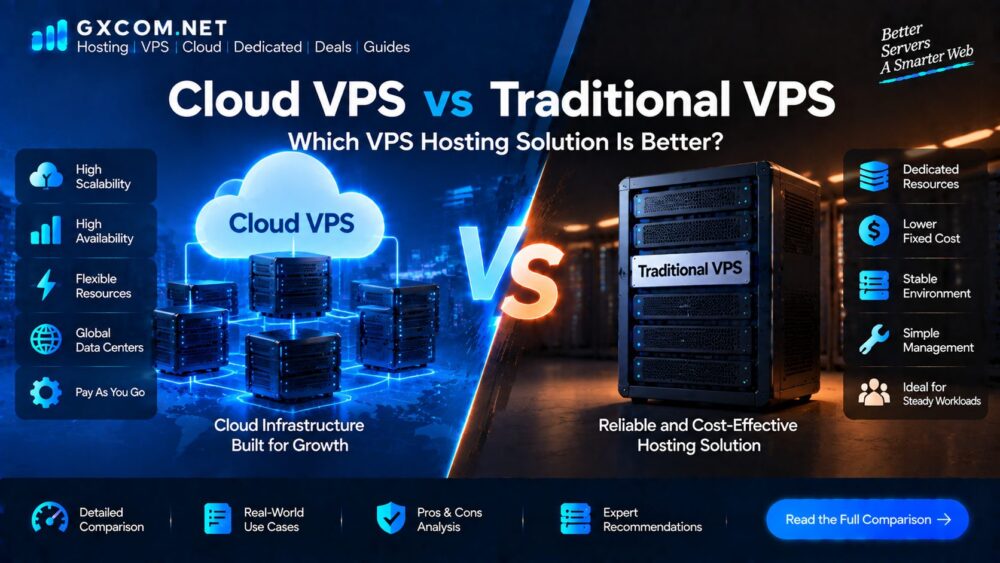
Cloud VPS vs Traditional VPS Quick Comparison
| Feature | Cloud VPS | Traditional VPS |
|---|---|---|
| Infrastructure | Cloud-based cluster | Single physical server |
| Scalability | High | Limited |
| Reliability | Higher redundancy | Depends on hardware |
| Pricing | Flexible | Usually fixed |
| Best For | Growing applications | Stable workloads |
What Is Cloud VPS?
Cloud VPS is a virtual server running on cloud infrastructure. Instead of depending on a single physical server, cloud VPS resources are connected through a network of servers.
This architecture allows providers to offer:
- Flexible scaling
- High availability
- Fast deployment
- Resource expansion
- Cloud management tools
Users comparing cloud infrastructure can also explore our cloud hosting solutions.
What Is Traditional VPS?
Traditional VPS hosting divides one physical server into multiple isolated virtual servers.
Each VPS receives allocated resources such as:
- CPU cores
- RAM
- Storage space
- Bandwidth
Traditional VPS remains popular because it provides dedicated resources at a lower cost compared with physical servers.
Infrastructure Comparison
| Category | Cloud VPS | Traditional VPS |
|---|---|---|
| Server Architecture | Multiple connected servers | Single physical server |
| Hardware Dependency | Lower | Higher |
| Resource Allocation | Flexible | Fixed |
| Failure Protection | Higher redundancy | Hardware dependent |
Performance Comparison
Both Cloud VPS and Traditional VPS can provide excellent performance, but their architecture creates different advantages.
| Performance Factor | Cloud VPS | Traditional VPS |
|---|---|---|
| CPU Performance | High | High |
| Storage Speed | SSD/NVMe options | SSD/NVMe options |
| Traffic Handling | Excellent scaling | Limited by server capacity |
| Performance Stability | High | Good |
Scalability Comparison
Scalability is one of the biggest differences between Cloud VPS and Traditional VPS.
| Feature | Cloud VPS | Traditional VPS |
|---|---|---|
| CPU Upgrade | Flexible | Plan upgrade required |
| RAM Expansion | Easy | Limited |
| Traffic Growth | Better handling | Requires migration |
Reliability Comparison
Cloud VPS generally provides higher reliability because resources are distributed across cloud infrastructure.
| Factor | Cloud VPS | Traditional VPS |
|---|---|---|
| Hardware Failure Protection | Higher | Lower |
| Availability | Strong | Depends on server |
| Backup Options | Usually flexible | Provider dependent |
Pricing Comparison
| Category | Cloud VPS | Traditional VPS |
|---|---|---|
| Entry Cost | Affordable | Affordable |
| Billing | Often flexible | Usually monthly plans |
| Scaling Cost | Pay for additional resources | Upgrade plans |
Management Comparison
Cloud VPS Management
Cloud VPS platforms usually provide modern dashboards and automation tools.
- API management
- Automatic deployment
- Cloud monitoring
- Flexible configurations
Traditional VPS Management
Traditional VPS usually requires more manual server management.
- Server administration
- Software installation
- Security configuration
- Resource monitoring
Who Should Choose Cloud VPS?
Cloud VPS is suitable for:
- Growing websites
- SaaS applications
- Online platforms
- Developers
- Businesses requiring scalability
Who Should Choose Traditional VPS?
Traditional VPS is suitable for:
- Small business websites
- Stable applications
- Budget-conscious users
- Projects with predictable traffic
Cloud VPS vs Traditional VPS For Businesses
| Business Need | Recommended Option |
|---|---|
| Startup application | Cloud VPS |
| Corporate website | Both |
| Rapid growth platform | Cloud VPS |
| Stable website | Traditional VPS |
Users looking for VPS provider recommendations can read our best VPS reviews.
If you need more server resources, our VPS vs Dedicated Server comparison explains the differences between VPS and dedicated hosting.
Cloud VPS vs Traditional VPS: Which One Should You Choose?
Choose Cloud VPS If You Need:
- Flexible scaling
- Higher availability
- Cloud automation
- Growing applications
Choose Traditional VPS If You Need:
- Lower fixed costs
- Simple hosting environment
- Predictable workloads
- Basic VPS resources
Final Verdict
Cloud VPS and Traditional VPS are both effective hosting solutions, but they serve different requirements.
Cloud VPS provides better scalability, flexibility and reliability for modern applications.
Traditional VPS remains a practical choice for users who need affordable dedicated virtual resources.
The right choice depends on your website requirements, growth expectations and budget.
Frequently Asked Questions
Is Cloud VPS better than Traditional VPS?
Cloud VPS offers advantages in scalability and availability, while Traditional VPS can provide good value for stable workloads.
Is Cloud VPS more expensive?
Pricing depends on resources, provider and usage requirements.
Can Cloud VPS replace Traditional VPS?
Both solutions continue to serve different user needs.
Which VPS is better for websites?
The best choice depends on website traffic, scalability needs and technical requirements.