Cloud hosting has become a preferred solution for websites, applications and online businesses that require reliable performance, flexible resources and future scalability.
Unlike traditional hosting that depends on a single server, cloud hosting uses connected infrastructure to deliver better availability and resource flexibility.
This guide explains how to choose the best cloud hosting for websites and applications, including important features, use cases, performance factors and recommended solutions.
What Is Cloud Hosting?
Cloud hosting is a hosting model that uses multiple interconnected servers to provide computing resources.
Instead of depending on one physical machine, websites and applications can use distributed cloud infrastructure.
Main advantages include:
- Better reliability
- Flexible scaling
- Improved performance
- Advanced security
- Resource customization
For provider comparisons, see our top cloud hosting providers guide.
Cloud Hosting vs Traditional Hosting
| Feature | Cloud Hosting | Traditional Hosting |
|---|---|---|
| Infrastructure | Multiple servers | Single server |
| Scalability | Excellent | Limited |
| Reliability | Higher | Depends on server |
| Customization | Flexible | Limited |
Best Cloud Hosting for Websites
Websites have different hosting requirements depending on traffic, content type and business goals.
1. Business Websites
Business websites need reliable uptime, security and fast loading speeds.
Cloud hosting provides:
- Stable performance
- Traffic handling
- Automatic scaling
- Security protection
2. Ecommerce Websites
Online stores require hosting that can handle traffic spikes and transaction workloads.
Important features include:
- High availability
- Fast database performance
- SSL security
- Backup systems
3. Content Websites and Blogs
Large content websites benefit from cloud hosting because resources can grow as visitors increase.
Best Cloud Hosting for Applications
Applications usually require more flexible infrastructure than standard websites.
1. SaaS Applications
Software platforms need scalable computing resources and reliable databases.
2. Mobile Applications
Cloud hosting provides backend infrastructure for mobile apps, APIs and user data.
3. Enterprise Applications
Large companies use cloud platforms for business software, analytics and internal systems.
Important Cloud Hosting Features
Performance
Fast CPUs, SSD storage and optimized networks improve website and application speed.
Scalability
The best cloud hosting allows resources to increase when traffic grows.
Security
Reliable providers offer:
- Firewall protection
- DDoS protection
- Data encryption
- Security monitoring
Backup and Recovery
Automatic backups help protect websites and applications from data loss.
Popular Cloud Hosting Platforms
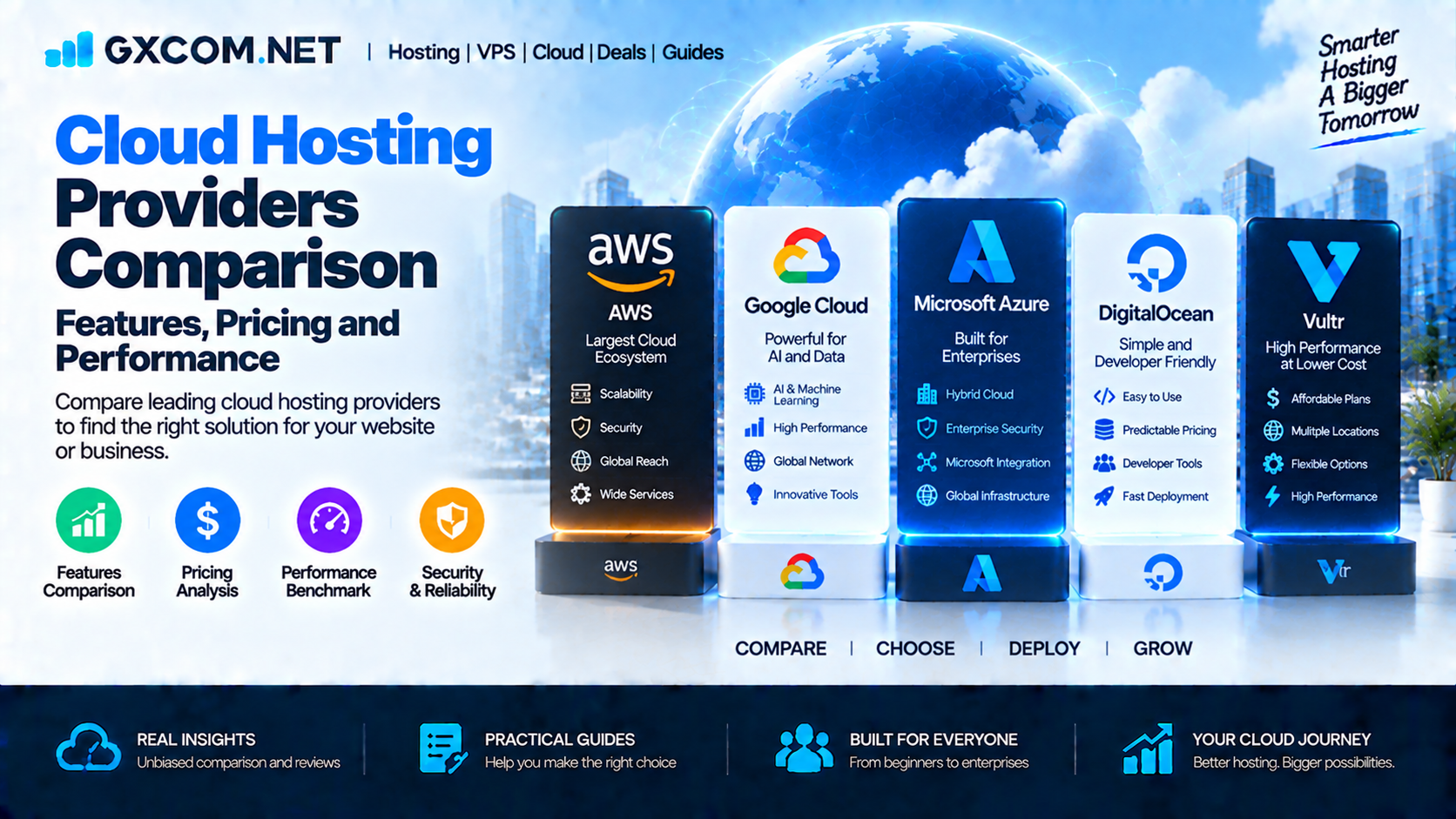
AWS
AWS provides the largest cloud ecosystem with extensive services for businesses and developers.
Learn more in our AWS hosting review.
Google Cloud
Google Cloud is known for artificial intelligence, analytics and powerful infrastructure.
Read our Google Cloud hosting review.
Microsoft Azure
Azure provides strong enterprise integration and hybrid cloud capabilities.
DigitalOcean
DigitalOcean offers simple cloud infrastructure for developers and startups.
Managed Cloud Hosting vs Self Managed Cloud
| Feature | Managed Cloud | Self Managed Cloud |
|---|---|---|
| Server Management | Provider handles | User handles |
| Technical Skills | Lower | Higher |
| Control | Moderate | Maximum |
| Support | Included | Limited |
How to Choose the Best Cloud Hosting?
Evaluate Your Website Size
Small websites may need basic cloud resources, while large platforms require advanced infrastructure.
Consider Traffic Growth
Choose a provider that can scale with increasing visitors.
Check Technical Requirements
Developers may need full server control, while businesses may prefer managed services.
Compare Pricing
Cloud pricing depends on storage, computing power, bandwidth and additional services.
Cloud Hosting Recommendations by User Type
| User Type | Recommended Solution |
|---|---|
| Beginners | Managed Cloud Hosting |
| Developers | DigitalOcean, AWS, Google Cloud |
| Businesses | Azure, AWS, Managed Cloud |
| Applications | Scalable Cloud Infrastructure |
Final Verdict
The best cloud hosting for websites and applications depends on your performance needs, technical skills and future growth plans.
Cloud platforms such as AWS, Google Cloud and Azure provide enterprise-level infrastructure, while managed cloud providers simplify server management.
For websites, applications and growing businesses, cloud hosting provides the flexibility and reliability needed for long-term development.
Frequently Asked Questions
Is cloud hosting good for websites?
Yes. Cloud hosting provides better scalability and reliability compared with many traditional hosting solutions.
What is the best cloud hosting for applications?
AWS, Google Cloud and Azure are popular choices for application hosting.
Is managed cloud hosting worth it?
Managed cloud hosting is useful for users who want professional support and easier management.
Can small businesses use cloud hosting?
Yes. Many cloud providers offer solutions suitable for small businesses and startups.