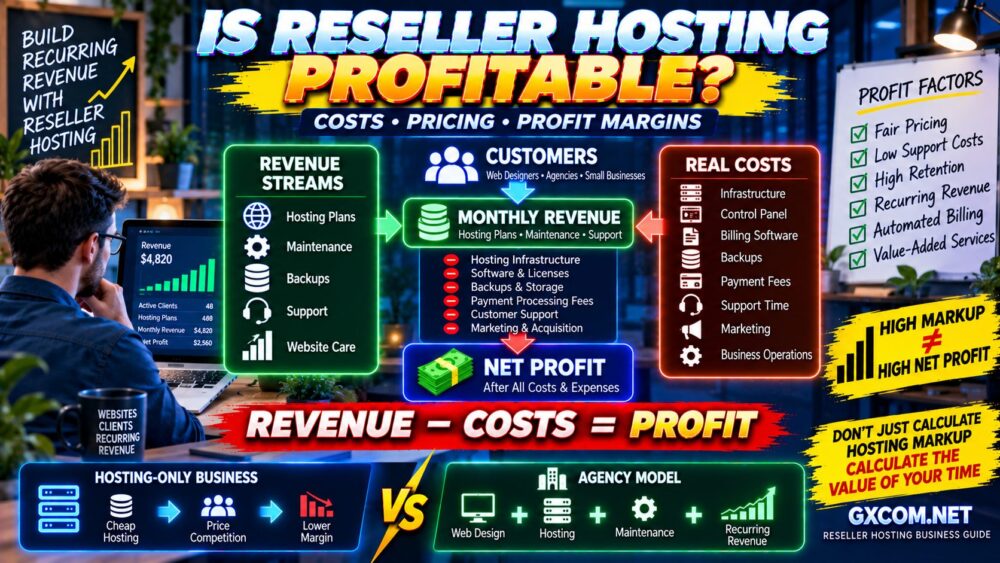
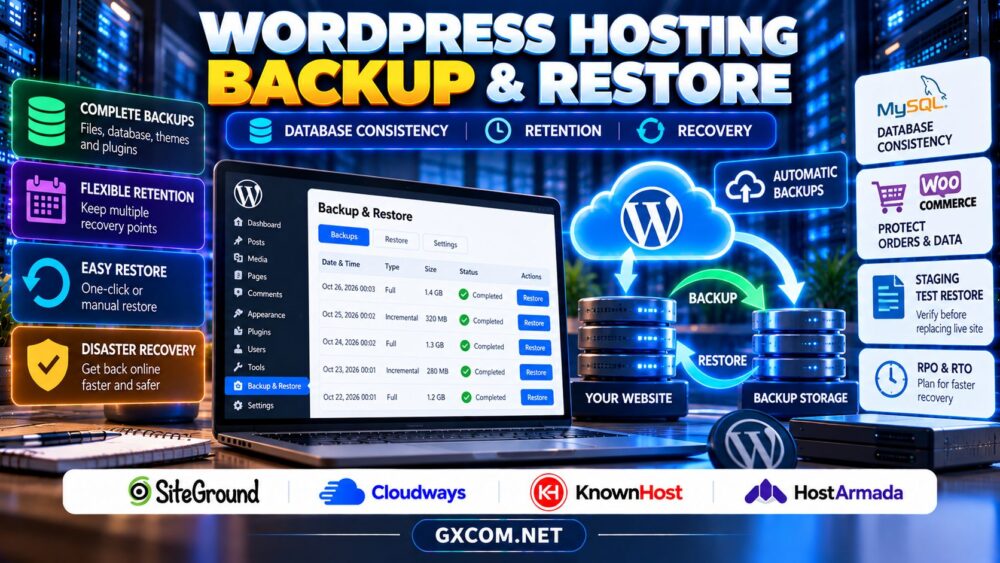
White label reseller hosting lets agencies, developers, and entrepreneurs sell website hosting under their own brand without building an entire data center or managing every physical server. However, launching a profitable hosting business requires more than adding your logo to a control panel.
Client billing, WHMCS licensing, account isolation, technical support, and renewal costs can determine whether a reseller operation becomes sustainable. This guide explains what white labeling actually includes, how billing automation works, and which hosting expenses deserve attention before you buy.
What Is White Label Reseller Hosting?
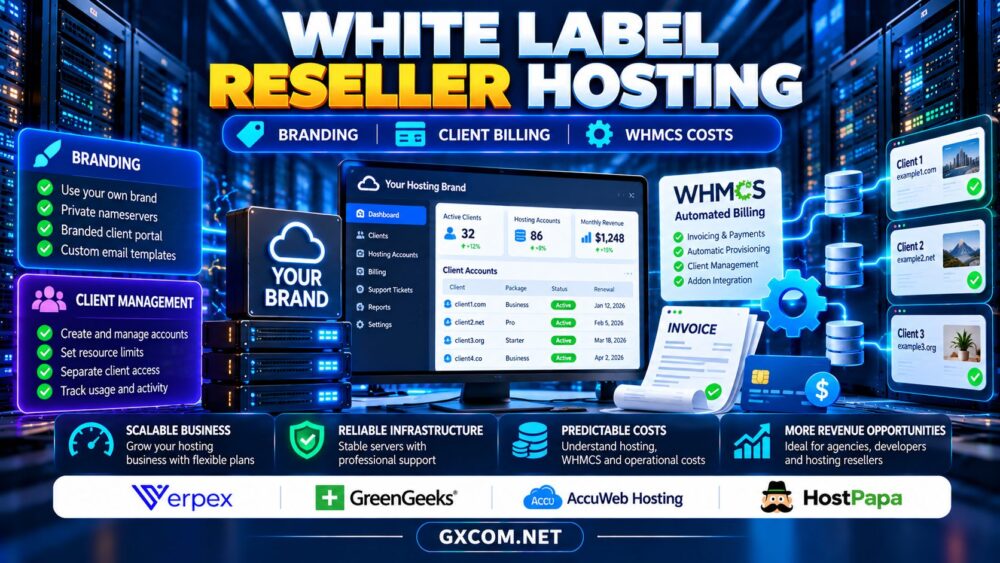
White label reseller hosting allows a business to package and sell hosting services using its own customer-facing identity. The underlying infrastructure belongs to an upstream provider, while the reseller typically manages pricing, customer relationships, and first-line assistance.
Depending on the plan, branding options may include private nameservers, custom hosting packages, branded control-panel access, and customer-facing billing portals.
White labeling does not automatically guarantee complete anonymity. Server hostnames, IP ownership, support messages, or third-party services may still identify the infrastructure provider.
1. Branding: What Can You Customize?
Before purchasing reseller hosting, determine which elements customers will actually see. A professional setup should use a consistent business name, domain, support email, and billing experience.
Private nameservers, such as ns1.yourbrand.com, can reinforce your identity, but they require correct DNS configuration. A branded client portal is equally important because customers may use it more frequently than the hosting control panel.
Ask whether the provider permits custom nameservers, branded account notifications, and control-panel customization. Verify these features on the exact plan rather than assuming every reseller package includes them.
2. Client Billing and Automated Provisioning
Manual invoicing may work for two customers, but it becomes difficult to maintain as your portfolio grows. Billing software can automate recurring invoices, payment reminders, account creation, suspension, and renewals.
Automation usually depends on integration between the billing application and the hosting control panel. Test the entire workflow: purchase, payment confirmation, account provisioning, welcome email, upgrade, cancellation, and refund handling.
Payment processing also creates responsibilities involving transaction fees, chargebacks, taxes, and customer information. A hosting reseller remains responsible for its own commercial policies even when infrastructure is outsourced.
3. WHMCS Costs: Included or Extra?
WHMCS is a widely used hosting billing and automation platform. It can connect customer management, invoices, support functions, and hosting provisioning, but licensing is a separate purchasing consideration.

Some reseller packages may bundle a WHMCS license, while others require a separate subscription. Included licenses can also have limits or conditions that differ from independently purchased licenses.
Before signing up, ask whether WHMCS is included, which license tier applies, how active clients are counted, and what happens when you outgrow the bundled allowance.
Remember to budget for payment gateway charges, optional integrations, domain reseller services, and administrative maintenance. Never assume a promotional hosting price covers the entire billing stack.
4. cPanel, WHM and Customer Isolation
Many reseller hosting workflows use WHM to create and manage individual cPanel accounts. This separation is useful because each customer can receive their own credentials, website files, email settings, and hosting package.
However, account separation does not necessarily mean dedicated CPU or memory resources. Review storage quotas, inode limits, entry processes, database restrictions, and policies governing resource-heavy customers.
For agencies deciding whether to resell hosting or maintain websites directly, see our reseller hosting for agencies guide.
5. Four Hosting Providers to Compare
Verpex
Verpex is a relevant starting point for evaluating reseller hosting and customer account management. Compare its current white-label options, resource allowances, control-panel arrangements, and whether billing software is included in your chosen package.
GreenGeeks
GreenGeeks is another provider to examine when building a branded hosting business. Review reseller account limits, storage policies, nameserver configuration, backup arrangements, and the total cost after introductory offers expire.
AccuWeb Hosting
AccuWeb Hosting can be considered when comparing hosting environments and reseller-oriented account management. Check the exact operating system, control panel, licensing terms, and automation compatibility before selecting a plan.
HostPapa
HostPapa is worth including in a small-business hosting comparison. Confirm whether the specific product supports reseller workflows, how customer accounts are administered, and what support responsibilities remain with your business.
For agencies that prefer provider-managed operations over resale, our managed hosting for agencies comparison explores client access, staging, backups, and support.
6. Calculate Your Real Reseller Hosting Costs
A sustainable reseller business should calculate costs per active customer rather than focusing only on the advertised monthly hosting fee.
Start with the hosting subscription, billing software, domain registration services, payment processing, backups, security tools, and support labor. Then account for customers who consume more resources than expected.
For example, a hypothetical business spending $80 monthly to support 20 paying customers has a baseline operating cost of $4 per customer before additional labor and taxes. This is an illustration, not a provider quote.
Build room for renewals, failed payments, and occasional migrations. Review our web hosting deals when comparing promotional offers, but always calculate the normal ongoing price.
7. Support, Backups and Customer Responsibility
Customers generally contact your brand first, even when the underlying problem originates with the upstream host. Establish clear escalation procedures and avoid promising response times that your provider has not contractually guaranteed.
Check backup frequency, retention, restoration charges, and whether customers can recover individual accounts. Maintain independent recovery arrangements for critical websites where appropriate.
Our managed hosting provider review offers additional context on evaluating management responsibilities, although reseller products should be assessed separately.
Compare White Label Reseller Hosting
Check branding permissions, account limits, WHMCS licensing, backup policies, and renewal costs before launching your hosting brand.
White Label Reseller Hosting FAQ
Do I need WHMCS to sell reseller hosting?
No. You can manage billing manually or use another compatible platform, although automation becomes increasingly valuable as customer numbers grow.
Is a free WHMCS license always included?
No. Inclusion, license limits, and renewal conditions depend on the provider and selected hosting package.
Can customers identify my upstream provider?
Potentially. Private branding can reduce visible references, but technical records and third-party infrastructure may still reveal the provider.
Final Verdict
White label reseller hosting works best when branding, automation, customer isolation, and support costs are planned together. Compare Verpex, GreenGeeks, AccuWeb Hosting, and HostPapa using verified package features and realistic operating expenses. A reliable billing workflow and predictable margins matter more than the lowest introductory price.