为专用服务器选择最佳的 Linux 发行版,将对应用程序兼容性、安全维护、软件部署以及运营成本产生深远影响。Ubuntu、Debian、AlmaLinux 和 Rocky Linux 都是生产环境基础设施中公认的成熟选择,但它们的设计侧重点略有不同。.
Ubuntu 在开发环境和现代应用程序堆栈中被广泛使用。Debian 则深受那些青睐保守、由社区驱动的发行版的管理员的喜爱。AlmaLinux 和 Rocky Linux 通常被用于评估与 Red Hat Enterprise Linux 生态系统相关的企业级工作负载。.
那么,您应该在专用服务器上安装哪款 Linux 发行版呢?
答案并不取决于哪个操作系统最受欢迎,而是取决于您的应用程序、管理员和托管服务提供商能够可靠支持什么。.
本对比分析了软件包管理、版本发布生命周期、控制面板兼容性、安全性、性能以及托管要求等方面的差异,以帮助您做出明智的决策。.
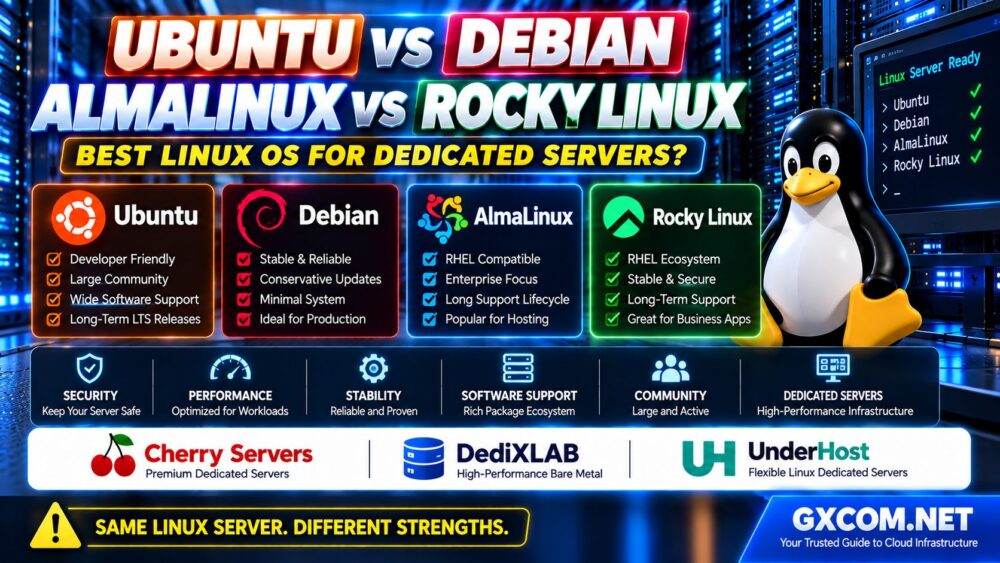
Ubuntu 与 Debian 与 AlmaLinux 与 Rocky Linux:快速对比
| 功能 | Ubuntu 服务器 | Debian | AlmaLinux | Rocky Linux |
|---|---|---|---|---|
| 分布族 | 基于 Debian 的 | 独立的 Debian 项目 | 与 RHEL 兼容的生态系统 | 与 RHEL 兼容的生态系统 |
| 包管理器 | APT / DEB | APT / DEB | DNF / RPM | DNF / RPM |
| 典型的生产选择 | LTS 版本 | 稳定版 | 受支持的主要版本 | 受支持的主要版本 |
| 主要优势 | 开发者生态系统与文档 | 稳健性与灵活性 | 企业应用程序兼容性 | 面向企业的兼容性 |
| 常见工作负载 | Web 应用、容器、开发 | 网站托管、数据库、自主托管 | 商业应用程序、托管平台 | 企业服务、托管平台 |
| 安全框架 | AppArmor 的常用场景 | 可配置的安全框架 | SELinux 通常处于启用状态 | SELinux 通常处于启用状态 |
这些是生态系统的普遍特征,而非针对每个软件包或服务器镜像的保证。具体的发行版版本和提供商的配置会产生影响。.
1. Ubuntu Server:最适合开发人员和现代应用程序栈
对于部署网站、API、容器平台和开发基础设施的组织而言,Ubuntu Server 是一个广受欢迎的选择。.
其详尽的文档和庞大的第三方软件生态系统可以简化部署和故障排除流程,特别是对于已经熟悉 Ubuntu 的团队而言。.
Ubuntu 专用服务器的优势
- 庞大的开发者和管理员社区
- 详尽的教程和软件文档
- APT 包管理
- 适用于生产环境的长期支持版本
- 与现代开发工具具有广泛的兼容性
- 围绕容器和自动化的强大生态系统
Ubuntu LTS 版本的受支持软件包将获得为期五年的标准安全维护。通过 Ubuntu Pro 及相关支持方案,可能还提供其他维护选项。.
不过,不同软件仓库中的软件包覆盖范围和支持权益并不完全相同。.
潜在的局限性
一些管理员更倾向于选择更精简的安装方案,或者采用具有不同打包和发布理念的发行版。.
Ubuntu 还会在某些软件分发场景中使用 Snap,但这可能与并非所有管理员偏好的运维模式相符。.
对于生产环境专用服务器而言,LTS 版本通常比寿命较短的临时版本更适合作为起点。.
最适合: 开发人员、Web 应用程序团队、基于容器的工作负载,以及需要查找有详尽文档记录的 Linux 管理流程的组织。.
2. Debian:最适合保守且可预测的服务器环境
Debian 是一个由社区维护的 Linux 发行版,以其对自由软件的重视、稳定性以及精心设计的软件包整合而著称。.
其“稳定”分支通常被选用于生产系统,因为在这些系统中,可预测的行为比立即采用最新软件版本更为重要。.
Debian 专用服务器的优势
- 保守型稳定发布模型
- APT 包管理
- 广泛的软件仓库
- 灵活且相对简化的服务器部署
- 建立社区治理机制
- 适用于长期运行的基础设施服务
Debian 稳定版通常遵循这样的生命周期:约三年常规支持,随后通过长期支持计划再提供两年支持。.
LTS 阶段有其自身的软件包和架构覆盖范围方面的考虑因素,因此管理员应查阅相关的安全支持信息。.
潜在的局限性
与那些优先采用较新应用程序栈的发行版相比,Debian 稳定版可能包含更旧的上游软件版本。.
这虽然有助于提高兼容性并确保维护的可预测性,但对于需要最新运行时版本的应用程序,可能需要额外的软件仓库、容器或经过精心管理的外部软件包。.
最适合: 经验丰富的管理员、长期运行的Web服务、数据库系统以及需要采取保守软件变更策略的基础设施。.
3. AlmaLinux:最适合基于 RHEL 的托管服务和企业级应用
AlmaLinux 是一款由社区驱动的企业级 Linux 发行版,旨在与 Red Hat Enterprise Linux 生态系统保持兼容。.
使用基于 RPM 的软件、企业管理实践或为 RHEL 兼容系统开发的应用程序的组织,通常会对其进行评估。.
AlmaLinux 专用服务器的优势
- 围绕 RHEL 应用生态系统的兼容性重点
- DNF 和 RPM 包管理
- SELinux 安全框架
- 主要版本维护生命周期较长
- 面向 RHEL 团队的熟悉的管理模式
- 受支持的主机控制面板中的相关选项
当某款商业应用程序或控制面板明确支持某个特定的AlmaLinux发行版时,AlmaLinux可能会特别有用。.
潜在的局限性
主要针对基于 Debian 的发行版编写的软件可能需要不同的安装步骤。.
管理员还必须检查特定应用程序是否支持该具体版本的AlmaLinux,而不仅仅是AlmaLinux这个名称。.
与更广泛的 RHEL 生态系统的兼容性,并不意味着每个第三方软件包或专有应用程序都会自动获得认证。.
最适合: 面向企业的应用程序、基于 RPM 的基础设施,以及需要受支持的 RHEL 兼容平台的主机托管环境。.
4. Rocky Linux:最适合企业级 Linux 系统的一致性
Rocky Linux 是另一款以社区为中心的企业级 Linux 发行版,其设计旨在与 RHEL 生态系统保持兼容。.
系统管理员若希望在无需切换到基于 Debian 的操作系统的情况下,仍能拥有一个熟悉的企业级 Linux 环境,通常会考虑这一方案。.
Rocky Linux 专用服务器的优势
- 与 RHEL 兼容的软件生态系统
- DNF 和 RPM 包管理
- SELinux 支持
- 主要版本的长期生命周期
- 企业级 Linux 管理员常用的工具
- 适用于受支持的业务和基础设施应用
Rocky Linux 为主要版本提供了较长的支持周期,但系统管理员必须将系统更新至受支持的次要版本。.

潜在的局限性
与AlmaLinux一样,对于那些安装文档默认基于Ubuntu或Debian的软件而言,Rocky Linux可能并非最理想的选择。.
应根据具体的 Rocky Linux 发行版以及供应商的支持矩阵来检查应用程序的兼容性。.
最适合: 面向企业的服务器工作负载、基于 RPM 的应用环境,以及熟悉 RHEL 管理的企业。.
5. Ubuntu 与 Debian:哪一个更适合专用主机?
Ubuntu 和 Debian 拥有共同的重要技术基础,包括 DEB 软件包和 APT 软件包管理。.
不过,它们在发布策略、软件包选择和生态系统优先级方面存在差异。.
当开发人员希望使用一个文档齐全且具有可预测的长期发布周期的平台时,Ubuntu LTS 便颇具吸引力。.
当管理员更倾向于采用保守的软件基线和由社区管理的发行版时,Debian 稳定版便颇具吸引力。.
仅凭名称,两者都没有哪一种普遍更快或更安全。.
对于需要特定版本的 PHP、Python、PostgreSQL 或其他运行时环境的应用程序,请对比您计划部署的实际发布版本所支持的软件包版本及维护策略。.
在以下情况下选择 Ubuntu: 您的团队重视针对 Ubuntu 的文档、开发工具或商业支持方案。.
在以下情况下请选择 Debian: 贵团队更青睐 Debian 的发布理念、极简的部署灵活性以及成熟的管理实践。.
6. AlmaLinux 与 Rocky Linux:真正的区别是什么?
AlmaLinux 和 Rocky Linux 在技术上有着许多相似之处,因为它们都面向那些关注与 RHEL 兼容的软件生态系统的组织。.
两者通常都使用 DNF、RPM、systemd 和 SELinux。.
对于许多标准的网站托管或商业应用程序而言,日常管理体验可能大同小异。.
实际上的差异通常包括:
- 项目治理与开发方法
- Release engineering and update policies
- Third-party vendor certification
- 社区资源
- Specific hardware and software compatibility
- Support relationships and operational preferences
Rather than declaring one distribution universally superior, check which is explicitly supported by your control panel, application vendor, security tools, and hosting provider.
If an application vendor certifies only one of them, that support requirement may be more important than minor differences in general server administration.
7. Which Linux Distribution Is Fastest?
A common question is whether Ubuntu, Debian, AlmaLinux, or Rocky Linux delivers the best dedicated server performance.
没有放之四海皆准的赢家。.
On identical hardware, performance depends on factors such as:
- Kernel version and configuration
- Filesystem selection
- CPU scheduler behavior
- Installed background services
- Compiler and library versions
- Storage drivers
- 应用程序配置
- 安全政策
A minimal installation of one distribution may appear faster than a heavily configured installation of another, but that is not a fair operating system comparison.
For most production workloads, choosing the right processor, RAM capacity, storage system, and application configuration will have a larger practical impact than switching distributions without identifying a specific bottleneck.
我们的 专用服务器硬件选择指南 explains how CPU generations, RAM, NVMe storage, and network specifications influence real-world server performance.
8. Security and Update Management Compared
All four distributions can support secure production environments when they are properly configured and maintained.
Security depends on update practices, access controls, software exposure, monitoring, and the applications installed on the server.
Ubuntu Security
Ubuntu commonly uses AppArmor and provides security maintenance for supported packages according to the selected release and subscription coverage.
Debian Security
Debian maintains security updates for supported releases, with a transition to the Debian LTS program during the later lifecycle phase.
AlmaLinux and Rocky Linux Security
Both commonly use SELinux and enterprise-oriented package management practices.
Administrators should maintain current supported minor releases and verify security advisories for the exact installed version.
Regardless of distribution, dedicated server security should include:
- SSH 密钥认证
- Restricted administrative access
- 防火墙规则
- 定期安全更新
- Service and log monitoring
- 独立备份
- 恢复测试
For practical deployment guidance, see our 非托管专用服务器设置检查清单.
9. Linux Distribution Support for Docker and Containers
Ubuntu, Debian, AlmaLinux, and Rocky Linux can all be used for container workloads when the required container software and kernel features are supported.
However, installation procedures, repository availability, security defaults, and maintenance policies may differ.
Ubuntu and Debian are frequently used in developer-oriented Docker environments because of their widespread documentation and familiarity.
AlmaLinux and Rocky Linux are also relevant for enterprise container environments, including workflows that use Podman and other compatible container tools.
Before choosing a distribution for containers, confirm:
- Supported container runtime versions
- Kernel and cgroup compatibility
- Storage driver requirements
- SELinux or AppArmor behavior
- Networking requirements
- Update and restart procedures
The best choice is the distribution that supports your container platform and fits your team's operational expertise.
10. Control Panel Compatibility: cPanel, Plesk and Other Tools
Hosting control panel compatibility can be a decisive factor when choosing a Linux distribution.
Different control panels support different operating system families, major versions, and architectures.
For example, a hosting business planning to deploy cPanel should verify the official operating system support matrix before ordering a dedicated server.
The same principle applies to Plesk, DirectAdmin, and other commercial server management platforms.
Do not assume that a control panel supports every release of Ubuntu, Debian, AlmaLinux, or Rocky Linux.
Check the exact supported version, required architecture, license conditions, and installation restrictions.
11. Which Linux Distribution Is Best for Web Hosting?
The best Linux distribution for web hosting depends on the applications and management tools you intend to use.
| 工作量 | Good Starting Options | 主要考虑因素 |
|---|---|---|
| WordPress 和 PHP | Ubuntu LTS, Debian Stable | PHP versions, database support, caching |
| 主机控制面板 | Supported AlmaLinux, Rocky Linux, or other approved releases | Official control panel compatibility |
| Docker 应用程序 | Ubuntu, Debian, AlmaLinux, Rocky Linux | Runtime and kernel support |
| 企业级应用程序 | AlmaLinux, Rocky Linux, or vendor-certified alternatives | Application certification |
| Minimal self-managed server | Debian Stable, Ubuntu Server | Administrator experience |
| 数据库托管 | Any appropriately supported distribution | Database compatibility, memory, storage |
These are starting points, not exclusive recommendations. A well-configured and supported distribution from any of these families can be appropriate for many workloads.
12. Choosing a Dedicated Server Provider for Your Linux Distribution
After choosing an operating system, verify that your hosting provider can deploy and support the required distribution.
A dedicated server may offer root access while still restricting available installation images or remote recovery methods.
Three providers worth evaluating for relevant Linux dedicated infrastructure are Cherry 服务器, DediXLAB, ,以及 UnderHost.
Cherry Servers: Linux Bare Metal Deployment Flexibility
Cherry 服务器 is a candidate for buyers evaluating configurable bare metal infrastructure and Linux deployment requirements.
Before ordering, verify which Ubuntu, Debian, AlmaLinux, or Rocky Linux images are available for the selected product.
Also confirm whether custom installation media, rescue access, and remote management features meet your needs.
DediXLAB: Self-Managed Linux Dedicated Infrastructure
DediXLAB can be included when comparing dedicated server hardware and self-managed Linux environments.
For cost-conscious buyers, evaluate the exact processor model, RAM, storage configuration, and operating system installation options rather than relying on headline specifications alone.
Ask which distributions are supported on the proposed server and who is responsible for operating system troubleshooting.
UnderHost: Verify Linux Deployment and Hosting Policies
UnderHost is another candidate to investigate when comparing Linux hosting infrastructure and deployment requirements.
Review the selected product's supported operating systems, installation options, acceptable use terms, and administration responsibilities.
Do not assume that every Linux distribution is available on every hosting plan.
13. Linux Dedicated Server Provider Checklist
Before buying, ask the hosting provider the following questions:
- Which Linux distributions and versions are available?
- Can I install a custom operating system image?
- Is full root access provided?
- Does the server support remote console or rescue access?
- Can the provider reinstall the operating system?
- Are software updates and security patches my responsibility?
- Does the selected control panel support this Linux release?
- What hardware and network specifications are included?
- What happens if the server fails to boot?
- What backup and recovery options are available?
For a broader provider selection framework, read our 最佳 Linux 专用服务器托管指南, which covers hardware, root access, network quality, and operating system support.
14. Should You Choose Managed or Unmanaged Linux Hosting?
The choice of Linux distribution also affects the administration skills required to maintain the server.

With unmanaged dedicated hosting, customers generally handle software installation, updates, security configuration, monitoring, and troubleshooting.
Managed hosting may include selected administration services, but the scope varies by provider and contract.
If your team has extensive Debian or Ubuntu experience, adopting AlmaLinux or Rocky Linux may introduce additional training and operational work.
Similarly, a team familiar with RHEL-oriented administration may prefer AlmaLinux or Rocky Linux over a Debian-based system.
For long-term planning, our 非托管专用服务器维护指南 covers patch management, monitoring, backups, and recovery procedures.
15. How to Choose the Best Linux Distro for Your Dedicated Server
Use the following decision framework:
- Choose Ubuntu LTS when your development stack, documentation, and administration experience align with Ubuntu.
- Choose Debian Stable when you prioritize conservative package updates and a community-maintained production platform.
- Choose AlmaLinux when your application or hosting tools require a supported RHEL-compatible environment.
- Choose Rocky Linux when your team prefers its RHEL-compatible ecosystem and the software vendor supports the selected release.
Then validate your decision against the actual application stack, support lifecycle, hosting provider, and operational budget.
APPLICATION COMPATIBILITY → SUPPORT LIFECYCLE → ADMIN EXPERIENCE → SERVER HARDWARE.
常见问题解答
哪种 Linux 发行版最适合专用服务器?
Ubuntu LTS, Debian Stable, AlmaLinux, and Rocky Linux are all strong candidates. The best option depends on application compatibility, security maintenance, administrator expertise, and hosting-provider support.
Is Ubuntu better than Debian for server hosting?
Ubuntu may be preferable for teams using Ubuntu-specific tools and documentation. Debian may be preferable for administrators who value its conservative Stable release model. Neither is universally better.
Is AlmaLinux better than Rocky Linux?
Both target the RHEL-compatible ecosystem. The better choice depends on the exact release, vendor certification, project preferences, and operational requirements.
Which Linux distro is fastest for a dedicated server?
There is no universal fastest distribution. Hardware, kernel configuration, installed services, and application optimization often have a greater effect on practical performance.
Which Linux distro is best for WordPress hosting?
Ubuntu LTS and Debian Stable are common choices for self-managed WordPress environments. Other distributions may also be appropriate when supported by the chosen hosting stack and control panel.
Can I run Docker on AlmaLinux or Rocky Linux?
Container workloads can run on supported AlmaLinux and Rocky Linux releases, subject to runtime, kernel, repository, and security configuration requirements.
Which Linux distribution has the longest support?
Support lifecycles vary by major release and maintenance arrangement. Ubuntu LTS offers five years of standard maintenance with additional options, Debian provides regular and LTS phases, and AlmaLinux and Rocky Linux target long enterprise-oriented major-version lifecycles.
Can I change Linux distributions after buying a dedicated server?
Usually, changing distributions requires reinstalling the operating system or migrating applications to a new installation. Confirm provider reinstall options and back up all required data before making changes.
Do Linux dedicated server providers support all four distributions?
Not necessarily. Operating system images, custom installation options, and support policies vary by provider and product.
Final Verdict: Choose the Linux Distribution That Fits Your Workload
Ubuntu, Debian, AlmaLinux, and Rocky Linux can all provide reliable foundations for dedicated server hosting.
Ubuntu LTS is a practical choice for modern application development and widely documented server administration. Debian Stable offers a conservative production platform. AlmaLinux and Rocky Linux are relevant for enterprise-oriented environments and RHEL-compatible applications.
Before purchasing hardware, verify software compatibility, supported release lifecycles, control panel requirements, and the operating system images available from your provider.
Cherry Servers, DediXLAB, and UnderHost are candidates to include in your infrastructure research, but the final decision should be based on the exact server configuration and deployment terms.
THE BEST LINUX DISTRO IS THE ONE YOUR APPLICATIONS AND TEAM CAN SUPPORT RELIABLY.