Understanding Google Cloud Egress Pricing
Google Cloud egress pricing can significantly affect the cost of hosting applications, APIs, databases, and downloadable content. While compute and storage prices are relatively easy to estimate, network charges depend on where data travels, which services process it, and how traffic reaches users.
Google Cloud generally distinguishes incoming traffic from outgoing data transfer. Internet egress, cross-region communication, and certain managed networking services can generate separate charges. Understanding these differences helps businesses avoid unexpected bills and choose infrastructure that matches actual traffic requirements.
What Counts as Egress in Google Cloud?
Egress refers to data leaving a resource or network location. Common examples include website responses delivered to visitors, application downloads, API responses, and backups exported to external destinations.
Inbound internet traffic is generally free of data transfer charges, although services processing that traffic may have their own fees. Outbound traffic is more complicated because its price depends on the source, destination, network service, and applicable billing rules.
Transfers between Google Cloud regions may also be chargeable even when data never reaches the public internet. For a broader comparison of network allowances and usage policies, read our 云VPS带宽费用指南.
Premium Tier vs Standard Tier Networking
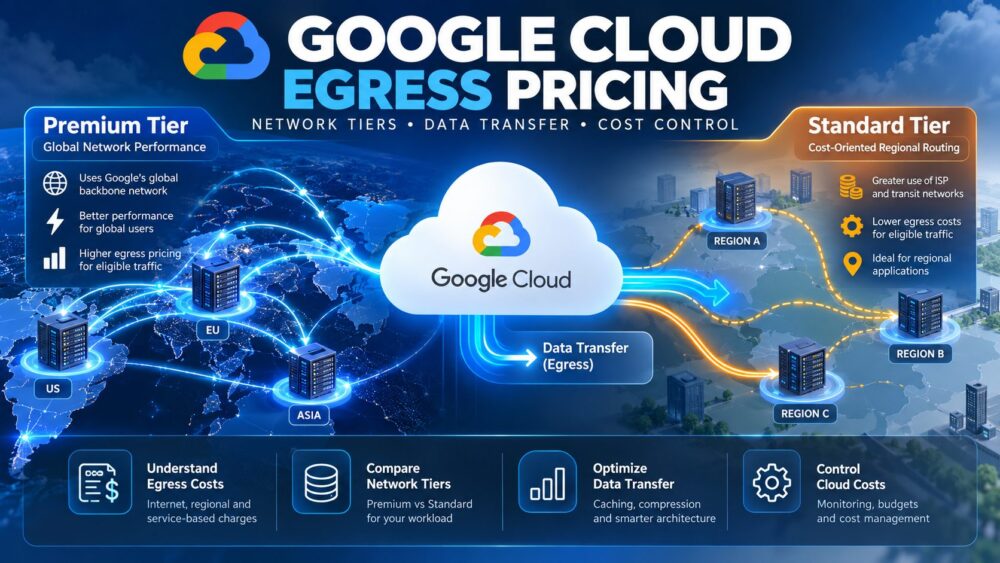
Google Cloud offers two Network Service Tiers for supported external connectivity. These tiers affect traffic routing, supported networking features, and internet data transfer pricing.
Premium Tier: Global Network Performance
Premium Tier uses Google’s global backbone to carry traffic across much of the journey between cloud resources and internet users. It is the default tier and supports global networking capabilities, including services that require globally distributed infrastructure.
This model can benefit applications serving geographically dispersed customers or requiring advanced global load balancing. However, Premium Tier pricing may be higher than Standard Tier pricing for comparable eligible outbound traffic.
Standard Tier: Cost-Oriented Regional Routing
Standard Tier typically routes internet traffic through peering or transit networks closer to the cloud resource’s region. It can reduce eligible internet egress costs, particularly for regional applications that do not require global networking features.
Standard Tier is not universally available for every Google Cloud networking product. For example, Cloud CDN requires Premium Tier. Businesses should verify compatibility before changing external IP configurations or load balancing architecture.
| 功能 | Premium Tier | Standard Tier |
|---|---|---|
| 主要重点 | Global network performance | Regional cost optimization |
| Internet routing | Extensive Google backbone usage | Greater use of ISP and transit networks |
| Global networking features | Broader support | 支持有限 |
| Internet egress pricing | Premium pricing structure | Lower-cost eligible pricing structure |
| 典型工作量 | 全球应用 | Regional applications |
Internet, Regional and Internal Data Transfer
Not every network transfer uses the same pricing category. Internet egress delivers data to destinations outside Google Cloud. Inter-region transfers move data between cloud regions and can incur separate charges.

Traffic within one region may qualify for different treatment depending on the services, zones, and network paths involved. Cloud Storage has its own location-based transfer rules, which should not be confused with Compute Engine VM networking charges.
Applications with distributed databases, remote backups, or cross-region replication should estimate internal transfers independently of customer-facing traffic. Our high-availability cloud servers guide explains why redundancy can introduce additional networking expenses.
Hidden Networking Costs Beyond Egress
Cloud NAT Processing
Cloud NAT allows supported resources without external IP addresses to initiate outbound connections. Its charges can include gateway usage, processed data volume, and external IP address usage. Internet egress charges may apply separately.
Load Balancing and External IP Addresses
Load balancers can introduce forwarding, processing, and other applicable charges. External IP addresses may also generate recurring costs. A small application using several networking components can therefore cost more than its virtual machine estimate suggests.
Cloud Storage and CDN Traffic
Cloud Storage downloads follow storage-specific network pricing rules. Cloud CDN can reduce repeated requests to origin infrastructure, but cache delivery, cache fill, and other applicable service charges still require evaluation.
Review the complete request path rather than assuming that adding a CDN automatically eliminates networking expenses.
Google Cloud Egress Cost Calculation Example
Consider an illustrative application transferring 3,000 GiB of billable internet traffic monthly. At a hypothetical rate of $0.10 per GiB, its egress expense would be $300. If an eligible configuration instead averaged $0.07 per GiB, the estimated expense would be $210.
The difference is $90 monthly, or $1,080 annually. These figures are examples only, not current Google Cloud quotations. Actual billing can involve tiered rates, location-specific prices, allowances, and additional networking services.
For accurate forecasting, separate traffic by source, destination, and service. Use Google Cloud’s current pricing documentation and billing reports rather than applying one estimated rate to every transfer.
Four Cloud Hosting Alternatives to Compare
Businesses with predictable workloads should also evaluate conventional cloud servers and VPS products. These alternatives may offer different traffic allowances and billing structures, although they do not necessarily replace specialized Google Cloud services.
Vultr: Cloud Compute and Transfer Allowances
Vultr offers cloud compute products worth comparing for applications requiring configurable virtual servers. Review included transfer, excess usage rules, regional availability, and backup charges before comparing total costs.
Kamatera:可配置的云基础设施
卡马特拉 provides customizable cloud servers that can suit teams needing control over resource allocations. Evaluate outbound traffic billing, optional management, storage, and network configuration against the complete Google Cloud deployment.
Hostwinds: VPS and Cloud Hosting Options
Hostwinds offers VPS and cloud hosting services for conventional application workloads. Compare the exact product’s bandwidth terms, network specifications, management options, and backup policies rather than assuming identical allowances across plans.
Contabo: VPS and Virtual Dedicated Servers
Contabo offers VPS and Virtual Dedicated Server (VDS) products for workloads that can operate on standard virtual server infrastructure. Check traffic policies, port limitations, resource allocation, and applicable usage conditions before purchasing.

探索我们的 经济实惠的云VPS套餐对比 以及 云托管优惠指南 有关其他购买注意事项。.
How to Reduce Google Cloud Egress Costs
- 统计流量: Identify the services and destinations responsible for the largest outbound volumes.
- Review network tiers: Consider Standard Tier only where its supported features and routing characteristics meet application requirements.
- Improve caching: Reduce repeated origin responses through appropriate application and CDN caching.
- Optimize content: Compress responses, resize images, and avoid transferring unnecessary data.
- Review architecture: Minimize avoidable cross-region transfers and unnecessary replication.
- 监控支出: Use billing reports, budgets, and alerts to investigate unusual network usage.
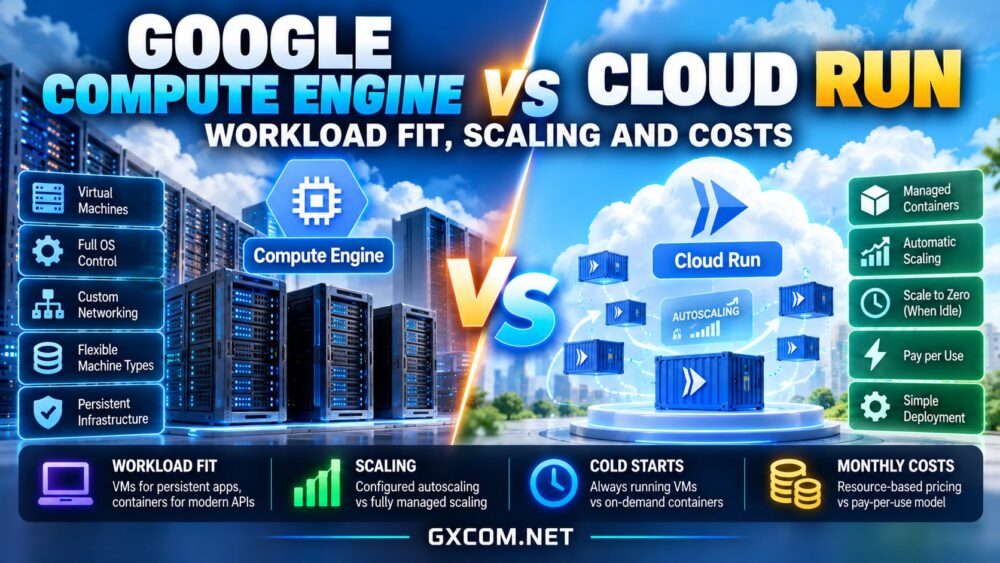
Network cost optimization should not undermine reliability or user experience. Test latency, availability, and recovery behavior before moving services or changing network configurations. Our Google Compute Engine vs Cloud Run comparison provides further context on workload architecture and operating costs.
最终裁决
Google Cloud egress pricing depends on much more than monthly traffic volume. Network Service Tiers, transfer destinations, Cloud NAT, load balancing, and storage services all influence the final bill.
Premium Tier can suit globally distributed applications, while Standard Tier may reduce eligible costs for regional workloads. For simpler deployments, compare approved cloud VPS alternatives using complete network and infrastructure expenses. The best decision balances predictable billing, application performance, and operational requirements.