Choosing the right hosting solution is one of the most important decisions when building a website. Many beginners and businesses compare cloud hosting vs web hosting because both options can power websites, but they work in very different ways.
Traditional web hosting is usually based on a single server environment, while cloud hosting uses multiple connected servers to provide better flexibility, scalability and reliability.
This guide explains the differences between cloud hosting and web hosting, including performance, pricing, security, scalability and which option is better for different types of websites.
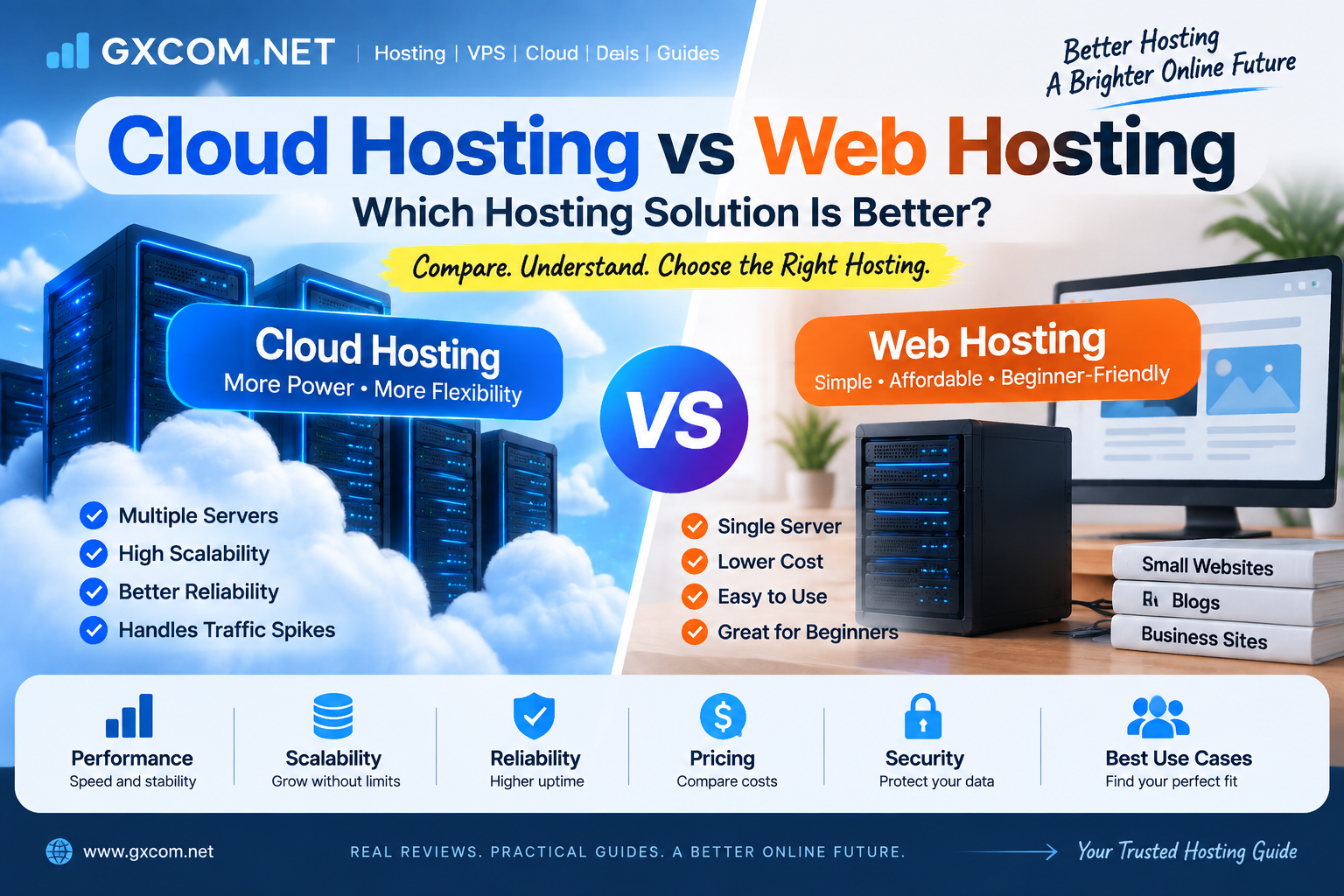
Quick Comparison: Cloud Hosting vs Web Hosting
| 功能 | 云托管 | 网站托管 |
|---|---|---|
| Infrastructure | Multiple connected servers | Usually one server |
| 性能 | Higher scalability | Basic performance |
| 可靠性 | Higher availability | Depends on server stability |
| 价格 | 灵活定价 | Usually cheaper |
| 最适合 | Growing websites and applications | Small websites and beginners |
什么是网站托管?
Web hosting is a traditional hosting service where websites store their files and databases on a physical server.
Most beginner hosting plans use shared hosting, where multiple websites share resources from the same server.
Web hosting usually includes:
- Website storage
- Bandwidth allocation
- Control panel access
- Email hosting options
- 基本安全功能
For users looking for traditional hosting solutions, explore our 最佳主机服务商 比较。.
什么是云托管?
Cloud hosting uses a network of connected servers instead of relying on a single physical machine.
This architecture allows websites and applications to use resources from multiple servers, improving flexibility and reliability.
Cloud hosting features often include:
- 可扩展资源
- Multiple server locations
- Improved uptime
- 灵活的定价模式
- Advanced infrastructure
See our guide to the 最佳云托管服务商 for recommended cloud platforms.
Cloud Hosting vs Web Hosting: Main Differences
1. Server Infrastructure
The biggest difference between cloud hosting and web hosting is the underlying infrastructure.
Web hosting typically relies on one server, while cloud hosting distributes resources across multiple connected servers.
2. Performance
Cloud hosting generally provides better performance because resources can be adjusted according to website requirements.
Traditional web hosting performance depends heavily on the server environment and the number of websites sharing resources.
3. Scalability
Scalability is one of the strongest advantages of cloud hosting.
Growing websites can increase resources quickly without migrating to another server.
Web hosting plans usually have fixed limits and may require upgrading to a larger plan.
4. Reliability and Uptime
Cloud hosting can provide better reliability because websites are not dependent on a single server.
If one server experiences problems, resources can often be moved to another available server.
5. Pricing
Web hosting is usually cheaper, making it attractive for beginners and small websites.
Cloud hosting often uses flexible pricing based on resources, making it suitable for websites with changing traffic.
Cloud Hosting vs Web Hosting Performance
| Performance Factor | 云托管 | 网站托管 |
|---|---|---|
| 速度 | High with scalable resources | Depends on server load |
| Traffic Handling | Better for traffic spikes | Limited by plan resources |
| Resource Scaling | 灵活的 | Usually requires upgrade |
| Server Control | More options | Basic management |
Security Comparison
Both cloud hosting and web hosting can provide secure environments, but cloud platforms often offer more advanced security tools.
Cloud hosting may include:
- Network protection
- Automated backups
- Monitoring systems
- Advanced access controls
Web hosting usually provides basic security features suitable for smaller websites.
Who Should Choose Web Hosting?
Web hosting is suitable for:
- 个人博客
- 小型企业网站
- 作品集网站
- 新网站
- Low traffic projects
Who Should Choose Cloud Hosting?
Cloud hosting is better suited for:
- 发展中的企业
- 电子商务网站
- High traffic websites
- Web应用程序
- Online platforms
Cloud Hosting vs Web Hosting: Pros and Cons
Cloud Hosting Advantages
- 更好的可扩展性
- 更高的可靠性
- Flexible resources
- Suitable for growth
Cloud Hosting Disadvantages
- Can cost more
- May require more technical knowledge
Web Hosting Advantages
- 实惠的价格
- 轻松设置
- Beginner-friendly
Web Hosting Disadvantages
- Limited scalability
- 共享资源
- Less flexibility
Cloud Hosting vs Web Hosting: Which One Should You Choose?
The right choice depends on your website size, budget and future growth plans.
Choose web hosting if:
- You are launching your first website.
- Your traffic is small.
- You need an affordable solution.
Choose cloud hosting if:
- Your website is growing.
- You need better scalability.
- You run business applications or ecommerce websites.
最终裁决
Cloud hosting and web hosting serve different purposes.
Web hosting remains a good choice for beginners and small websites because it is affordable and easy to manage.
Cloud hosting is a better solution for businesses, growing websites and applications that require higher performance, flexibility and reliability.
Before choosing a hosting solution, consider your current needs and future growth plans.
常见问题解答
Is cloud hosting better than web hosting?
Cloud hosting is usually better for scalability and reliability, while web hosting is better for beginners who need an affordable solution.
Is cloud hosting more expensive?
Cloud hosting can cost more because it provides flexible resources and advanced infrastructure.
Can beginners use cloud hosting?
Yes. Managed cloud hosting services make cloud hosting easier for beginners.
Should a small business use cloud hosting?
Small businesses expecting growth may benefit from cloud hosting because it provides better scalability.