HTTPS has become a standard requirement for modern websites. Installing an SSL certificate on a WordPress website helps protect visitor data, improve trust and create a secure connection between browsers and servers.
Although many hosting providers now offer free SSL certificates, WordPress website owners still need to configure HTTPS correctly to avoid security warnings and mixed content issues.
This guide explains how to install SSL certificate on WordPress website, configure HTTPS settings and ensure your website works correctly after migration from HTTP to HTTPS.
Why Install SSL Certificate on WordPress?
An SSL certificate encrypts communication between visitors and your website server.
Installing SSL provides several benefits:
- Protects user information
- Enables HTTPS connection
- Improves visitor trust
- Supports website security
- Creates a better technical SEO foundation
Before Installing SSL Certificate
Before enabling HTTPS, check the following requirements:
| 要求 | Status |
|---|---|
| Active domain name | 必填 |
| Working WordPress website | 必填 |
| Hosting control panel access | 必填 |
| SSL certificate available | 必填 |
| Website backup | Recommended |
Step 1: Get an SSL Certificate From Your Hosting Provider
Many hosting providers include free SSL certificates through automated certificate authorities.
Common SSL options include:
- 免费 SSL 证书
- Premium SSL certificates
- Wildcard SSL certificates
- Business validation certificates
When selecting hosting, check whether SSL installation and renewal are included.
You can compare hosting options through our 最佳网站托管服务 指南。.
Step 2: Install SSL Through Hosting Control Panel
Most hosting providers provide SSL management tools through their control panels.
The general installation process includes:
- Open your hosting control panel.
- Find SSL or Security settings.
- Select your domain name.
- Install or activate the SSL certificate.
- Wait for certificate verification.
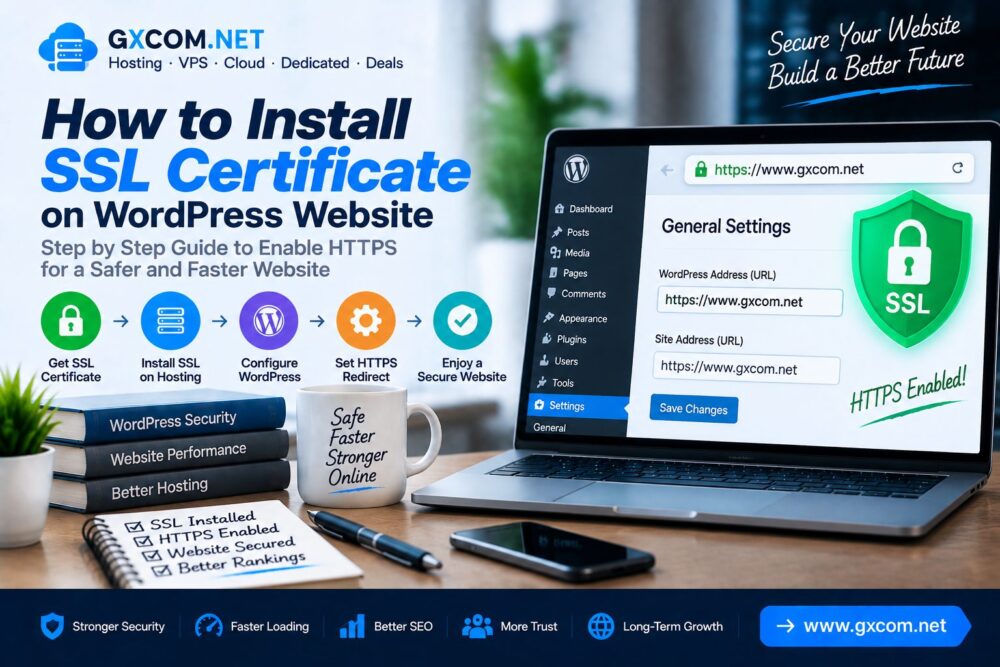
Step 3: Change WordPress Website URL to HTTPS
After installing SSL, WordPress needs to use HTTPS instead of HTTP.
Go to:
WordPress Dashboard
→ Settings
→ General
Change:
http://example.com
to:
https://example.com
Update both:
- WordPress Address (URL)
- Site Address (URL)
Step 4: Force HTTP Redirect to HTTPS
After enabling SSL, all visitors should automatically access the secure HTTPS version.
HTTP to HTTPS redirect prevents:
- Duplicate URLs
- Security warnings
- SEO confusion
- Incorrect indexing
Many hosting providers offer automatic HTTPS redirect options.
Step 5: Fix WordPress Mixed Content Issues
Mixed content happens when an HTTPS website still loads some resources through HTTP.
Common causes include:
- Old image URLs
- HTTP scripts
- Theme resources
- Plugin files
Solutions include:
- Update HTTP links to HTTPS
- Replace old media URLs
- Check theme settings
- Review plugin resources
Step 6: Update WordPress Database URLs
Some old HTTP URLs may remain inside the WordPress database.
Database updates may be required for:
- Posts
- Images
- Internal links
- Plugin settings
Step 7: Update Google Search Console
After switching WordPress to HTTPS, website owners should update search engine tools.
Recommended actions:
- Add HTTPS property
- Submit updated sitemap
- Monitor indexing status
- Check security issues
Step 8: Update Internal Links
Internal links should use HTTPS URLs after SSL installation.
请检查:
- Navigation menus
- Blog articles
- Footer links
- Images
Step 9: Verify SSL Installation
After completing setup, confirm that SSL works correctly.
请检查:
- Browser lock icon
- HTTPS URL
- No security warnings
- Valid certificate information
WordPress SSL Installation Checklist
| Task | Status |
|---|---|
| Install SSL Certificate | 必填 |
| Enable HTTPS | 必填 |
| Redirect HTTP Traffic | 必填 |
| Fix Mixed Content | 必填 |
| Update Sitemap | Recommended |
Common WordPress SSL Installation Problems
| Problem | 解决方案 |
|---|---|
| HTTPS Not Working | Check SSL configuration |
| Mixed Content Warning | Replace HTTP resources |
| Redirect Loop | Review HTTPS settings |
| Certificate Error | Verify domain and renewal |
WordPress SSL Plugin vs Manual Configuration
| Method | Suitable For |
|---|---|
| SSL Plugin | Beginners needing simple setup |
| Manual Configuration | 高级用户 |
| Hosting SSL Tools | 大多数网站 |
How Hosting Affects SSL Performance
SSL configuration depends on the quality of hosting infrastructure.
A reliable hosting environment should provide:
- Automatic SSL renewal
- Modern encryption support
- Secure server configuration
- HTTPS compatibility
Websites requiring more server control can explore our 最佳VPS评测.
常见问题解答
How do I install SSL certificate on WordPress?
You can install SSL through your hosting provider, activate HTTPS in WordPress settings and redirect HTTP traffic to HTTPS.
Is free SSL enough for WordPress?
Free SSL certificates provide encryption and HTTPS protection for most websites.
Why does my WordPress site show mixed content?
Mixed content occurs when some website resources still load through HTTP after SSL activation.
Does SSL improve WordPress SEO?
SSL creates a secure website foundation and works together with speed, content and technical SEO optimization.
结语
Installing an SSL certificate on WordPress is an essential step for website security and modern web standards.
A correct HTTPS setup requires more than activating a certificate. Website owners should also configure redirects, fix mixed content and update website settings.
With proper SSL configuration and secure hosting infrastructure, WordPress websites can provide safer experiences for visitors and stronger technical foundations for future growth.