WordPress performance depends not only on themes and plugins but also on the hosting environment behind the website. Proper hosting settings can improve loading speed, stability and the ability to handle more visitors.
Many website owners focus only on installing optimization plugins while ignoring important server-level configurations such as PHP versions, caching, database optimization and resource allocation.
This guide explains the best WordPress 托管服务 settings that can help improve website performance and create a faster, more reliable WordPress environment.
Why WordPress Hosting Settings Matter
WordPress requires a combination of software configuration and server resources to deliver fast page loading speeds.
Optimized hosting settings can improve:
- 网站加载速度
- Server response time
- 用户体验
- Search performance
- 网站稳定性
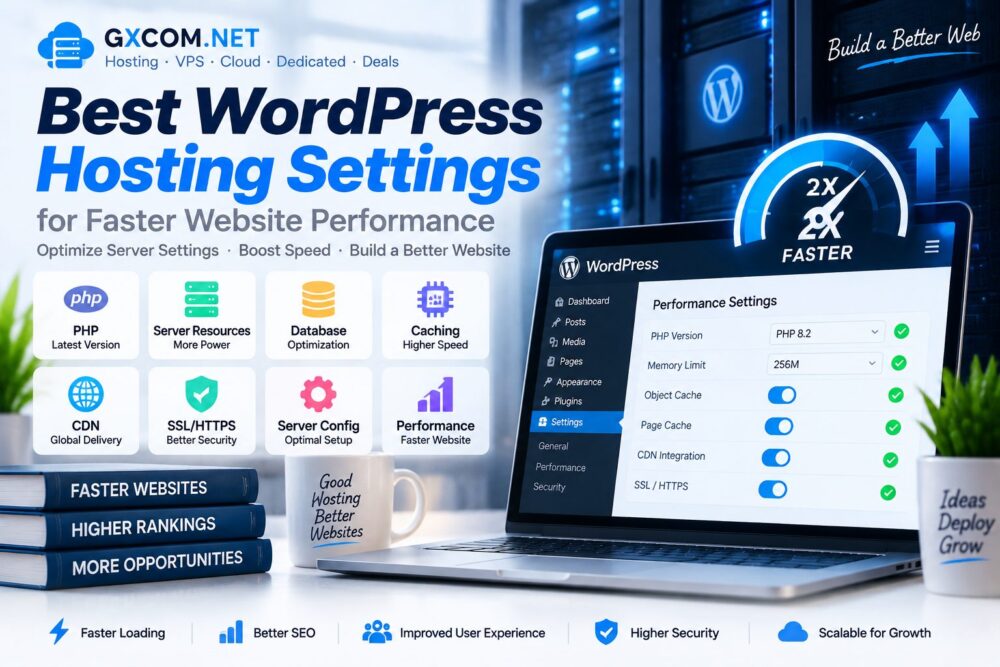
Recommended WordPress Hosting Settings Overview
| Setting | Recommended Configuration |
|---|---|
| PHP Version | Latest supported stable version |
| Memory Limit | 256MB or higher |
| 存储 | SSD or NVMe |
| 缓存 | Enabled |
| CDN | Recommended |
| SSL | HTTPS enabled |
1. Use the Latest PHP Version
PHP is the programming language that powers WordPress. Using an outdated PHP version can reduce performance and create security risks.
Modern PHP versions provide:
- Faster code execution
- 安全性得到提升
- Better WordPress compatibility
- Lower server resource usage
Check that your hosting provider supports updated PHP versions before selecting a plan.
2. Increase WordPress Memory Limit
The WordPress memory limit controls how much server memory WordPress can use when running themes, plugins and processes.
A low memory limit can cause:
- Plugin errors
- Slow admin dashboard
- Failed updates
- Website instability
For most modern WordPress websites, a higher memory allocation improves reliability.
3. Enable Server-Level Caching
Caching is one of the most effective ways to improve WordPress performance.
Common caching methods include:
- Page caching
- Object caching
- Browser caching
- Database caching
Some managed WordPress hosting providers include built-in caching systems optimized for WordPress websites.
4. Configure CDN Integration
A Content Delivery Network (CDN) stores website resources across multiple locations and delivers content from servers closer to visitors.
CDN benefits include:
- Faster global loading speed
- Reduced server workload
- Improved website availability
- Better performance for international visitors
5. Optimize Database Settings
The WordPress database stores posts, settings, user data and plugin information. Over time, unnecessary data can affect performance.
Database optimization includes:
- Removing old revisions
- Cleaning unused data
- Optimizing database tables
- Reducing unnecessary queries
6. Choose SSD or NVMe Hosting Storage
Storage performance directly affects website speed, especially for database-driven WordPress websites.
| 存储类型 | 性能 |
|---|---|
| Traditional HDD | 更慢 |
| SSD | Faster |
| NVMe 固态硬盘 | Highest performance |
7. Configure WordPress Cron Jobs
WordPress uses WP-Cron to schedule tasks such as updates, publishing posts and background processes.
For high-traffic websites, server-based cron jobs can provide more reliable performance than default WordPress cron execution.
8. Enable HTTPS and SSL Configuration
HTTPS protects communication between visitors and websites while improving trust and security.
A properly configured SSL environment helps ensure:
- Secure connections
- Browser compatibility
- Better user confidence
- Modern website standards
9. Select the Right Hosting Resources
Different WordPress websites require different levels of server resources.
| 网站类型 | Recommended Hosting |
|---|---|
| Personal Blog | 共享主机 |
| Business Website | 托管主机 |
| Growing Website | VPS 主机 |
| 大型应用程序 | Cloud or Dedicated Server |
Users comparing hosting options can explore our 最佳网站托管服务 指南。.
10. Optimize Server Location
The physical location of hosting servers affects latency and loading speed.
Choosing a data center closer to your main visitors can improve:
- Response times
- Page loading speed
- 用户体验
WordPress Hosting Optimization Checklist
| 优化 | Status |
|---|---|
| Updated PHP | 必填 |
| SSD/NVMe Storage | Recommended |
| Cache Enabled | 必填 |
| CDN Configured | Recommended |
| SSL Enabled | 必填 |
WordPress Hosting Settings vs VPS Hosting
| 功能 | Optimized Hosting | VPS 主机 |
|---|---|---|
| 控制 | 限量版 | 高级 |
| 维护 | 更简单 | Requires management |
| 资源 | Shared or managed | 专用虚拟资源 |
| 最适合 | 大多数网站 | Growing projects |
For advanced users, our 最佳VPS评测 provide comparisons of VPS providers and performance options.
Common WordPress Hosting Mistakes
- Using outdated PHP versions
- Choosing insufficient resources
- Ignoring caching configuration
- Installing too many plugins
- Not monitoring server performance
常见问题解答
What are the best WordPress hosting settings?
The best settings include updated PHP, sufficient memory, caching, SSD storage, CDN support and proper server configuration.
Does hosting configuration affect WordPress speed?
Yes. Hosting settings directly influence server response time and website performance.
Should WordPress websites use VPS hosting?
Growing websites with higher traffic may benefit from VPS resources and additional control.
Is managed WordPress hosting faster?
Managed WordPress hosting often includes optimized environments, caching and maintenance features.
结语
Optimizing WordPress hosting settings is an important step toward building a faster and more reliable website.
The right combination of PHP configuration, caching, storage, CDN and server resources can significantly improve WordPress performance.
By choosing suitable hosting settings and monitoring website requirements, WordPress users can create a faster platform ready for future growth.